Pages

Showing posts with label Religion. Show all posts

9.12.2021

Time Regained vol VI pp 217-30

p 217 | Gabriel Davioud, (French architect, 1823–81), who basically redesigned Paris, i.e., Trocadero, Jardin des Champs-Élysées. 

p 218 | Charterhouse of Pavia = Carthusian monastery of Pavia (Italy).
 
p 218 | Martyrdom of Saint Sebastian 
 
p 218 | Andrea Mantegna (c. 1431-1506), Italian artist. 
 
p 218 | Passy is an area of Paris, in the 16th arrondissement, on the Right Bank, traditionally home to many of the city's wealthiest residents. 
Passy, in Musée Carnavalet
 
 p 219 | The Bois de Boulogne is a large public park on the western edge of the 16th arrondissement of Paris, near the suburb of Boulogne-Billancourt and Neuilly-sur-Seine. It was created between 1852 and 1858 during the reign of the Emperor Louis Napoleon. 
 
 p 229-30 | Ferdinand Barbedienne (French artist, 1810-92). Bronze worker, reproduced ancient and modern sculptures (Rodin) in bronze.

8.14.2021

Time Regained VI pp 27-32


Edmond & Jules (by Nadar)

 p. 27 | The Goncourt brothers offer an intimate view into late 19th century French literary society:

 p. 27 | Eugène Fromentin (1820–76) was a French painter and writer. Madeleine is a character in his novel Dominique (1862), known for its psychological depiction of characters content with second best in life and love. In the novel, Dominique falls in love with the unattainable Madeleine, a friend’s married cousin. To overcome his disappointment, he throws himself into a Paris literary career, only to realize that his work is mediocre. 

p. 27 | Charles Blanc  (1813-82) was a French art critic.  Paul Bins, comte de Saint-Victor  (1827-81), known as Paul de Saint-Victor, was a French author and critic. Charles Sainte-Beuve (1804-69) wrote novels and poetry, but was primarily known as a French literary critic. Proust disagreed with his belief that in order to understand an artist and his work, it was necessary to understand that artist's biography and refuted it in his collection of essays Contre Sainte-Beuve ("Against Sainte-Beuve"). Philippe Burty (1830-90) was a French art critic who supported the Impressionsts, Japonism, and the revival of etching.

p. 27 | Eugène Gautier (1822-78) was a French classical violinist and composer. 

p. 27 | Les Maîtres d'autrefois ("The Masters of Past Time", 1876), art criticism by Fromentin, was an influential appreciation of early Dutch & Belgian painting, including Rubens & Rembrandt. He also contextualizes the art by noting that the Dutch Golden Age painting develops shortly after Holland won its independence. 

p. 27 | ... towers of the Trocadéro...
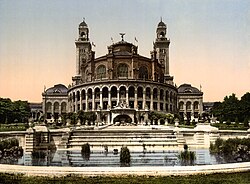
 The Trocadero, Exposition Universal, 1900, Paris, France.jpg


p. 27 | Verdurins' Quai Conti neighborhood...


p. 27 | Les Maîtres d'autrefois ("The Masters of Past Time", 1876), art criticism by Fromentin, was an influential appreciation of early Dutch & Belgian painting, including Rubens & Rembrandt. He also contextualizes the art by noting that the Dutch Golden Age painting develops shortly after Holland won its independence. 

 https://upload.wikimedia.org/wikipedia/commons/thumb/b/be/Armature.puits.Marcoussis.png/297px-Armature.puits.Marcoussis.png 

p. 28 |... a well-head... an above-ground top of a well...

p. 28 | Coronation of the Virgin...., for example (not of Sansovino): 


Amazon.com: Bethlehem Handicrafts Coronation of Virgin Mary Olive Wood  Statue : Home & Kitchen

 p. 28 | Jacopo d'Antonio Sansovino (1486–1570): Italian sculptor and architect, best known for his works around the Piazza San Marco in Venice, crucial in Venetian Renaissance architecture.

p. 28 | ... The Salute in Guardi's pictures....

https://images.metmuseum.org/CRDImages/ep/original/ep71.120.bw.R.jpg
Santa Maria della Salute


Guardi
p. 28 | Francesco Lazzaro Guardi (1712–93) was an Italian painter, one of the last practitioners of the classic Venetian school of painting.

p. 28 | Rue du Bac owes its name to a ferry (bac) established around 1550 on what is now the quai Voltaire, to transport stone blocks for the construction of the Palais des Tuileries. It crossed the Seine at the site of today's Pont Royal, bridge constructed under the reign of Louis XIV to replace the Pont Rouge built in 1632 by the financier Barbier. Originally, the street was named Grand Chemin du Bac, then Ruelle du Bac and Grande Rue du Bac. (wiki)

p. 28 | ... my aunt de Courmont = Nephtalie Le Bas de Courmont (née Lefebvre de Béhaine, 1802-44), who encouraged the brothers to become art collectors.

p. 28 | Miramiones: Nuns of the order of S. Genevieve, named after they combined with another order of which Mme. de Miramion was the founder in 1665, for education & nursing (A Glossary of Ecclesiastical Terms, ed. Shipley).

p. 28 | Little Dunkirk, a retail shop near the Pont-Neuf that sold "... French and foreign merchandise..." (Birnie, An Economic History of Europe, 1760-1930)

p. 28 | Gabriel de Saint-Aubin (1724-80) was a French draftsman, printmaker, etcher and painter. His enchanted genre scenes are often imbued with sweetness and elegance; their refined colors create a poetic mood. He often tempered his works with a moral tone, alluding to fleeting time and the vanity of worldly pleasures. Saint-Aubin is best known for his illustrations and tiny drawings in the margins of sales catalogues and his own Salon livrets, or guidebooks. He could capture a scene in few strokes and seldom forgot the humor in life.

p. 29 | Fermiers Généraux (publishers): a fictitious edition, referring to the 18th-century edition of La Fontaine's Contes et nouvelles en vers, which the Goncourts admired as an unparalleled example of book production (Patterson's notes).

Jules David (1808-1892). Illustration from the Book 'Choix de Fables de La Fontaine' (Choice of La Fontaine's Fables), Lib...

The Oyster and the Pleaders

The Oyster and the Litigants by Jean de La Fontaine. 

p. 29 | Polish sculptor Viradobetski.... we know him as "Ski," but someone thinks they are related... 

p. 29 | Japanese chrysanthemums: The chrysanthemum, or "kiku" in Japanese, was first introduced to Japan from China in the 5th century. Because they used the flower’s image on official seals & the throne, the imperial family was called "chrysanthemum throne;" it remains the symbol of the Japanese emperor today. In Japan, a white mum is the proper flower for a funeral, and a red chrysanthemum is a symbol of love. (wiki)

p. 29 | Archduke Rudolf of Austria (1858-89): apparent suicide. 

p. 29 | Charlemagne was revered as a saint in the Holy Roman Empire and some other locations after the 12th century. The Apostolic See did not recognise his invalid canonisation by Antipope Paschal III and it annulled all of Paschal's ordinances at the Third Lateran Council in 1179. He is not enumerated among the 28 saints named "Charles" in the Roman Martyrology. His beatification has been acknowledged as cultus confirmed and is celebrated on 28 January.

p. 29 | La Faustin: Edmond Goncourt novel (1882), exploring the life of a Parisian actress.

p. 30 | Yung-cheng plate...  Chinese Porcelain Plate Yung Cheng-Qianlong Period-18th Century 22cm

the du Barry

p. 30 | "...the du Barry...": Jeanne Bécu, Comtesse du Barry (1743–93) was the last mistress of Louis XV.

p. 30 | Château de Jean d'Heurs: a former abbey in Meuse where the Goncourt cousins, who kept an excellent kitchen, lived.  

p. 31 | Léoville: Wine from Château Léoville Barton.

p. 31 | The brill (Scophthalmus rhombus) is a species of flatfish in the turbot family. 

p. 32 | Sir Thomas Lawrence (1769–1830): major English portrait painter, 4th President of the Royal Academy.  

p. 32 | Pierre Gouthière (1732–1813), great French bronze chaser and gilder who worked for Louis XV and Louis XVI. 

P. Gouthière, brûle-parfum en forme de cassolette de jaspe rouge et bronze doré, v. 1774-1775, Wallace Collection (F292)


On the Goncourt section:

Comments & an essay at The Cork Lined Room

More from the Cork-Lined Room


2.15.2018

The Fugitive V pp 614-54

p 617-20 | Phèdre (originally Phèdre et Hippolyte) is a French dramatic tragedy in five acts written in alexandrine verse by Jean Racine, first performed in 1677 at the theatre of the Hôtel de Bourgogne in Paris.

p 620 | ..."Jansenist" scruples...: Jansenism is so called after the Christian doctrine put forth by Cornelius Jansen (1585-1638), a Dutch Catholic bishop, in his Augustinus, 1640. This doctrine favors grace and predestination rather than free will and good works. In this light, Phèdre would be less responsible for her actions, and less guilty. (Collier notes)

p 627 | Gare d'Orsay: former Paris railway station and hotel built in 1900. this station served the south and southwest of France, including Châtelleraut and Touraine. After closing as a station, it reopened in December 1986 as the Musée d'Orsay, an art museum.
Electric trains in the Gare d'Orsay, ca. 1900

p 630 |"..close down the churches and ..." : An allusion to French legislation passed in 1904 and 1905 leading to the separation of Church and State (Loi sur les Congrégations).

p 634 | Niccolò Machiavelli (1469–1527) was an Italian diplomat, politician, historian, philosopher, humanist, and Renaissance writer. Often called the father of modern political science, he was an official in the Florentine Republic, as well as writing comedies, songs, & poetry. "Machiavellianism" is a widely used negative term to characterize unscrupulous politicians of the sort he described most famously in The Prince (Il Principe), his most renowned work, in 1513.

Touraine
p 636 | Touraine: a traditional province of France, whose capital was Tours.

p 646 | Les Écorres...Marie-Antoinette: Farms near Balbec where Albertine and the girls may have visited; it was fashionable at the time to drive out into the countryside in Normandy and take tea on a farm.

p 648 | Cricqueville-en-Bessin is a commune in the Calvados department in the Normandy region in NW France. Its name is from its deep-water creek that forms a natural harbor, from Crycavilla.

p 654 | "to philosophise in my garret...": Collins offers a reference to a work by 19th-century novelist Émile Souvestre (1806–54), who wrote Un philosophe sous les toits (An attic philosopher in Paris, or A peep at the world from a garret : the journal of a happy man, 1850).

p 654 | ..."the goatherd's horn..." : 


9.29.2017

The Captive V pp 511-31

Photo: Georges Jansoone
p 512 | Creation of Woman (Eve) at Orvieto Cathedral (probably by Maitani). 

 p 514 | Jean-Philippe Rameau (French Baroque composer, 1683–1764); Alexander Borodin (Russian Romantic composer, 1833–87).

p 515 | Saint Cecilia is the patroness of musicians. While details of her story appear fictional, her existence & martyrdom are considered historical fact. A number of musical compositions are dedicated to her, and her feast day, November 22, became the occasion for concerts & musical festivals. |

p 516 | Bernardino Luini (c. 1480/82 – 1532) was a North Italian (Milanese) painter from Leonardo's circle, said to have worked with Leonardo directly.

p 517 | Giorgione (c. 1477/8–1510) was an Italian painter of the Venetian school in the High Renaissance, whose career was ended by his death at about 30. He is known for the elusive poetic quality of his work, though only about six surviving paintings are affirmatively acknowledged to be his.

Blue & gold Fortuny gown lined in pink (V 531)

3.16.2017

The Captive V pp 369-91

p 382 | Thomas Couture (1815-79): French history painter & teacher.
Romans during the Decadence (1847)
 p 383 | Georges Enesco (Romanian violinist, 1881–1955); also a composer, pianist, conductor, and teacher, often considered Romania's most important musician. Lucien Capet (French violinist, 1873–1928); Jacques Thibaud (French violinist, 1880–1953). 

p 383 | Étienne Pierre Théodore Rousseau (1812–67) was a French painter of the Barbizon school (realism in art).

p 385 | Angelus: The Angelus (Latin for "angel") is a Catholic devotion commemorating the Incarnation... called the "prayer of the devotee", traditionally recited three times daily: 6:00 am, noon, and 6:00 pm.... The Angelus is usually accompanied by the ringing of the Angelus bell, which is a call to prayer and to spread good-will to everyone. The angel referred to in the prayer is Gabriel, a messenger of God who revealed to Mary that she would conceive a child to be born the Son of God.

p 386 | florilegium=a collection of literary extracts; an anthology.

p 386 | Auguste Vacquerie (French writer, 1819-95); Paul Meurice (French writer, 1818-1905); Victor Hugo (1802–85).

p 387 | "...not in the least timorous..." = not showing or suffering from nervousness, fear, or a lack of confidence.


p 389 | beadle=A beadle is a church leader. Often, a beadle serves as an usher or manages charities for the church. The noun beadle isn't used very often in American English, though it's still fairly common in Britain, where beadles hold symbolic or ceremonial jobs in parishes or at universities.

p 389 | sursum corda (Latin: "Lift up your hearts" or literally, "Hearts lifted").

p 390 | The Most Serene House of Condé was a French princely house and a cadet branch of the House of Bourbon. The name of the house was derived from the title of Prince of Condé that was originally assumed around 1557 by the French Protestant leader, Louis de Bourbon (1530–1569), uncle of King Henry IV of France, and borne by his male-line descendants. 


p 390 | ... wearing a ruff... An item of clothing worn in Western Europe from the mid-16th century to the mid-17th century, primarily. The ruff, worn by men, women and children, evolved from the small fabric ruffle at the drawstring neck of a shirt or chemise. This changeable piece of cloth could be laundered separately while keeping the wearer's doublet from becoming soiled at the neckline.

p 391 | Man proposes, but God disposes is a translation of the Latin phrase Homo proponit, sed Deus disponit from Book I, chapter 19, of The Imitation of Christ by the German cleric Thomas à Kempis.

6.12.2015

Sodom and Gomorrah IV pp 245-305

Paul Decauville (1846-1922), industrialist and politician, who in­vented a narrow-gauge railway that could be demounted and transported. (Sturrock)

p 248 | Rosemonde: a slip of the pen for Albertine. (Sturrock)

“ascenseur”…“accenseur”: In French, the difference in sound is between “assenseur” and “acksenseur.” Ascenseur means “elevator” or “lift.” (Sturrock)

the recidivism… single negative: Proust’s lift boy omits the normal ne in front of the verb used negatively. Bélise is a character in Les Femmes savantes, in which Molière makes fun of grammatical pedantry. (Sturrock)

p 272 | Legend has the poetess Sappho throwing herself into the sea off Lesbos as a result of her unrequited love for a boatman. (Sturrock)

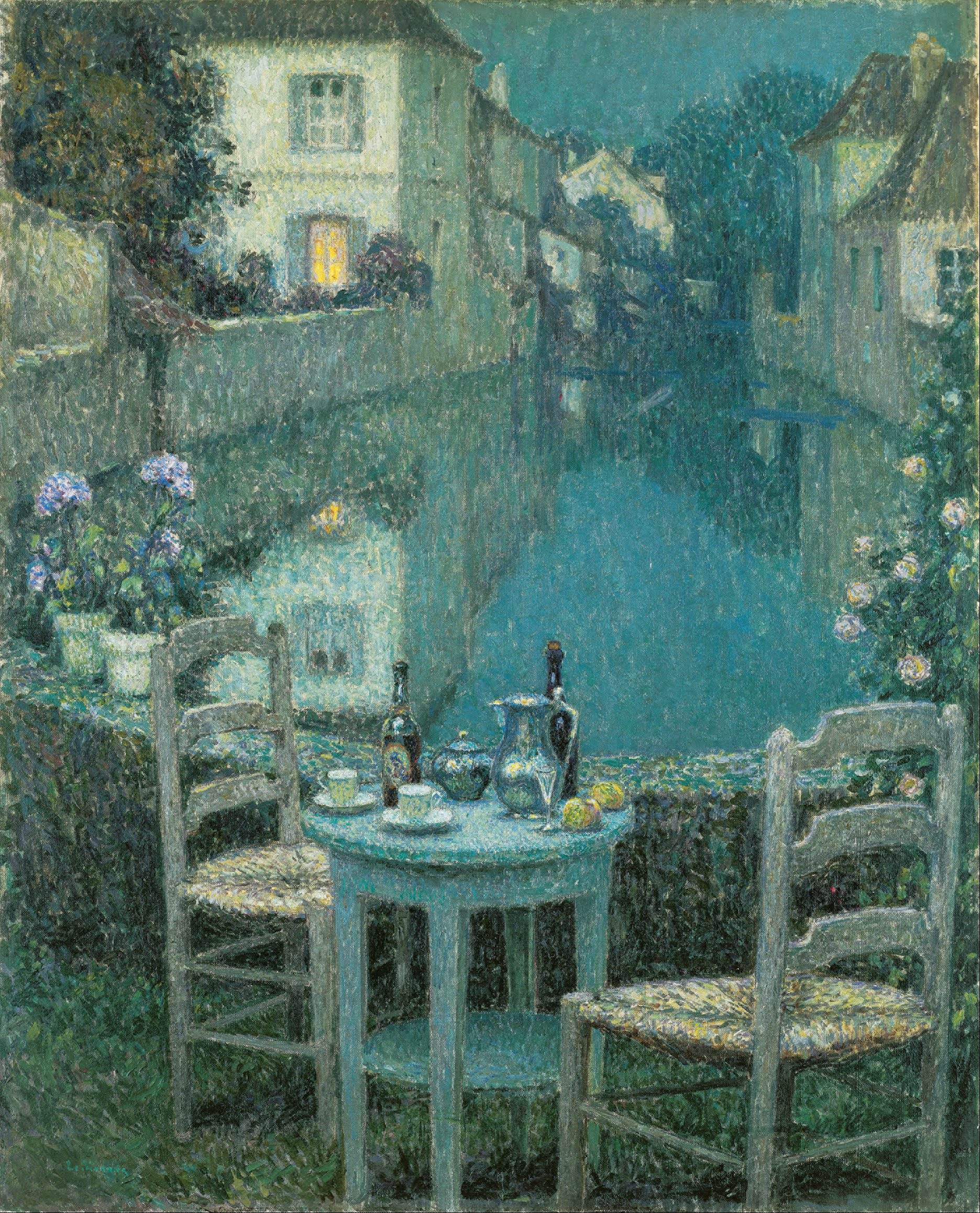
p 278 | Henri le Sidaner (1862-1939), a minor Impressionist, best known for his cityscapes of Bruges and Venice. (Sturrock)

p 287 | “M. Degas assures us…: Degas had much to do with the re­vival of Poussin’s reputation during the 1890s. (Sturrock)

p 289 | “Their giant’s wings…”: a line from a celebrated sonnet in which Baudelaire describes the ungainliness of an albatross when it is on the ground, using the bird as a symbol for the Poet. In French, “Leurs ailes de géant les empêchent de marcher.” (Sturrock)

The Congrégations were religious bodies that ran many schools (and some hospitals) in France; they were dissolved in 1904. “Wars in the East” refers to the 1904-05 war between Russia & Japan; the Japanese victory created European fears that the “yellow” races might prove too strong for the white. (Sturrock)

p 288, 290-91: Tetralogy: the four operas of Wagner’s Ring cycle.  (Sturrock)

Young-jules-massenet-1860s p 291 | Jules Massenet (1842-1912), a composer best known for op­eras, especially Manon and Don Quixote. (Sturrock)