Pages

Showing posts with label Photos. Show all posts

8.01.2019

The starting eight.... And then there were four...

Congratulations on regaining time.... 
Lynn, Monica, Terri & Renée 


2.15.2018

The Fugitive V pp 614-54

p 617-20 | Phèdre (originally Phèdre et Hippolyte) is a French dramatic tragedy in five acts written in alexandrine verse by Jean Racine, first performed in 1677 at the theatre of the Hôtel de Bourgogne in Paris.

p 620 | ..."Jansenist" scruples...: Jansenism is so called after the Christian doctrine put forth by Cornelius Jansen (1585-1638), a Dutch Catholic bishop, in his Augustinus, 1640. This doctrine favors grace and predestination rather than free will and good works. In this light, Phèdre would be less responsible for her actions, and less guilty. (Collier notes)

p 627 | Gare d'Orsay: former Paris railway station and hotel built in 1900. this station served the south and southwest of France, including Châtelleraut and Touraine. After closing as a station, it reopened in December 1986 as the Musée d'Orsay, an art museum.
Electric trains in the Gare d'Orsay, ca. 1900

p 630 |"..close down the churches and ..." : An allusion to French legislation passed in 1904 and 1905 leading to the separation of Church and State (Loi sur les Congrégations).

p 634 | Niccolò Machiavelli (1469–1527) was an Italian diplomat, politician, historian, philosopher, humanist, and Renaissance writer. Often called the father of modern political science, he was an official in the Florentine Republic, as well as writing comedies, songs, & poetry. "Machiavellianism" is a widely used negative term to characterize unscrupulous politicians of the sort he described most famously in The Prince (Il Principe), his most renowned work, in 1513.

Touraine
p 636 | Touraine: a traditional province of France, whose capital was Tours.

p 646 | Les Écorres...Marie-Antoinette: Farms near Balbec where Albertine and the girls may have visited; it was fashionable at the time to drive out into the countryside in Normandy and take tea on a farm.

p 648 | Cricqueville-en-Bessin is a commune in the Calvados department in the Normandy region in NW France. Its name is from its deep-water creek that forms a natural harbor, from Crycavilla.

p 654 | "to philosophise in my garret...": Collins offers a reference to a work by 19th-century novelist Émile Souvestre (1806–54), who wrote Un philosophe sous les toits (An attic philosopher in Paris, or A peep at the world from a garret : the journal of a happy man, 1850).

p 654 | ..."the goatherd's horn..." : 


3.01.2017

Proustiennes forever!

See more of us over here!


 August 2010: Watching "Swann in Love" together

10.30.2016

The Captive V pp 156-168


p 159 | Renaissance Pietà: There are others, but Michaelangelo's is the main one.

p 161 | Prunier Restaurant in Paris specialized in seafood.

p 161 | Here's mackerel! (Il arrive le maquereau) = a pun because maquereau is French slang for a pimp, hence his thought wanders to the chauffeur.

p 161 | Cos lettuce=Romaine

p 162 | Praeceptis salutaribus moniti et divina institutione formati audemus dicere : "Instructed by Thy saving precepts, and following Thy divine institution, we are bold to say..." This is the opening to the Lord's Prayer in the Mass liturgy.

p 162 | Suave mari magno="How pleasant when on a great sea..." (Lucretius). These opening lines of Book II of Lucretius' poem De rerum naturae observe how pleasant it is, when we are on dry land, to watch another man battling to stay afloat in a stormy sea. Though the poet was commending not schadenfreude but philosophical detachment, the phrase is used proverbially to allude to someone who takes pleasure in the suffering of others. Proust, however, seems here to be using it literally and not figuratively. (Clark)


p 163 | Chasselas = White wine grape

p 163 | Rebattet, 12, rue du Faubourg- Saint-Honore. A very
fashionable pastry shop.

p 164 | "... ices not hawked in the street..." : small ices, to be eaten immediately, were certainly sold in the street before 1900: there is a 19th century photo of an ice-cream man with his cart by Eugene Atget. But what the characters are discussing here are sizeable, elaborate iced desserts sold in expensive shops. Scroll down on this page to see an example.


Eugene Atget
p 165 | Monte Rosa is a huge ice-covered mountain in the Alps.

p 167 | Scheherazade is the fictional narrator of the Arabian Nights, a book which Proust loved both as a child and as an adult. She made up a new tale for 1001 nights to avoid being killed by the king.

p 168 | "...consecration-cross of his wheel = the steering-wheel of some cars at this time was cruciform, with no outer ring. Others were stylized, with a circle enclosing a cross.


p 168 ff: The Palace at Versailles;  Grand Trianon at Versailles;
Petit Trianon at Versailles
Hôtel des Réservoirs at Versailles
Vatel

9.16.2015

Sodom and Gomorrah IV pp 447-55

p 447 |  The English name "Normans" (settled in Normandy, France) comes from the French words Normans/Normanz, plural of Normant, modern French normand, which is itself borrowed from Old Low Franconian Nortmann "Northman" or directly from Old Norse Norðmaðr, Latinized as Nortmannus (recorded in Medieval Latin, 9th century) to mean "Norseman, Viking". (Wikipedia)

p 447 | The Tour d'Argent, on the Left Bank, was, and remains, one of the great restaurants of Paris; the Hotel Meurice, on the rue de Rivoli, was one of the city's best in Proust's day.
Boutroux

p 448 | Émile Boutroux (1845-1921) was an eminent 19th century French philosopher of science & religion and an historian of philosophy. He firmly opposed materialism in science. He ... defended the idea that religion & science are compatible...  His work is overshadowed... by that of his student, the more celebrated Henri Bergson. He was elected to the Academy of Moral & Political Sciences in 1898 & to the Académie française in 1912. (Wiki)

Académie française
p 448 | Académie française : The Forty are the "Immortals," or the forty members of the Académie française. Not all the names Brichot cites are actual Academicians. (Storrock)

p 448-9 | Henri Houssaye; Olivier Lefèvre d'Ormesson; Édouard René de Laboulaye: Honoré Le Peletier, comte d'Aunay; M. de Bussière; M. Albaret; M. de Cholet; M. dela Pommeraye

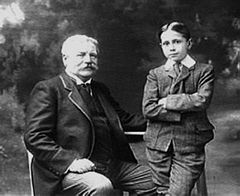
p 449 | Paul Porel (Paul Désire Parfouru, 1843-1917), actor &  theater director, who ran the Odéon on the Left Bank, from 1884 to 1892, hence "Odéonia." He was married to the comedienne Réjane (one of the models for Berma), who, with their son Jacques Porel were friends with Proust. 
p 449 | The Théâtre de l'Odéon is one of France's six national theatres. It is located at 2 rue Corneille in the 6th arrondissement of Paris on the left bank of the Seine, next to the Luxembourg Garden. It was originally built between 1779 and 1782, in the garden of the former Hôtel de Condé, to a Neoclassical design by Charles De Wailly and Marie-Joseph Peyre. The Odéon was originally intended to house the Comédie Française, which, however, preferred to stay at the Théâtre-Français in the Palais Royal. The new theatre was inaugurated by Marie-Antoinette on April 9, 1782.

p 450 | Even though Moncrieff uses "-ast" here, the French has "-arder", which Sturrock suggests could possibly stand for pétarder, meaning "to blow one's top" -- and possibly several other slangy meanings. I think Moncrieff used his translator's licence to indicate that the two men were gossiping about Charlus being gay (i.e., "pederast"). Remember Marcel has already indicated that the people in one's social circle wouldn't mention or notice it, but outsiders would do both.

p 452 | La Chercheuse d'esprit, a comic opera with words by Charles-Simon Favart (1710-92) and music by Jean-Claude Trial (1732-71), first presented in 1741.

p 453 | The Sarmatians were a large confederation of Iranian people during classical antiquity, flourishing from about the 5th century BC to the 4th century AD. They spoke Scythian, an Indo-European language from the Eastern Iranian family.

p 454 | ... the Rohans...: The House of Rohan is a French noble family of viscounts, later dukes and princes, coming from the locality of Rohan in Brittany. 

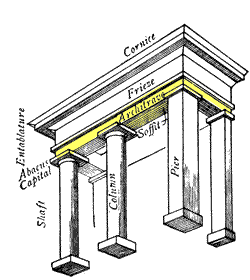
architrave
p 454 | architrave: the lintel or beam that rests on the capitals of the columns. It is an architectural element in Classical architecture.
Odéon
the lintel or beam that rests on the capitals of the columns. It is an architectural element in Classical architecture.
p 455 | galantine: A galantine is a Polish dish of de-boned stuffed meat, most commonly poultry or fish, that is poached and served cold, coated with aspic.

p 455 | Mme Jeanne Samary: 19th century actress and model (Renoir's lover for a while).


p 455 | Le Capitaine Fracasse by Théophile Gautier: This book was promised to the public in 1836 but finally published in 1863. It is centered on a soldier named Fracasse whose adventures portray bouts of chivalry, courage and a sense of adventure. Gautier places the story in his favourite historical era, that of Louis XIII. It is best described as a typical cloak-and-dagger fairy tale where everyone lives happily ever after.


7.14.2015

Sodom and Gomorrah IV pp 342-357

p 343 | Amphitryon: in Greek mythology, during Amphitryon’s absence, Alcmene became pregnant by Zeus, who, disguised as her husband, visited her; she became pregnant again by her real husband when he returned the next day. Of these unions were born twin boys -- Iphicles was the son of Amphitryon, Heracles the son of Zeus. 

p 345 | Cliff of Criquetot: Not sure if this is it, but it is on the coast of France. 

p 346 | Marcel spent part of autumn 1891 at this beautiful manor in Trouville, home of Arthur Baignères, uncle of his school friend Jacques Baignères. Les Frémonts was the model for La Raspelière, summer home of the Verdurins. Built in an L-shape and on a small cliff, the property looks out on the Channel, and on the other side, the Norman countryside (my translation).


 p 347 | Revue des deux mondes; still being published here and an English introduction is here.


p 353 | French flower girl.

p 347 | Paper by Gene M. Moore on the little train (downloadable), referencing names of towns on the line.


p 356 | Les Maximes, first published in 1665, are by François, Duc de La Rochefoucauld (1613-80). Here's one: "Self-love is the greatest of all flatterers." Here are some more, and here's the whole book.

p 357 | "But won't you, indolent traveler, rest your head/And dream your dreams upon my shoulder?": from a poem by Alfred de Vigny (Storrock) 
Lyre

6.11.2015

Sodom and Gomorrah IV pp 195-203

p 195-6 | The Ligue de la Patrie Française was founded to bring together those opposed to Dreyfus, and as an answer to the Dreyfusard Ligue des Droits de l'Homme. (Sturrock)

p 197 | Duc d'Estrées so probably Charles de La Rochefoucauld-Doudeauville (1864-1907)

p 197 | Paul Doumer (1857-1932), a radical politician who became president of the Republic in 1931, only to be assassinated a year later; Paul Deschanel (1855-1922) became president in 1920, but resigned nine months later due to illness. (Sturrock)

p 197 |François de Charette (1763-96) led the counter-revolutionary Royalist uprising in the Vendée in 1793; his family remained strongly Royalist throughout the 19th century. Sosthène de Doudeauville (1825-1908), descended from another ultra-Royalist family, was a right-wing deputy for many years & ambassador in London 1873-74.  (Sturrock)

p 198 |Committee of Public Safety (Comité de Salut Public) was the most ferocious of the ruling institutions created by the French Revolution, lasting from 1793 to 1795; dominated first by Danton, then Robespierre. (Sturrock)

Zola in the 1890s
p 199 | Georges Clemenceau (1841-1929), a left-wing journalist and politician, was prime minister from 1906 to 1909 & again in the last months of WWI, but later was not elected president;

Émile Zola (1840-1902), by then the country's leading writer, was the most prominent Dreyfus supporter during the Affair;  Joseph Reinach  (1856-1921), a politician, eventually wrote a 7-volume history of the Affair;

Fernand Labori (1860-1917), a lawyer, defended Émile Zola in 1898 in the Dreyfus trial, and Captain Alfred Dreyfus himself at the court martial in Rennes in 1899.< (Sturrock)

p 201 |Édouard Juda Colonne (1838-1910), violinist & conductor who founded the Concert National in Paris in 1871 and later the Association des Concerts Colonne.

 
by Falconet

p 201 | Revue des deux mondes: (Review of the Two Worlds) is a French monthly literary & cultural affairs magazine published in Paris since 1829.


p 203 | Étienne Falconet (1716-91), sculptor and ceramic artist, whose patron was Mme de Pompadour.  


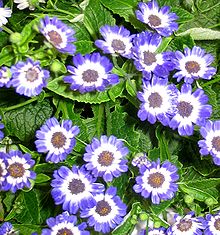
p 203 | Blue Cineraria flowers

10.31.2014

The photos that could have been, but never were...

I just re-found this extraordinary artist's portfolio of photographs of Proust (the dozen we know so well) ensconced in well-known Proustian hangouts.
7.28.2014

Sodom and Gomorrah IV p 1-21

Sodom and Gomorrah (The Cities of the Plain)

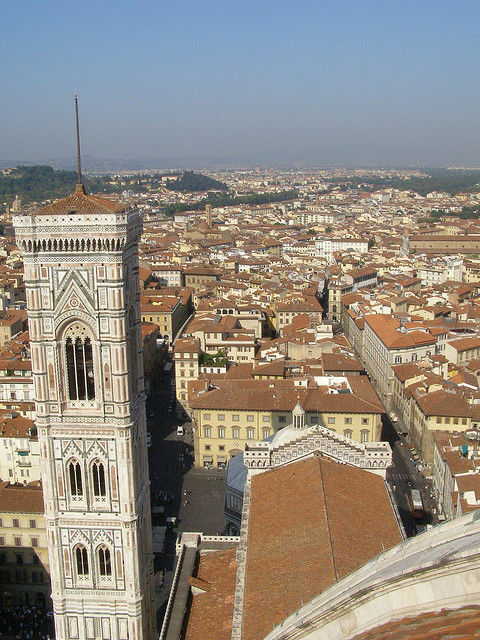
p 1 | "...rose-pink campanile..." (bell tower; this one is Giotto's in Florence); coach-house = carriage house;  eyrie or aerie: large nest of a bird of prey, especially an eagle, typically built high in a tree or on a cliff.

p 2 | pollination

the chapel at Combray     

Robert de Montesquiou

 p 2 | Excellent essay on Count Robert de Montesquiou (above), who was a partial model for the Baron de Charlus...

p 7 | "... Beethoven's questioning phrases..." In Hammerklavier’s Adagio Sostenuto or the Sixteenth Quartet?

p 10 | Boer War (Second)

p 12 | Fanlight = window  transom

p 12 | pregnancy (of Nero) in the Golden Legend.

p 13 | Caliph of Baghdad dressed as a merchant 

p 14 | Gare d'Orléans; Orléans is about 83 miles ssw of Paris.

p 15 | Cathedral of Orléans
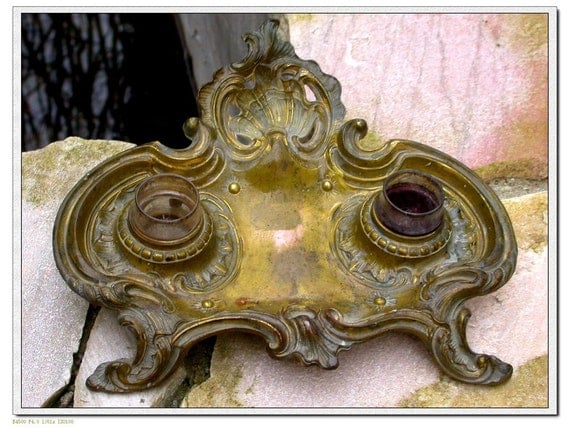
real penholder
stereoscope


p 15 | optical penholder  (stereoscope)

p 15 | ophthalmia = inflammation of the conjunctiva or the eyeball;
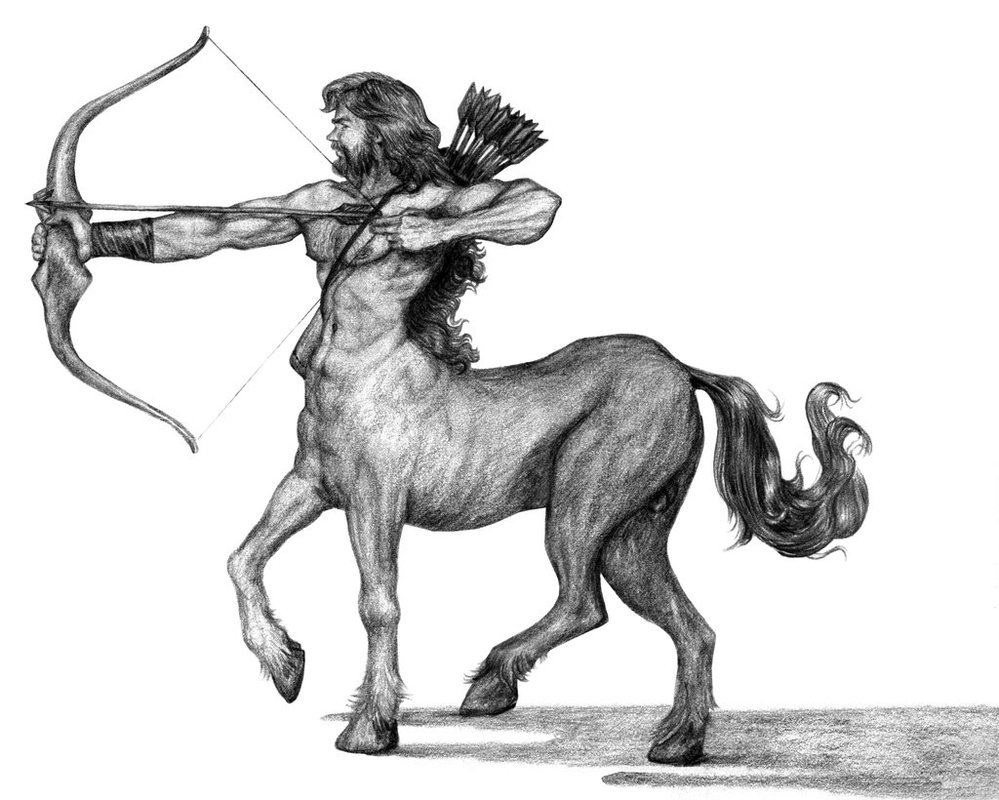
Centaur

p 15 | Diane  de Poitiers, mistress of King Henri II of France. Her Renaissance house in Orleans was destroyed in June 1940. {Sturrock, note 10}

p 16 | mantle in gules (heraldry); "I have three popes in my family": possibly an allusion to three Renaissance popes from the Medici family in Florence from whom Charlus is supposedly descended: Leo X, Clement VII, and Leo XI. {Sturrock, note 11}

p 18 | "... word dear to the ancient Greeks...";  Athena: the goddess who protects Ulysses in both the Iliad & the Odyssey. In Book XIII of the Odyssey, she finally reveals herself to him, having earlier appeared in the guise of an adolescent. {Sturrock, note 12}
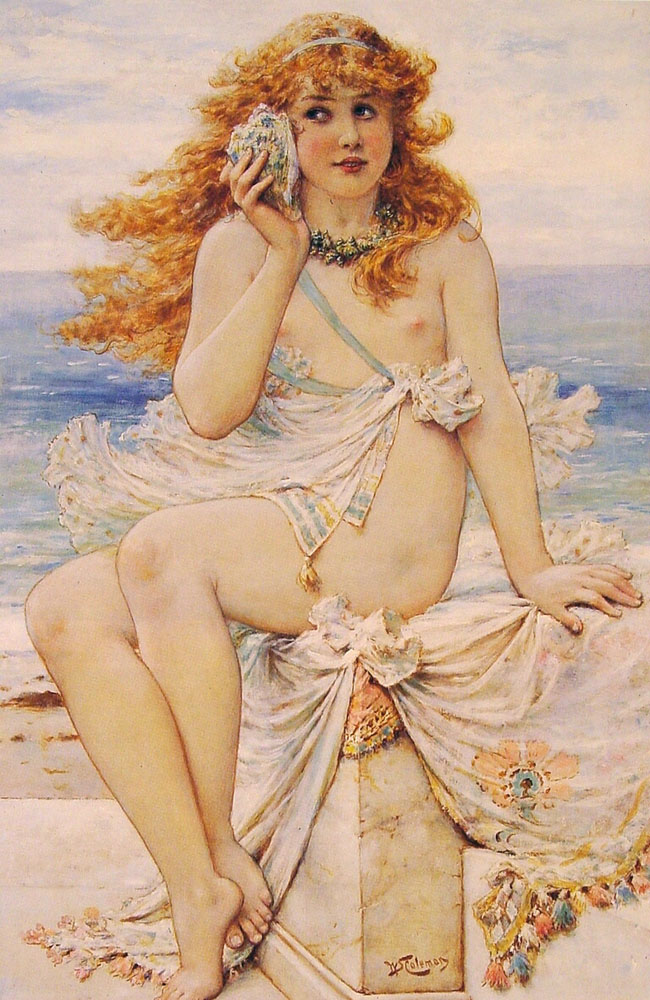
nymph
p 19 | Mene, Tekel, Upharsin (the writing on the wall); prophetic words written on the wall by the fingers of a man's hand during King Belshazzar's fatal feast in Babylon. They were interpreted by the prophet Daniel to mean that Belshazzar's reign, and indeed his life, were over (see Daniel 5). {Sturrock, note 13}

p 20 | A nymph in Greek & Latin mythology is a minor female nature deity usually associated with a specific location or landform. Not goddesses, nymphs are seen as divine spirits who animate nature, often shown as beautiful, young nubile maidens who dance and sing. Ephebes are young adolescent men of (military) training age.

p 20 | Original sin and racial predestination.

p 21 | ... honour precarious, liberty provisional, ... position unstable, ... the poet one day feted in every drawing room & applauded in every theatre in London, and the next driven from every lodging... (Oscar Wilde?, Wilde was convicted of gross indecency and sentenced to two years' hard labor, 1895-97.)

p 21 | turning the mill like Samson....

p 21 | "two sexes shall die... " Vigny poem, Proust's meaning, timing, connection to Baudelaire are all discussed beginning on page 18 of Proust's Lesbianism by Elisabeth Ladenson; a line from Alfred de Vigny's poem "La Colere de Samson", where Samson becomes disillusioned with women following his betrayal by Delilah. {Sturrock, note 14}

5.02.2014

The Guermantes Way III p 703-10

p 704 | King of Spain:  Alfonso XIII, who reigned from 1886-1931.
p 705 | pabululm: bland, simplistic food or intellectual sustenance; sapid=flavorful.
p 705 | The Supreme War Council, founded 1917 in Versailles, was a central command created by British Prime Minister David Lloyd George to coordinate Allied military strategy during WWI. 
p 705 | French in Morocco

p 706 | a purple flower that smells bad.... maybe  Amorphophallus titanum known as the Titan Arum or Datura stramonium, known as Jimson weed or Devil's snare.
p 708 | Edmond Albius (Albins), and vanilla propagation
p 709 | Empire-style furniture 
p 709 | Montesquiou family
p 710 | furniture with a Wedgwood medallion
p 710 | Duc de Guastalla & the Princesse de Parme
p 710 | How Proust knows about Princesse Mathilde & the Duc d'Aumale; interesting write-up about her here on page 464 and following. Here is a painting of her salon. Here's the duke.


3.29.2014

The Guermantes Way III p 626-629

p 627 | squaring the circle: which was proven impossible in 1882; the expression is often used as a metaphor for trying to do the impossible
p 627 | minced pork of Tours: perhaps referring to these rillettes; biscuits of Rheims, which are pink. <<==


p 628 | conical mitre of the Jews: the Jewish hat <<==
p 628 | Academic robe ==>>
p 628 | pharisaical = marked by hypocritical censorious self-righteousness
p 628 | aroma of carbolic acid: Phenol — also known as carbolic acid - is an aromatic organic compound, once was widely used as an antiseptic, especially as carbolic soap, from the early 1900s to the 1970s.
p 628 | <<==  gown of scarlet satin faced with ermine, like that of a Doge...
p 629 | The Council of Ten (1310-1797), one of the major governing bodies of the Republic of Venice.
p 629 | Veto: from the Latin vetare, I forbid.
p 629 | Juro: While playing the hypochondriac Argan in his last play Le Malade Imaginaire (The Imaginary Invalid), Molière, who suffered from pulmonary tuberculosis, was seized by a coughing fit & spat blood just before he was to speak the word Juro (I swear). He finished the performance and died a few hours later.
p 629 | Bar Council: Bar Association.
p 629 | Chargé d'affaires = diplomatic official who temporarily takes the place of an ambassador.
p 629 | Salon=The Salon or Salon de Paris, beginning in 1725, was the official art exhibition of the Académie des Beaux-Arts in Paris. From 1748-1890, it was the greatest annual or biannual art event in the Western world. In 1849, medals were introduced.

1.09.2014

The Guermantes Way III p 537-551


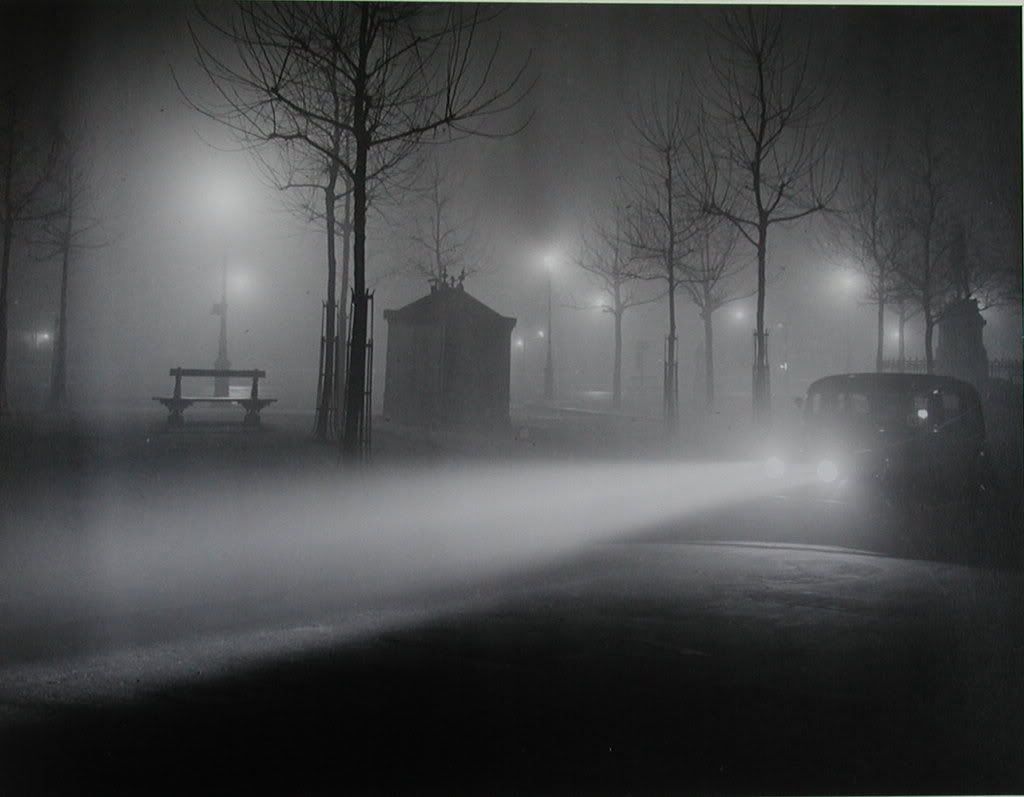
p 539 | Paris in fog
p 539 | Jews used to cover their heads with ashes in times of mourning...
p 540 | Nietzsche cut himself off from Wagner's music.... More on Proust and Nietzsche

p 544 | Le Figaro: French daily newspaper.

p 544 | Steeples at Martinville

p 547 | Pillar of Fire that guided the Hebrews.
p 548 | Arabian roc
p 548 | Zola trial  and this Zola trial


p 549 | Melanie Louise Sophie Renouard de Bussiere, better known under her married name Countess Edmond de Pourtales (1836-1914), was one of the "queens of Paris" under the Second Empire. Marquise de Galliffet.
p 549 | Revolving doors

p 550 | Dignus est intrare. Latin for "He is worthy to enter." Also, this phrase is found in Molière's comedy-ballet Le Malade imaginaire.
p 551 | Rond-Point of the Avenue des Champs-Elysées

2.23.2013

My Favorite Marcel

Everyone's talking about this picture again, now asserting that it shows Marcel was the first to play air guitar. Well, why not? He loved music, he loved the girl standing on the chair (Jeanne Pouquet, one of his models for Gilberte Swann) even though she was affianced to his friend Gaston Arman de Caillavet.  Others are Gabrielle Schwartz, Gabriel Trarieux, the Daireaux and the Dancognée girls.

This great photograph is the only one I've seen of Proust enjoying a moment of true levity, sporting a sly, mischievous smile. Readers of his novels know that in addition to being a sickly recluse, he was also an extremely amusing & intelligent man -- the kind you'd want at your dinner parties & salons, despite his overcoat -- with his writing filled with biting humor & slashing satire. (You just have to find it!)

2.16.2011

Radio Proust has been updated

Have a look at the Radio Proust website at Bard.  Many updates, videos, new photographs, and links to information and courses.

8.04.2010

Within a Budding Grove (vol II) Pages for August

WITHIN A BUDDING GROVE :: 
Week 40:  How I came to say of Berma: “What a great artist!” (72). The laws of Time (74). Effect produced by Norpois on my par­ents (75), on Françoise (76); the latter’s views on Parisian restaurants (78).
New Year’s Day visits (79). I propose to Gilberte that we should rebuild our friendship on a new basis (80); but that same evening I realize that New Year’s Day is not the first day of a new world (81). Berma and love (83). Gabriel’s palaces (84). I can no longer recall Gilberte’s face (84). She returns to the Champs-Elysées (85). “They can’t stand you!” (86) I write to Swann (86). Reawakening, thanks to involuntary memory, in the little pavilion in the Champs-Elysées, of the impressions experienced in Uncle Adolphe’s sanctum at Combray (89, 91; cf. I 99). Amorous wrestle with Gilberte (89). I fall ill (91). Cottard’s diagnoses (96).


Man Ray's photo of the late Marcel Proust, at the Getty Museum.

6.29.2010

La Berma

Bernhardt as Phèdre in Racine's Phèdre. From the Getty Museum, Los Angeles. Photograph: Paul Nadar, negative about 1874, print about 1880s, albumen silver print (cabinet card), 5 3/4 x 4 1/2 in. Introduced in the 1860s, cabinet cards were studio photos mounted on card stock for public sale. Widely collected, they often featured portraits of celebrities of the day (writers, musicians, actors). This Nadar photo of The Divine Sarah is from a collector's album of cabinet cards. The New York Times reviewed this in 1905.

6.12.2010

Within a Budding Grove (vol II): Dinner guests; Berma

Jockey-Club de Paris: The Jockey Club de Paris is best remembered as a gathering of the elite of nineteenth-century French society. The club still exists at 2 rue Rabelais, and hosts the International Federation of Racing Authorities. From Wikipedia: "Proust's Charles Swann was a member, a fact that Proust more than once noted as a signal honour, given his Jewish background."
Dr. Jules Cotard: Was he the model for Proust's character?
    Comments by other Proust readers onine:  C. Matthews here and D. Abrams here

    Note that Seize Mai (May 16) was the day of a constitutional crisis, MacMahon resigned, and back in the park, while two men watched Odette parading down the avenue, one made a comment about being with her on that day (1877, in real history time). The parading, since Gilberte is already 12-ish, would have to be about 14-15 years later, say 1891-ish. This part of the novel was originally part of Place Names: The Name, but Proust's publisher thought v. 1 was getting too long, and so it was cut, to begin v.2.

    There is so much space given to describing the changes of Cottard and Swann, that you could even say that the doctor changed from a buffoon to a well-respected man and Swann changed in the opposite way.


    La Berma = Sarah Bernhardt
    Here are some photos in the Library of Congress of Bernhardt performing in the U.S.  Nice crowds. 

    In this exquisite portrait by Nadar (there were many, and he was the best), La Berma was only 20 years old. BTW, born Jewish & illegitimate.
    Here she is full-face. 

    6.11.2010

    Printable Photos of the Proust house at Illiers-Combray

    The Architectural Digest article begins here and the photos are here.