Pages

Showing posts with label Combray. Show all posts

8.14.2021

Time Regained VI pp 1-27

p 1-4 | the two ways (in French, with photos; translation to come); also here.
p 7: Chinese porcelain bowl


 p 7 | ... Léa dressed as a man... (cross-dressing)

p 8 |... Pascal's gulf.... From a poem titled "Le Gouffre"  ("The Gulf"), the opening lines of Baudelaire:


"Pascal avait son gouffre, avec lui se mouvant.
— Hélas! tout est abîme, — action, désir, rêve,"

"Pascal had his abyss that moved along with him.
— Alas! all is abysmal, — action, desire, dream,"


p 12 | Marienbad: Mariánské Lázně, a spa town in the Czech Republic. Most of its buildings are from its Golden Era in the second half of the 19th century, when celebrities & European rulers came to enjoy the curative carbon dioxide springs.


Empress Theodora
p 17 | Empress Theodora: (c.497-548 AD), powerful Byzantine empress, wife of Justinian I, said to have been a low-born actress.

p 21 | ...battle of Ulm...: on 16–19 October 1805 was a series of skirmishes that allowed Napoleon I to trap an entire Austrian army under the command of Karl Freiherr Mack von Leiberich with minimal losses and to force its surrender near Ulm in the Electorate of Bavaria  (wiki).  The Battle of Lule Burgas (1912) was here in the First Balkan War. (Sidenote: its emperor was Theodosius I. We see the fictional Theodosius II visit Paris twice during the novel.)


p 23 | La Fille aux yeux d'or (The Girl with the Golden Eyes): 1835 novel by Balzac, part of La Comédie humaine.


p 25 | Joseph Fourier (1768–1830) was a French mathematician and physicist known for initiating the investigation of Fourier series & their applications to problems of heat transfer and vibrations. The Fourier transform and Fourier's law are also named in his honor; also generally credited with discovering the greenhouse effect.


p 25 | Tobolsk is a town in Tyumen Oblast, Russia, located at the confluence of the Tobol and Irtysh Rivers. Founded in 1590, Tobolsk is the second oldest Russian settlement east of the Ural Mountains in Asian Russia, and is a historic capital of the Siberia region. In the early 1900s, it was famous as the administrative center of Grigori Rasputin's home province, and is located close to his birthplace.

 
p 26 | the Goncourt Brothers produced the Goncourt Journal together from 1850-1870, then by Edmond alone till 1896. It was a candid chronicle of the literary and artistic Parisian world in which they lived. Proust paid the Journal a tribute by including a pastiche* of it in Time Regained. Some say the Journal's obsessive chronicling of the most minute details of its authors' social lives and rendering of them into literary art anticipates Proust's novel.  (wiki) 


* A pastiche is a work of visual art, literature, theatre, or music that imitates the style or character of the work of one or more other artists. Unlike parody, pastiche celebrates, rather than mocks, the work it imitates. (wiki)

7.28.2014

Sodom and Gomorrah IV p 1-21

Sodom and Gomorrah (The Cities of the Plain)

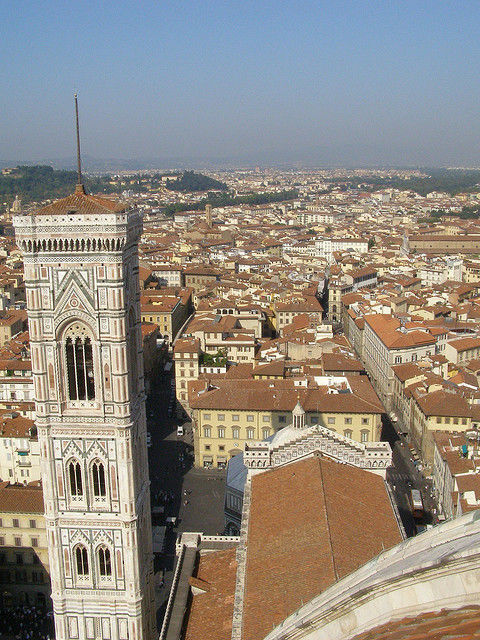
p 1 | "...rose-pink campanile..." (bell tower; this one is Giotto's in Florence); coach-house = carriage house;  eyrie or aerie: large nest of a bird of prey, especially an eagle, typically built high in a tree or on a cliff.

p 2 | pollination

the chapel at Combray     

Robert de Montesquiou

 p 2 | Excellent essay on Count Robert de Montesquiou (above), who was a partial model for the Baron de Charlus...

p 7 | "... Beethoven's questioning phrases..." In Hammerklavier’s Adagio Sostenuto or the Sixteenth Quartet?

p 10 | Boer War (Second)

p 12 | Fanlight = window  transom

p 12 | pregnancy (of Nero) in the Golden Legend.

p 13 | Caliph of Baghdad dressed as a merchant 

p 14 | Gare d'Orléans; Orléans is about 83 miles ssw of Paris.

p 15 | Cathedral of Orléans

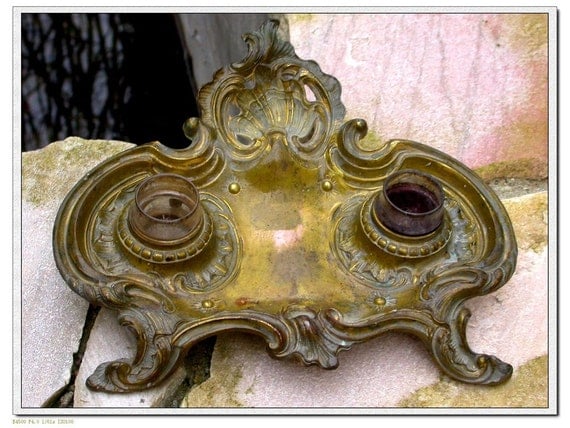
real penholder
stereoscope


p 15 | optical penholder  (stereoscope)

p 15 | ophthalmia = inflammation of the conjunctiva or the eyeball;

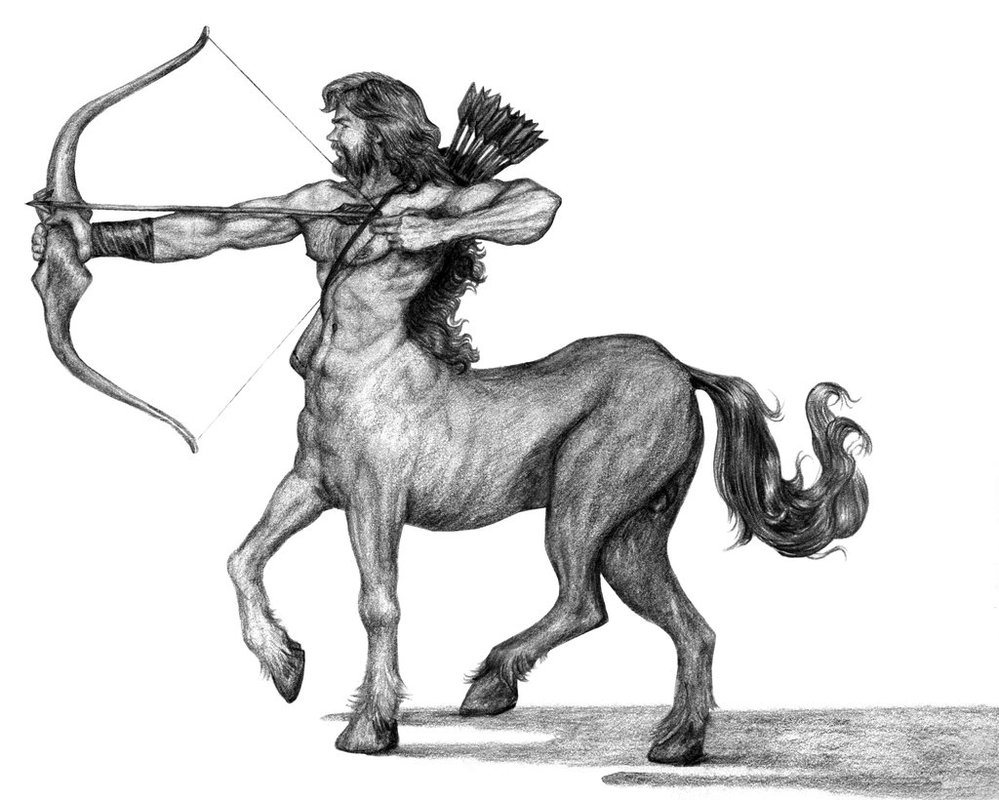
Centaur

p 15 | Diane  de Poitiers, mistress of King Henri II of France. Her Renaissance house in Orleans was destroyed in June 1940. {Sturrock, note 10}

p 16 | mantle in gules (heraldry); "I have three popes in my family": possibly an allusion to three Renaissance popes from the Medici family in Florence from whom Charlus is supposedly descended: Leo X, Clement VII, and Leo XI. {Sturrock, note 11}

p 18 | "... word dear to the ancient Greeks...";  Athena: the goddess who protects Ulysses in both the Iliad & the Odyssey. In Book XIII of the Odyssey, she finally reveals herself to him, having earlier appeared in the guise of an adolescent. {Sturrock, note 12}

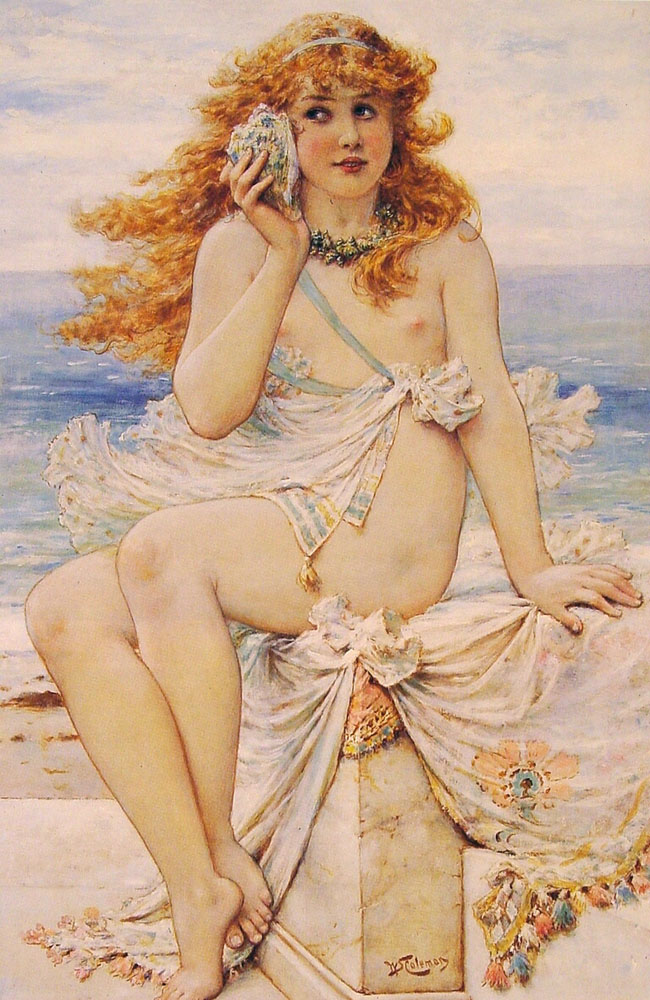
nymph
p 19 | Mene, Tekel, Upharsin (the writing on the wall); prophetic words written on the wall by the fingers of a man's hand during King Belshazzar's fatal feast in Babylon. They were interpreted by the prophet Daniel to mean that Belshazzar's reign, and indeed his life, were over (see Daniel 5). {Sturrock, note 13}

p 20 | A nymph in Greek & Latin mythology is a minor female nature deity usually associated with a specific location or landform. Not goddesses, nymphs are seen as divine spirits who animate nature, often shown as beautiful, young nubile maidens who dance and sing. Ephebes are young adolescent men of (military) training age.

p 20 | Original sin and racial predestination.

p 21 | ... honour precarious, liberty provisional, ... position unstable, ... the poet one day feted in every drawing room & applauded in every theatre in London, and the next driven from every lodging... (Oscar Wilde?, Wilde was convicted of gross indecency and sentenced to two years' hard labor, 1895-97.)

p 21 | turning the mill like Samson....

p 21 | "two sexes shall die... " Vigny poem, Proust's meaning, timing, connection to Baudelaire are all discussed beginning on page 18 of Proust's Lesbianism by Elisabeth Ladenson; a line from Alfred de Vigny's poem "La Colere de Samson", where Samson becomes disillusioned with women following his betrayal by Delilah. {Sturrock, note 14}

6.11.2010

Printable Photos of the Proust house at Illiers-Combray

The Architectural Digest article begins here and the photos are here.

5.11.2010

Swann's Way (vol I p 134 ff). Swann in Love: Notes May 2010

p 134 |Portrait of Mahomet II by Bellini (also used in describing Bloch)
And Swann felt a very cordial sympathy with that Mahomet II whose portrait by Bellini he admired, who, on finding that he had fallen madly in love with one of his wives, stabbed her, in order, as his Venetian biographer artlessly relates, to recover his spiritual freedom. Then he would be ashamed of thinking thus only of himself, and his own sufferings would seem to deserve no pity now that he himself was disposing so cheaply of Odette's very life.

La maison dorée restaurant around 1860. Wikipedia has a history and this page shows the evolution of the building on the corner. (p. 526/384)

Possible letter-writers:
  1. Basin, Duc de GUERMANTES, as Prince des Laumes: (brother of Charlus & husband of Oriane). Consistently unfaithful: 481. Swann suspects he wrote the anonymous letter: 506-10.
  2. Palamède, Baron de CHARLUS (nicknamed Mémé; brother of Basin). At Combray, rumored lover of Mme Swann; 45, 137. Go-between with Odette: 442, 449, 456. Swann suspects he wrote the anonymous letter: 506-7.
  3. M. d'ORSAN (Swann’s friend..."they held the same views about everything", though was said to have indelicate relations with a certain wealthy woman).  Swann suspects he wrote the anonymous letter: 506-8.
A procuress is a female pimp. Interestingly enough, this subject was popular among Dutch artists, including Swann's Vermeer! Here is a discussion of his painting The Procuress (1656); click on the title to see the whole image.  Two other paintings on the same subject are here and here.

1.13.2010

Combray (vol I)


We're starting part 2 of Swann's Way, Swann in Love.  This is set further back in time, a re-telling by the Narrator (second-hand) of what someone told him about Swann's life.  If you want to read in French & English, try it here.  We can increase the page count if you're making good time.

I haven't yet found any analysis of the unnamed fisherman in the straw hat. 
The Pont-Vieux led to a tow-path which, at this point, would be overhung in summer by the bluish foliage of a hazel, under which a fisherman in a straw hat seemed to have taken root. At Combray, where I knew everyone, and could always detect the blacksmith or grocer’s boy through his disguise of a beadle’s uniform or chorister’s surplice, this fisherman was the only person whom I was never able to identify. He must have known my family, for he used to raise his hat when we passed; and then I would always be just on the point of asking his name, when some one would make a sign to me to be quiet, or I would frighten the fish.
So.  Proust wrote Impressions on Riding in an Automobile about a car trip to Caen, where he saw the steeples shifting at Saint-Etienne & Saint-Pierre.  The pertinent part of the article later became the boy Marcel's writing fragment, the one he jots down in the carriage. See the page 437 preview in Carter's biography at this link. (Scroll down).

More analysis of the Martinville fragment in this learned essay (Ruskin, Proust, and the Art of Failure). (Use Ctrl F to find the word "Martinville").

Oh, I've found someone hosting an online reading of Proust. They're doing 10 pages per day, but Abrams posts some excellent research and people's comments are thoughtful, like yours. Try this one for size....  Nice Moss post.

Check the blog for steeple & Vivonne illustrations. See you soon!

12.24.2009

Combray : Notes on Week 15

But in my dreams of Combray (like those architects, pupils of Viollet-le-Duc, who, fancying that they can detect, beneath a Renaissance rood-loft and an eighteenth-century altar, traces of a Norman choir, restore the whole church to the state in which it probably was in the twelfth century) I leave not a stone of the modern edifice standing, I pierce through it and ’restore’ the Rue des Perchamps. 
Eugène Emmanuel Viollet-le-Duc (January 27, 1814 – September 17, 1879) was a French architect and theorist, famous for his "restorations" of medieval buildings. Born in Paris, he was as central a figure in the Gothic Revival in France as he was in the public discourse on "honesty" in architecture, which eventually transcended all revival styles, to inform the emerging spirit of Modernism.

 Steeples at Martinville
   At a bend in the road I experienced, suddenly, that special pleasure, which bore no resemblance to any other, when I caught sight of the twin steeples of Martinville, on which the setting sun was playing, while the movement of the carriage and the windings of the road seemed to keep them continually changing their position; and then of a third steeple, that of Vieuxvicq, which, although separated from them by a hill and a valley, and rising from rather higher ground in the distance, appeared none the less to be standing by their side.
    In ascertaining and noting the shape of their spires, the changes of aspect, the sunny warmth of their surfaces, I felt that I was not penetrating to the full depth of my impression, that something more lay behind that mobility, that luminosity, something which they seemed at once to contain and to conceal.


More views at the Ecclesiastical Proust Archive 

https://www.amisdeproust.fr/fr/

Water-lillies on the Vivonne

Proust and His Times

I haven't yet found any analysis of the unnamed fisherman in the straw hat.  {{The Pont-Vieux led to a tow-path which, at this point, would be overhung in summer by the bluish foliage of a hazel, under which a fisherman in a straw hat seemed to have taken root. At Combray, where I knew everyone, and could always detect the blacksmith or grocer’s boy through his disguise of a beadle’s uniform or chorister’s surplice, this fisherman was the only person whom I was never able to identify. He must have known my family, for he used to raise his hat when we passed; and then I would always be just on the point of asking his name, when some one would make a sign to me to be quiet, or I would frighten the fish. }}

So.  Proust wrote Impressions on Riding in an Automobile about a car trip to Caen, where he saw the steeples shifting at Saint-Etienne & Saint-Pierre.  The pertinent part of the article later became the boy Marcel's writing fragment, the one he jots down in the carriage. See the page 437 preview in Carter's biography at this link. (Scroll down).

More analysis of the Martinville fragment in on page 38 of this essay (Ruskin, Proust, and the Art of Failure). (Use Ctrl F to find the word "Martinville").

12.10.2009

Combray (vol I): Pages for December 2009

(Enright paging; yours may differ) 
Week 13 -- 12/3
Dawn of love for Gilberte: glamour of the name “Swann” (202; cf. 586). Farewell to the hawthorns (204). Mlle Vinteuil’s friend comes to Montjouvain (206). M. Vinteuil’s sorrow (208). The rain (211). The porch of Saint-André-des-Champs, Françoise and Théodore (211). Death of Aunt Léonie; Françoise’s wild grief (215). Exultation in the solitude of autumn (218). Disharmony between our feelings and their habitual expression (218). “The same emotions do not float spring up simultaneously in everyone” (219). Stirrings of desire (219). The little closet smelling of orris-root (222; cf. 14).

Week 14 -- 12/10
Scene of sadism at Montjouvain (224).

Week 15 -- 12/10 -- 1/7   (Finishing Combray)
The Guermantes Way. River landscape: the Vivonne (235); the water-lilies (238). The Guermantes; Geneviève de Brabant “the ancestress of the Guermantes family” (242). Daydreams & discouragement of a future writer (243). The Duchesse de Guermantes in the chapel of Gilbert the Bad (246). The secrets hidden behind shapes, scents and colors (252). The steeples of Martinville; first joyful experience of literary creation (254). Transition from joy to sadness (257). Does reality take shape in the memory alone? (260).  Awakenings (262; refers back to p.1).

12.08.2009

Hard to Read Proust?

Nah! Not after you read this lovely essay by Marcelle Clements on how to do it. Many thanks to Virginia for unearthing this inspiring gem at Oprah's. It begins:
"Some readers are lucky; they fall in love with Proust on page one and enter a sort of rapture that transports them through all six volumes of In Search of Lost Time. Others struggle, resist, quit in a huff. My guess is that many readers are alternately smitten and outraged by Proust's prose style, especially in the opening pages, when we are in the dark—or rather, in a room where the drapes are drawn—and the only thing we can figure out with any certitude is that the narrator is unable to get to sleep and that this reminds him of many other sleepless nights...."
The essay continues here, on Oprah's website.  Enjoy. And thank you again, VA!
~~~~~~~~~~~~~~~~~~~~~~~~~~~~~~~~~~~~~~
But wait! There's more!  Here's the late, great Russell Baker making a case that reading Proust is like climbing Mount Everest....(no way)
~~~~~~~~~~~~~~~~~~~~~~~~~~~~~~~~~~~~~~~~~~~~~~~~~~~~~~~~~~
Here's someone else (LanguageHat) who finished reading it.

11.18.2009

Notes on week 12

 (PAGES KEY TO ENRIGHT; yours may differ). 
Curé's view from the bell-tower:


Swann’s (or the Méséglise) way and the Guermantes way (188).  View over the plain (189). 
The hawthorn lane (193).
  • Photos and map of the hawthorn paths in Combray (great!)   
  • Terrific hawthorn in bloom
  • May is blooming month... let's go for a walk!
    Apparition of Gilberte (197). 
    The lady in white and the man in white “ducks” (Mme Swann and M. de Charlus) (199).
    General Combray photos....
    ~~~~~~~~~~~~~~~~~~~~~~~~~~ 
    En effet c’est en 1970 que la ville d’Illiers associe le nom de Combray, en hommage à l’œuvre de Proust dans laquelle il évoque la ville sous le nom de Combray. C’est un fait rare en France que le nom d’une ville soit changé de par l’influence d’une œuvre.  
    It’s been since 1970 that the town of Illiers attached the name of Combray, in homage to Proust’s work in which he evoked the town under the name Combray.  It’s a rare occurrence in France that the name of a town is changed by the influence of such work.
    (Remember the curé and his knowledge of the history of town names!)

    11.11.2009

    FRANCE: A la Recherche de Marcel Proust

    FRANCE: A la Recherche de Marcel Proust

    What it's like in Illiers-Combray. Time Magazine, 1971

    11.06.2009

    Combray (vol I p 151 ff): Notes on week 10

    • The kitchen-maid’s confinement:: humor
    • Aunt Léonie’s nightmare: we hear what she dreams, but M is "trapped" in the doorway, in a young voyeuristic moment
    • Saturday lunches: country habits & family humor 
    • The hawthorns on the altar in Combray church: see hawthorne links; triple threat sensory metaphor, with sexual innuendo for these
    • M. Vinteuil: introduction to a semi-important character; he is a composer, we'll hear more of him, it's his "petite phrase" that tugs at Swann's heart
    • His “boyish-looking” daughter: foreshadowing; first hint of lesbian characters; more of her later & throughout the novel
    • Walks around Combray by moonlight: beautiful descriptions, sense of place, and M's mother/father psychodynamic in action (humorous & loving)

    11.01.2009

    Combray Swann's Way (vol I) Discussion questions

    • The renowned translator of Proust, C. K. Scott Moncrieff, originally grouped the opening section of In Search of Lost Time under the title "The Overture," which includes two famous passages, the good-night kiss and the evocative taste of the madeleine. Does this seem apt? If so, how might this fifty-odd page beginning prefigure what will transpire later? What would you expect to follow, given that an overture usually introduces the main themes of a musical work? What does it suggest about Proust's conception of literature and music?
    • The episode of the good night kiss strikes some readers as odd or contradictory: the Narrator's need for a kiss seems almost infantile, while his power of observation seems extraordinarily precocious. Considering that he is sent to bed at eight o'clock, how old do you think the Narrator is? Is it significant that his father suggests the Narrator be given the kiss he craves, whereas his mother is reluctant, saying "We mustn't let the child get into the habit . . ."? Is the fact that the Narrator succeeds in getting the kiss he wants a good thing or a bad thing? Why?
    • "The whole of Proust's world comes out of a teacup," observed Samuel Beckett. Indeed the episode of the madeleine dipped in tea is the first (and most famous) of numerous instances of "involuntary memory" in the novel. A recognized psychological phenomenon triggered by smells, tastes, or sounds, involuntary memory vividly reproduces emotions, sensations, or images from the past. Why do you think readers and critics universally consider this scene to be pivotal? What does the Narrator think about the experience of involuntary memory? What might its function be in the scheme of In Search of Lost Time?
    • In "Combray" we are introduced to the Narrator's family, their household, and their country home. Since Paris is the true heart of upper-class France, why do you think Proust chose to begin In Search of Lost Time elsewhere? What do we learn from the Narrator's description of his family's life and habits? Is the household dominated by men or by women? Does the Narrator's account seem accurate, or is it colored by his own ideas and preoccupations?
    • Swann's Way and the Guermantes Way are presented as mutually exclusive choices for promenades, with Swann's Way given primacy of place at the novel's outset. Where, metaphorically speaking, does Swann's Way seem to lead? What are the aesthetic signposts and milestones the Narrator points out? What does the landscape around Combray represent?
    • "I want my work to be a sort of cathedral in literature, " Proust once said. In his description of the area around Combray - and in many other places in the novel - the Narrator describes churches, and particularly steeples. Indeed, Howard Moss cites the steeple as one of Proust's most important symbols. In religious architecture, the steeple represents man's aspiration toward God, and by inference toward Art, the Proustian religion. What else might it suggest? Does it have a counterpart in nature?
    • Proust and the Narrator share an appreciation of gardens and flowers - Proust himself was eager to visit Monet's celebrated garden - and in a sense, all Combray can be seen as a garden. What associations does this evoke? How does the Narrator respond to natural beauty? What do flowers mean to him? How do we know?
    • Proust's work is filled with "doubling" - the most obvious being the identification of the author with a fictional self of the same name but with somewhat different characteristics. Is Swann a double of the Narrator? What qualities do they share? In what ways do they seem different? What is the importance of the fact that Swann is a Jew?
    • While writing In Search of Lost Time, Proust often rummaged through his vast photographic collection of Belle Époque luminaries as a means of stimulating his memory. Indeed, the Baron de Charlus, in Within a Budding Grove, speaks of the special importance of photographs in preserving an unsullied moment of time past, before it has been altered by the present. Discuss how Proust used photographs in the story - just as he exploited the technology of trains, cars, and airplanes - as symbols of passing time.
    • In his landmark essay on Proust, Edmund Wilson praises the broad Dickensian humor and extravagant satire that animate vast sections of In Search of Lost Time, yet he goes on to call it "one of the gloomiest books ever written." Can you reconcile Wilson's remarks?
    • Many crucial sexual scenes in Proust are witnessed through the "lenses" of windows, which become a commanding metaphor in the novel. Consider how Proust first introduces the window device by way of the magic lantern slides in Marcel's bedroom at Combray. How are windows analogous to Proust's notion of viewing life through a telescope, an instrument that propels images through dimensions of both space and time?
    • Critic Barbara Bucknall maintains that "no Proustian lover really cares at all for his beloved's feelings." Is this true? Would the Narrator agree? Would the author? Are there any happy or satisfied couples in In Search of Lost Time? Or is love in Proust inevitably a prelude to misunderstanding?
    • Louis Auchincloss questions the use of a fictional first person named "Marcel," who is, but isn't, Proust. Marcel claims that he is neither a snob nor a homosexual, yet he is obsessed with both. Would Proust have strengthened Marcel's viewpoint by making it that of the young social climber that he himself so clearly was? Did he enhance or detract from Marcel's credibility by casting him as one of the few heterosexuals in the book? Does it matter that Marcel regards "inversion" as a dangerous vice? Did Proust?
    • A madeleine dipped into a cup of tea first impelled Proust into the "remembrance of things past." Though Proust was a gourmet in his youth, in the final years of his life he subsisted mainly on fillets of sole, chicken, fried potatoes, ice cream, cakes, fruit, and iced beer. Consider how food and culinary happenings - from meals at the restaurant in the Grand Hotel in Balbec to dinners at La Raspelière and the Guermantes's in Paris - form an integral part of the work.
    • Another emblematic theme involves the recurring "little phrase" of music by Vinteuil that catches the ear of Swann at the Verdurin's salon and steals into his life. How do Vinteuil's compositions stir both Swann and the Narrator? In Proust's scheme of things, is music a higher art than painting or writing because it can produce involuntary memories? How does involuntary memory affect writing and painting? Is it unrelated to art except as a necessary catalyst?
    • Time is a central concern for Proust, appearing first in the title and last as the final word of the novel. What is his vision of the past? Does he have a vision of the present? The future? Can the Narrator be said to be living in the past? Is he like the White Queen in Through the Looking-Glass, with "jam tomorrow and jam yesterday - but never jam today"?

    Combray (vol I): Pages for November 2009

    (Enright paging; yours may differ) 
    Week 10
    The kitchen-maid’s confinement (151). Aunt Léonie’s nightmare (152). Saturday lunches (154).The hawthorns on the altar in Combray church (155). M. Vinteuil (155). His “boyish-looking” daughter (157). Walks around Combray by moonlight (159).

    Week 11
    Aunt Léonie and Louis XIV (165).  M. Legrandin’s strange behavior (166-186).

    Week 12 -- 11/19
    Swann’s (or the Méséglise) way and the Guermantes way (188).  Swann’s Way. View over the plain (189).
    The lilacs of Tansonville (190).   The hawthorn lane (193).  Apparition of Gilberte (197). The lady in white and the man in white “ducks” (Mme Swann and M. de Charlus) (199).

    Week 13 -- 12/3

    Dawn of love for Gilberte: glamour of the name “Swann” (202; cf. 586). Farewell to the hawthorns (204). Mlle Vinteuil’s friend comes to Montjouvain (206). M. Vinteuil’s sorrow (208). The rain (211). The porch of Saint-André-des-Champs, Françoise and Théodore (211). Death of Aunt Léonie; Françoise’s wild grief (215). Exultation in the solitude of autumn (218). Disharmony between our feelings and their habitual expression (218). “The same emotions do not float spring up simultaneously in everyone” (219). Stirrings of desire (219). The little closet smelling of orris-root (222; cf. 14).

    Week 14 -- 12/10

    Scene of sadism at Montjouvain (224).


    10.01.2009

    Combray (vol I): Pages for October 2009

    (Enright paging; yours may differ)
    Week 5
    Combray. Aunt Léonie’s two rooms (66); her lime-tea (69). Françoise (71).

    Week 6
    The church (80). M. Legrandin (-). Eulalie (93). Sunday lunches (97). Uncle Adolphe’s sanctum (99). Love of the theater: titles on posters (100).

    Week 7
    Meeting with “the lady in pink” (104). My family quarrel with Uncle Adolphe (109). The kitchen-maid: Giotto’s “Charity” (110).

    Week 8-
    Reading in the garden (115). The gardener’s daughter and the passing cavalry (121). Bloch and Bergotte (124). Bloch and my family (125).

    Week 9-
    Reading Bergotte (129). Swann’s friendship with Bergotte (135). Berma (135). Swann’s speech mannerisms and mental attitudes (135). Prestige of Mlle Swann as a friend of Bergotte’s (138; cf. 582). The curé’s visits to Aunt Léonie (142). Eulalie and Françoise (148).

    9.23.2009

    Combray (vol I p 22-55): Notes September 2009

    marrons glacés::
     
    Aristaeus and learning that...the realms of Thetis ...  into an empire hidden from mortal eyes, where Virgil...

    a letter from Twickenham:: TWICKENHAM, London. Residence of the exiled Comte de Paris.

    Marquise de Villeparisis (née Mlle de Bouillon, aunt of the Duc and Duchesse de Guermantes; friend of M's grandmother from convent days; lover of the Duc de Norpois)

    the des Laumes (Prince and Princesse des Laumes become the Duc and Duchesse de Guermantes)

    Sévigné: Mme de SÉVIGNÉ, author of the famous Letters (1626-96).

    p 26 | the Maréchal de MacMahon :: (1808–93; President of the Republic 1873–79).

    reign of Louis-Philippe :: Louis-Philippe I (6 October 1773 – 26 August 1850), was King of the French from 1830 to 1848 in what was known as the July Monarchy. He was the last king to rule France, although Napoleon III, styled as an emperor, would serve as its last monarch.

    Duc d’Audiffret-Pasquier :: (le chancelier; French statesman, 1767–1862)

    ...met a learned old man who knows Maubant very well :: MAUBANT (French actor, 1821–1902)

    Mme. Materna:: (Austrian singer, 1847–1918)

    Saint-Simon :: Louis de Rouvroy, Duc de SAINT-SIMON (French social philosopher, author of the Mémoires, 1675–1755) describes how Maulévrier : MAULÉVRIER, Marquis de (French Ambassador in Madrid, 1720–23).

    novels of George Sand

    Chartres Cathedral by Corot, of the Fountains of Saint-Cloud by Hubert Robert

    Mount Vesuvius by Turner

    p 54 | the engraving by Morghen  of Leonardo’s Last Supper

    sculptures representing the miracle of Saint Théophile or the four sons of Aymon

      9.10.2009

      Combray: Week 2

       Orris root -- From Wikipedia

      Orris root is the root of some species of iris, grown principally in southern Europe: Iris florentina, and Iris pallida. Once important in western, it is now used mainly as a fixative and base note in perfumery, as well as an ingredient in many brands of gin (perhaps most famously in Bombay Sapphire gin). Orris root must generally be hung and aged for 5 years before it can be used for perfumery. Fabienne Pavia, in her book L'univers des Parfums (1995, ed. Solar), states that in the manufacturing of perfumes using orris, the scent of the iris root differs from that of the flower. After preparation the scent is reminiscent of the smell of violets.  

       Wild-currant bush:  Photo

      fer·ru·gi·nous  adj. 1. Of, containing, or similar to iron.  2. Having the color of iron rust; reddish-brown. [From Latin ferrginus, from ferrg, ferrgin-, iron rust, from ferrum, iron.] (c The American Heritage® Dictionary of the English Language)

      Bressant style:  {From HairTalk tm @ HairBoutique.com}  I am reading a translation of Swann's Way by Proust. In a recollection of childhood, the narrator talks about a man of his acquaintance who wore his hair in the "Bressant-style." The footnote reveals that "Jean-Baptiste Prosper Bressant (1815-86) was a well-known actor who introduced a new hairstyle, which consisted of wearing the hair in a crew cut in front and longer in the back." The translator could have just as well said that the Bressant-style"is popularly known as the mullet." Short in front and long in back is hardly a "new" trend. {Fr. wiki: Il introduit une nouvelle coupe de cheveux coupés en brosse sur le devant et longs derrière, étant probablement à l'origine à la coupe mullet. On parle alors de coiffe "à la Bressant."

      Jockey Club:  from Wikipedia:: The Jockey Club de Paris is best remembered as a gathering of the elite of nineteenth-century French society. The club still exists at 2 rue Rabelais, and hosts the International Federation of Racing Authorities.... During the Second Empire and the Third Republic, the gentlemen of the Jockey Club held numerous boxes at the Opera, "many little suspended salons" in Marcel Proust's phrase, where the required ballet expected in every opera was never in the first act, when the Jockey Club would habitually still be at dinner. One result was the famous fiasco of the "Paris Tannhäuser" of 1861, when Wagner insisted on inserting the requisite ballet into the first act, and the second act, with the members of the Jockey Club arriving to view their favourites in the corps de ballet, was all but hissed off the stage: Wagner never permitted another production in Paris. Proust's Charles Swann was a member, a fact that Proust more than once noted as a signal honor, given his Jewish background.

      Prince Philippe, Comte de Paris: (eldest grandson of Louis-Philippe, 1838–94). Swann was his friend.

      Prince of Wales: Edward VII (Albert Edward; 9 November 1841 – 6 May 1910) was King of the United Kingdom and the British Dominions and Emperor of India from 22 January 1901 until his death on 6 May 1910. He was the first British monarch of the House of Saxe-Coburg and Gotha, which was renamed the House of Windsor by his son, George V.
          Before his accession to the throne, Edward held the title of Prince of Wales and was heir apparent to the throne for longer than anyone else in history.[1] During the long widowhood of his mother, Queen Victoria, he was largely excluded from political power and came to personify the fashionable, leisured elite.
          The Edwardian period, which covered Edward's reign and was named after him, coincided with the start of a new century and heralded significant changes in technology and society, including powered flight and the rise of socialism and the Labour movement. Edward played a role in the modernisation of the British Home Fleet, the reform of the Army Medical Services,[2] and the reorganisation of the British army after the Second Boer War. He fostered good relations between Great Britain and other European countries, especially France, for which he was popularly called "Peacemaker", but his work was unable to prevent the outbreak of World War I in 1914.


      The aristocratic world of the Faubourg Saint-Germain/Saint-Germain-des-Prés (wiki):  This central Rive-Gauche quarter is named for its 7th century abbey of which only a church is still standing. Its commercial growth began upon the 1886 completion of its Boulevard Saint-Germain and the opening of its cafés and bistrots namely its "Café de Flore" and "Deux Magots" terraces. Its fame came with the 1950s post-WW II student "culture emancipation" movement that had its source in the nearby University. Many jazz clubs appeared here during those times, and a few still remain today.  Located near the École des Beaux-Arts, this quarter is known for its artistry in general, and has many galleries along its rue Bonaparte and rue de Seine. In all, Saint-Germain-des-Prés is an upper-class bourgeois residential district, and its quality clothing and gastronomical street-side commerce is a direct reflection of this.

      9.01.2009

      Combray (vol I) Pages for September 2009

      Synopsis 1 SWANN’S WAY
      Part 1 COMBRAY

      (Enright paging; yours may differ)
      Week 1
      Awakenings (1). Bedrooms of the past, at Combray (4), at Tan­sonville (6), at Balbec (8; cf. II 333). Habit (8).  Bedtime at Combray (cf. 57). The magic lantern; Geneviève de Brabant (9).

      Week 2
      Family evenings (11). The little closet smelling of orris-root (14; cf. 222). The good-night kiss (15; cf. 29, 35-58). Visits from Swann (16); his father (17); his unsuspected social life (18). “Our social personality is a creation of other people’s thoughts” (23).

      Week 3
      Mme de Villeparisis’s house in Paris; “the tailor and his daughter” (25). Aunts Céline and Flora (27). Françoise’s code (38). Swann and I (40; cf. 419). My upbringing: “principles” of my grandmother (cf. 12, 13) and my mother; arbitrary behavior of my father (48).

      Week 4
      My grandmother’s presents; her ideas about books {i.e., “My dear,” she had said to Mamma, “I could not allow myself to give the child anything that was not well written.”} (52). A reading of Georges Sand (55).  Resurrection of Combray through involuntary memory. The madeleine dipped in a cup of tea (60).