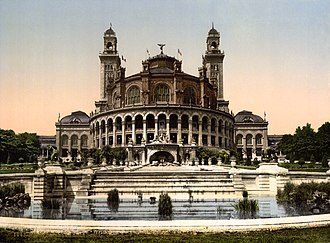
p 217 | Gabriel Davioud, (French architect, 1823–81), who basically redesigned Paris, i.e., Trocadero, Jardin des Champs-Élysées.
Showing posts with label Paris. Show all posts
9.12.2021
Time Regained vol VI pp 217-30
p 218 | Charterhouse of Pavia = Carthusian monastery of Pavia (Italy).
p 218 | Martyrdom of Saint Sebastian
p 218 | Andrea Mantegna (c. 1431-1506), Italian artist.
p 218 | Passy is an area of Paris, in the 16th arrondissement, on the Right Bank, traditionally home to many of the city's wealthiest residents.
p 219 | The Bois de Boulogne is a large public park on the western edge of the 16th arrondissement of Paris, near the suburb of Boulogne-Billancourt and Neuilly-sur-Seine. It was created between 1852 and 1858 during the reign of the Emperor Louis Napoleon.
p 229-30 | Ferdinand Barbedienne (French artist, 1810-92). Bronze worker, reproduced ancient and modern sculptures (Rodin) in bronze.
7.01.2020
Interesting Random Links to the Man & the Novel
In the Footsteps of Marcel Proust by Wm Friedkin, 5/15/17 NYTimes: an essay with photos of Proust’s Illiers-Combray
French archives & seminars & papers on Proust
Chris Taylor's Marcel Proust Chris Taylor's Excellent Ephemera Site (still active in 2019)
Marcel Proust : Writing and the Arts
The Enduring Romance with Proust, an essay by Dan Shewan (2012)
Did Proust invent "air guitar"? It's related to a poem entitled "The Mortal Coil" by Billy Collins, page 106 in this book. (2.21.13)
ArtCritical: review of The World of Proust as seen by Paul Nadar.
ArtCritical: review of Paintings in Proust: A Visual Companion to “In Search of Lost Time” by Eric Karpeles
How To Dress The Guermantes Way: “Proust’s Muse” at FIT (2016-17)
Someone asked The Paris Review which translation of Proust to read and their answer is "Start with Davis, then switch to Montcrieff/Enright.
From Paul La Farge’s Favorite Reads from 2011: "...And finally, the award for Most Shocking Rhythm Change near the End of a Long Novel goes to Marcel Proust for Le Côté de Guermantes, in which the narrator, having done more or less nothing for many hundreds of pages, finally, in a fit of rage, stomps on the Baron de Charlus’s hat." (12/15/11)
Lorin Stein, new editor of the Paris Review, on Jewish writers... "...The other writers, the ones who are our age—for them it’s a fact of life that doesn’t need to be celebrated particularly. It almost sounds odd to call Lipsyte a Jewish writer. We call Proust a Jewish writer, I think, because he wrote so much about being Jewish. (Plus—if you can claim Proust, you claim Proust.) ..." (6/2/11)
Colm Tóibín on The Sweet Troubles of Proust , Proust & Swann’s Way: 100th Anniversary on view at The Morgan Library (2013)
Essay/Review of the last three Penguin novels (2005) in Slate (Mar. 3, 2005)
Literary Fallout from André Aciman's review of the Penguin UK edition (2005) (Apr. 6, 2006) in the NY Review of Books.
"...Through his eyes we see what actuates the dandy and the lover and the grandee and the hypocrite and the poseur, with a transparency unexampled except in Shakespeare or George Eliot. And this ability, so piercing and at times even alarming, is not mere knowingness. It is not, in other words, the product of cynicism. To be so perceptive and yet so innocent—that, in a phrase, is the achievement of Proust. It is also why one does well to postpone a complete reading until one is in the middle of life, and has shared some of the disillusionments and fears, as well as the delights, that come with this mediocre actuarial accomplishment." From The Acutest Ear in Paris : Christopher Hitchens examines the Davis translation in The Atlantic Monthly, Jan 2004
One-minute video of Alain de Botton telling why he wrote his self-help book, How Reading Proust Can Change Your Life. See many other videos by searching on "Marcel Proust."
Sven Birkerts writes "Master of Reveries: Why Proust? And why now?" in The Atlantic Online, 9/7/2000. It promotes Shattuck's book, Proust's Way (reviewed in NYTimes1 and NYTimes2). And here is Chapter 1.
An excerpt from Madame Proust by Evelyne Bloch-Dano, a biography of Jeanne Weil Proust. For Mother's Day!
Man Ray took the last photo of Marcel Proust. Marcel Proust is mentioned in this review of a Man Ray exhibit.
Want to buy a lightly-revised galley proof of Combray? Someone did.
Stephane Heuet's series of graphic-novel versions of RTP. Amazing books. NPR interviewed (4 minutes) Heuet when the combined & re-translated English edition came out in 2016 to mixed reivews.
Proust mugs & tote bags for sale, celebrating the end of a year of reading at the Cork-Lined Room blog. Oh, and laptop sleeves, and more over at Society6, books, art, and trinkets on Etsy.
In case you wonder how it looked in Victorian Paris...
1-hour video of Professor Carter talking about his biography of Proust on Book-TV
Full text of something called The Women of the French Salons.
Guardian's movie reviews of Proust on film.
The Desert of After Proust... and how would he use his smartphone? Here are the entire archives of Hannah Gersen's Proust blog at The Millions site.
=======================
Paul Murray, author of Skippy Dies, is reading Proust.
Angel: What are you reading? Murray: I’m reading Within a Budding Grove. Proust.
Angel: Is In Search of Lost Time a book you’ve meant to read for a long time and finally got around to reading? Murray: Well, actually I was pretty daunted by it, so I’d set it by for my retirement. But the book I’m working on now has a French narrator so I thought I should bone up on French culture. I’m reading it in English, but I thought that this was a key text and it is the key text. I’m realizing while I’m reading it that it is so influential.
Angel: Which translation are you reading? Murray: I’m reading the Scott Moncrieff translation.
Angel: How many hours a day do you devote to that? Murray: Nabokov wrote an essay about the first volume in which he says, “In Search of Lost Time makes up 4,000 pages which are about a month’s reading.” That’s Nabokov. It took me a month to read the first volume. The sentences are so convoluted you have to read almost every single one twice. The first time round you’re just looking for the verb, then you go back and work out what he’s talking about. So it’s slow going. And I’m reading other stuff, too. {....}
11.22.2016
The Captive V pp 231-60
p 231 | Passy : an area of Paris located in the 16th arrondissement, on the Right Bank, home to many of the city's wealthiest residents.
p 233 | ... Rue de Berri and Rue Washington are in the same neighborhood, the 8th arrondissement of Paris,
p 233 | Lemuel Gulliver is the fictional protagonist and narrator of Gulliver's Travels, a novel written by Jonathan Swift, first published in 1726.
p 235 | Janus is the god of beginnings, gates, transitions, time, duality, doorways, passages, and endings. He is usually depicted as having two faces, since he looks to the future and to the past.
p 237 | ... old French silver... This is only from 1882.
p 249 | Claude-Philibert Barthelot, comte de Rambuteau (1781–1869), Préfet of the former Départment of the Seine, caused pissoirs to be installed on Paris streets. See also pissotière.
p 255 | Neurasthenia.... more than just neurotic?
p 257 | Le Pêcheur d'Islande (An Iceland Fisherman, 1886 novel by Pierre Loti); Tartarin de Tarascon (Tartarin of Tarascon, 1872 novel by Alphonse Daudet)
p 26o | Eyeglasses in 19th century France
p 233 | ... Rue de Berri and Rue Washington are in the same neighborhood, the 8th arrondissement of Paris,
p 233 | Lemuel Gulliver is the fictional protagonist and narrator of Gulliver's Travels, a novel written by Jonathan Swift, first published in 1726.
p 235 | Janus is the god of beginnings, gates, transitions, time, duality, doorways, passages, and endings. He is usually depicted as having two faces, since he looks to the future and to the past.
p 237 | ... old French silver... This is only from 1882.
p 240 | Anaxagoras (c. 500—428 B.C.E.): Anaxagoras of Clazomenae was an important Presocratic natural philosopher and scientist who lived and taught in Athens for approximately 30 years.
p 240 | .... the Apostles at Pentecost...The Christian feast day of Pentecost is 7 weeks after Easter Sunday. It commemorates the descent of the Holy Spirit upon the Apostles and other followers of Jesus Christ while they were in Jerusalem celebrating the Feast of Weeks, as described in the Acts of the Apostles.
p 243 | amyl = amyl nitrite, a vasodilator, may have been used to treat / prevent chest pain (angina).
p 249 | Claude-Philibert Barthelot, comte de Rambuteau (1781–1869), Préfet of the former Départment of the Seine, caused pissoirs to be installed on Paris streets. See also pissotière.
p 255 | Neurasthenia.... more than just neurotic?
p 257 | Le Pêcheur d'Islande (An Iceland Fisherman, 1886 novel by Pierre Loti); Tartarin de Tarascon (Tartarin of Tarascon, 1872 novel by Alphonse Daudet)
p 26o | Eyeglasses in 19th century France
8.28.2016
The Captive V pp 133-147
| The old Palais du Trocadéro |
p 135 | Empfindung = sensation, feeling, emotion; empfindelei = sentimentality.

p 135 | "...plants which bifurcate..." :
![]() |
| Photo: Parisian Fields |
p 146 | "... iron shutters.... lowered..."
p 147 | Booksellers' door of Rouen Cathedral... (Escalier de la Librairie)
![]() |
| http://www.flickr.com/photos/cloudsoup/3441624647/ |
8.01.2016
The Captive V pp 47-64
p 47 | "...yellow dress with big black flowers...": Or maybe the black dress with the big yellow flowers...p 47 | "... things from Callot's or Doucet's or Paquin's ...": This wonderful page from the Glamour Daze blog should make everything clear.
p 48 | Lady Warwick was Daisy Greville, Countess of Warwick, lover of King Edward VII of England. Not sure which Duchess of Marlborough Oriane is referring to; I like this one, so French!
p 52 | The Galeries Lafayette is an upmarket French department store, founded in 1912. Its flagship store is on Boulevard Haussmann in the 9th arrondissement of Paris.p 52 | This is a little later than the period the book is in... There is some gay French history on the left side of this page.
p 53 | "Xerxes, son of Darius, ordering..." : After the battle of Salamis, the Persian fleet was destroyed by a storm in the Hellespont. Xerxes, the King of Persia, is said to have vented his feelings by having his servants beat the sea with rods.
p 54 | Social classes in 19th century Paris, with a chronology. A little earlier than the book's time setting. Nicely done.
p 54 | "... Jupien's niece had been, when scarcely more than a child, 'in trouble'..." : Consider these historical notes: 1832 - an age of consent is introduced on 28 April, fixed to 11 years for both sexes.
1863 - Age of consent is raised to 13 years.
p 57 | The House of Croy is an international family of European nobility which held a seat in the Imperial Diet from 1486, and was elevated to the rank of Princes of the Holy Roman Empire in 1594. In 1913 the family had branches in Belgium, France, Austria and Prussia. And the Princes Murat also.
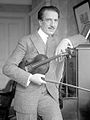
p 59 | hand cramps in violinists -- a real thing!
p 60 | According to this site, before World War I, when France was firmly on the gold standard, a franc was worth about 19 cents, or 5.18 to the dollar. So, 5000 francs at that time would have been about $950. Earlier, it could have been more, so maybe about $1000.
p 63 | Violinist Jacques Thibaud (1880-1953) can be heard here.
p 64 | Syringa is lilac, pronounced like this. Well, seh-RING-gah. 5.12.2016
The Captive V pp 1-27
p 3 | Russian ballet=Ballets Russes
p 3 | "Les douleur sont des folles/Et qui les écoute est encore plus fou." Albertine hums this refrain from Biniou, by Hippolyte Guérin, music by Emile Durand (1830-1903).
p 4 | "Une chanson d'adieu sort des sources troublées..." From Pensée d'automne by Armand Silvestre, music by Jules Massenet, French opera composer, 1842-1912.
p 13 | Assuerus = Ahasuerus, King of Persia, in the play Esther, by Racine., here Act I, Scene 3

p 15 | Parc des Buttes Chaumont: 5th largest park in Paris, opened in 1867. The park took its name from the bleak hill on the site, which, because of the soil's chemical composition, was almost bare of vegetation; it was called Chauve-mont, or bare hill.
p 16 | coalheaver = one who feeds coal into a furnace
p 20 | Gomorrah: Sodom and Gomorrah were cities named in the Bible, the Torah and other religious texts, destroyed by God in fire and brimstone because of their lack of hospitality & wickedness. Proust here seems to be using it to refer to the rampant lesbianism he imagined at Balbec.
p 27 | Arquebus : an early muzzle-loaded firearm, sensitive to humidity.
p 3 | "Les douleur sont des folles/Et qui les écoute est encore plus fou." Albertine hums this refrain from Biniou, by Hippolyte Guérin, music by Emile Durand (1830-1903).
p 4 | "Une chanson d'adieu sort des sources troublées..." From Pensée d'automne by Armand Silvestre, music by Jules Massenet, French opera composer, 1842-1912.
p 13 | Assuerus = Ahasuerus, King of Persia, in the play Esther, by Racine., here Act I, Scene 3
p 15 | Parc des Buttes Chaumont: 5th largest park in Paris, opened in 1867. The park took its name from the bleak hill on the site, which, because of the soil's chemical composition, was almost bare of vegetation; it was called Chauve-mont, or bare hill.
p 16 | coalheaver = one who feeds coal into a furnace
p 20 | Gomorrah: Sodom and Gomorrah were cities named in the Bible, the Torah and other religious texts, destroyed by God in fire and brimstone because of their lack of hospitality & wickedness. Proust here seems to be using it to refer to the rampant lesbianism he imagined at Balbec.
4.12.2016
Sodom and Gomorrah IV pp 692-
Sapphism in 19th century France
3.06.2016
Sodom and Gomorrah IV pp 611-625
p 612 | "Esther heureuse...": the titles of three of the four sections of Splendeurs et misères des courtisanes.
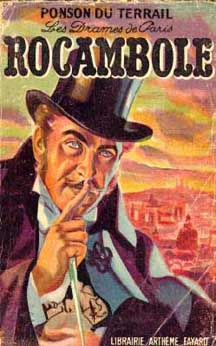
p 612 | Rocambole was the hero of more than 30 adventure novels written by Alexis Ponson du Terrail (1829-71), as well as later writers. The adjective rocambolesque usually means a fantastic adventure.
p 612 | "...moult sorbonagre, sorbonicole et sorboniforme...": a scathing Rabelaisian way of referring to a pedantic doctor from the Sorbonne, perhaps translatable as "Sorbonnified, Sorbonniculous, and Sorbonniform."
p 612 | "The quart d'heure de Rabelais...": popular phrase meaning "the moment of reckoning." An explanatory anecdote from a comic incident from the writer’s life. "One day he was in Lyon and wanted to travel to Paris. He had no money and so he marked several sachets of sugar “Poison for the King” and left them lying prominently around. He was arrested and taken to Paris, thus getting a free ride. King Francis I laughed so hard when he heard about it that he happily paid for the trip." Literally, "the quarter-hour of Rabelais," which is amusingly echoed in Andy Warhol's "15 minutes of fame."
p 613 | "Chateaubriand aux pommes": Sturrock says this is "Chateaubriand steak served with apple," but I think the dish is really served with potatoes (pommes frites, pommes de terres...).
p 613 | gnōthi seauton : Greek for "Know thyself."
p 613 | Jean-Martin Charcot, 19th century French neurologist.
p 614 | "...holy terror Ovid..." Ovid wrote "Materiam superabat opus" (Metamorphoses II, 5), or "The workmanship surpassed the material" (form over content).
p 614 | "Meudon... ": Meudon, now part of Paris, was the parish of which Rabelais was the curé; Ferney was the Genevan home of Voltaire; the Vallée-aux-Loups, near Sceaux, was where Chateaubriand lived for several years; Les Jardies was the name of Balzac's house in Villa d'Avray; the "Polish woman" was Mme Hanska, whom Balzac married in 1850, shortly before his death and the inspiration for many of his characters. (Sturrock)
p 614 | Hippolyte Taine complained in a well-known essay on Balzac, that the Comedie humaine contained too much that was morbid or unnatural, and did not meet his literary concepts of "race, milieu, et moment." See his Wiki page for an interesting explanation.
p 617 | Zénaïde, French form of Zenaida, a feminine form of "Zeus."
p 618 | Diane de Maufrigneuse, main character in Balzac's novel Les Secrets de la Princesse de Cadignan, part of the Comedie humaine.
p 620 | "cut a dash" = (Br.) Be stylish or impressive in one’s dress or behavior, e.g. "The Foreign Secretary wanted to cut a dash in Brussels."
p 620 | Paul Thureau-Dangin (1837-1913) was a Catholic historian, member of the Académie française. Gaston Boissier (1823-1908) was a French classical scholar, and secretary of the Académie française.
p 620 | Boissier is a chocolatier, founded in 1827.
p 621 | ...40bis Boulevard Malesherbes...: For most of his life (until 1900) Proust lived at 9 boulevard Malesherbes, near the Madeleine church, where the family moved in 1873 after his brother Robert was born. Proust himself had lived with his parents at 9 Boulevard Malesherbes. His maternal grandparents lived at 40bis rue du Faubourg-Poissonniere.
p 621 | Marc-Joseph-Edgar Bourdon Vatry (baron de, 1828-1891)
p 612 | Rocambole was the hero of more than 30 adventure novels written by Alexis Ponson du Terrail (1829-71), as well as later writers. The adjective rocambolesque usually means a fantastic adventure.
p 612 | "...moult sorbonagre, sorbonicole et sorboniforme...": a scathing Rabelaisian way of referring to a pedantic doctor from the Sorbonne, perhaps translatable as "Sorbonnified, Sorbonniculous, and Sorbonniform."
p 612 | "The quart d'heure de Rabelais...": popular phrase meaning "the moment of reckoning." An explanatory anecdote from a comic incident from the writer’s life. "One day he was in Lyon and wanted to travel to Paris. He had no money and so he marked several sachets of sugar “Poison for the King” and left them lying prominently around. He was arrested and taken to Paris, thus getting a free ride. King Francis I laughed so hard when he heard about it that he happily paid for the trip." Literally, "the quarter-hour of Rabelais," which is amusingly echoed in Andy Warhol's "15 minutes of fame."p 613 | "Chateaubriand aux pommes": Sturrock says this is "Chateaubriand steak served with apple," but I think the dish is really served with potatoes (pommes frites, pommes de terres...).
p 613 | gnōthi seauton : Greek for "Know thyself."
p 613 | Jean-Martin Charcot, 19th century French neurologist.
p 614 | "...holy terror Ovid..." Ovid wrote "Materiam superabat opus" (Metamorphoses II, 5), or "The workmanship surpassed the material" (form over content).
![]() |
| Hanska by Delmont |
p 614 | Hippolyte Taine complained in a well-known essay on Balzac, that the Comedie humaine contained too much that was morbid or unnatural, and did not meet his literary concepts of "race, milieu, et moment." See his Wiki page for an interesting explanation.
p 617 | Zénaïde, French form of Zenaida, a feminine form of "Zeus."
p 618 | Diane de Maufrigneuse, main character in Balzac's novel Les Secrets de la Princesse de Cadignan, part of the Comedie humaine.
p 620 | "cut a dash" = (Br.) Be stylish or impressive in one’s dress or behavior, e.g. "The Foreign Secretary wanted to cut a dash in Brussels."
p 620 | Paul Thureau-Dangin (1837-1913) was a Catholic historian, member of the Académie française. Gaston Boissier (1823-1908) was a French classical scholar, and secretary of the Académie française.
p 620 | Boissier is a chocolatier, founded in 1827.
p 621 | ...40bis Boulevard Malesherbes...: For most of his life (until 1900) Proust lived at 9 boulevard Malesherbes, near the Madeleine church, where the family moved in 1873 after his brother Robert was born. Proust himself had lived with his parents at 9 Boulevard Malesherbes. His maternal grandparents lived at 40bis rue du Faubourg-Poissonniere.
p 621 | Marc-Joseph-Edgar Bourdon Vatry (baron de, 1828-1891)
labels:
Characters,
Definitions,
Food,
Humor,
Paris,
People,
Places,
Sodom & Gomorrah,
Writers
1.09.2014
The Guermantes Way III p 537-551
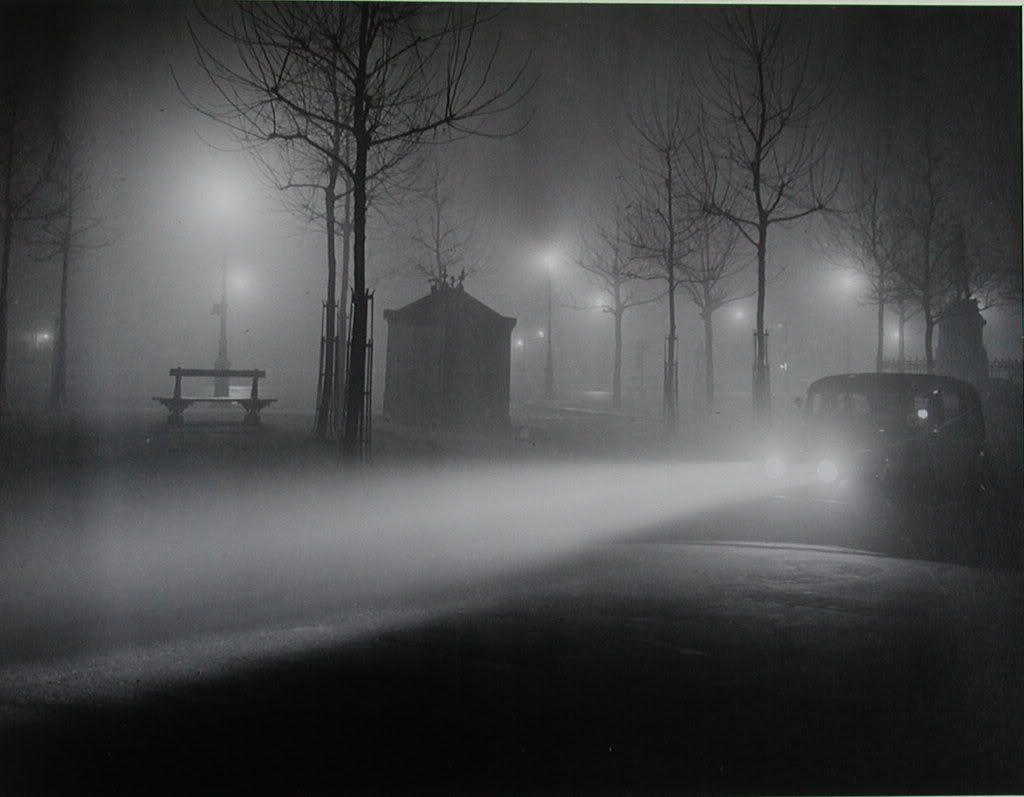
p 539 | Paris in fog
p 539 | Jews used to cover their heads with ashes in times of mourning...
p 540 | Nietzsche cut himself off from Wagner's music.... More on Proust and Nietzsche
p 544 | Le Figaro: French daily newspaper.
![]() |
|
|
p 547 | Pillar of Fire that guided the Hebrews.
p 548 | Arabian roc
p 548 | Zola trial and this Zola trial
p 549 | Melanie Louise Sophie Renouard de Bussiere, better known under her married name Countess Edmond de Pourtales (1836-1914), was one of the "queens of Paris" under the Second Empire. Marquise de Galliffet.
p 549 | Revolving doors
p 550 | Dignus est intrare. Latin for "He is worthy to enter." Also, this phrase is found in Molière's comedy-ballet Le Malade imaginaire.
p 551 | Rond-Point of the Avenue des Champs-Elysées
2.10.2011
Within a Budding Grove (vol II pp 241-51) Notes for February 2011
p 242 | Grebe: a diving bird without webbed feet. Really nice photo of a French grebe is here; look at the large size to see feather details.
p 242 | Cockade : a badge on a hat; more pictures here.
p 243 | 1928 lithograph advertising Maitre Fleurs Naturelles, an important Parisian florist of the day.
p 244 | LACHAUME was -- and still is -- one of the important florists in Paris. Probably as expensive as Odette said... [
p 246 | Lohengrin is an opera by Richard Wagner (wiki). Here's a synopsis of Lohengrin at the Metropolitan Opera House website.
p 242 | Cockade : a badge on a hat; more pictures here.
p 243 | 1928 lithograph advertising Maitre Fleurs Naturelles, an important Parisian florist of the day.
p 244 | LACHAUME was -- and still is -- one of the important florists in Paris. Probably as expensive as Odette said... [
p 246 | Lohengrin is an opera by Richard Wagner (wiki). Here's a synopsis of Lohengrin at the Metropolitan Opera House website.
2.01.2011
10.12.2010
Within a Budding Grove (vol II p 122-27) Notes October 2010
p 127 | Louis-Philippe, Count of Paris (1838-94)
p 124-25 | Faubourg Saint-Germain: fashionable Parisian district, where most of Swann's old friends were.

p 124-25 | Faubourg Saint-Germain: fashionable Parisian district, where most of Swann's old friends were.

p 122-23 | Dreyfus Affair (1894-1906): more to come
p 124 | THE ALMANACH de GOTHA: Europe's Nobility Reference Book
Madame de Marsantes (Countess) was the sister of Charlus and Basin (Duc de Guermantes); mother of Robert de Saint-Loup, niece of Mme de Villeparisis. She was the one person who disobeyed Lady Israels by being "at home" to Odette, until the day they arrived together.
p 125 | Swann's friend, Robert Philippe d’Orléans (1840–1910), was the Duc de Chartres and claimant to the throne. He was the Prince, but this confused Odette, who thought he was only a duke.
p 124 | THE ALMANACH de GOTHA: Europe's Nobility Reference Book
Madame de Marsantes (Countess) was the sister of Charlus and Basin (Duc de Guermantes); mother of Robert de Saint-Loup, niece of Mme de Villeparisis. She was the one person who disobeyed Lady Israels by being "at home" to Odette, until the day they arrived together.
p 125 | Swann's friend, Robert Philippe d’Orléans (1840–1910), was the Duc de Chartres and claimant to the throne. He was the Prince, but this confused Odette, who thought he was only a duke.
p 125 | Aisne: Department in northern France. Odette thought the Guermantes family were from here. They were not. Another gaffe.
5.27.2010
5.11.2010
Swann's Way (vol I p 134 ff). Swann in Love: Notes May 2010
p 134 |Portrait of Mahomet II by Bellini (also used in describing Bloch):
And Swann felt a very cordial sympathy with that Mahomet II whose portrait by Bellini he admired, who, on finding that he had fallen madly in love with one of his wives, stabbed her, in order, as his Venetian biographer artlessly relates, to recover his spiritual freedom. Then he would be ashamed of thinking thus only of himself, and his own sufferings would seem to deserve no pity now that he himself was disposing so cheaply of Odette's very life.
La maison dorée restaurant around 1860. Wikipedia has a history and this page shows the evolution of the building on the corner. (p. 526/384)
Possible letter-writers:
- Basin, Duc de GUERMANTES, as Prince des Laumes: (brother of Charlus & husband of Oriane). Consistently unfaithful: 481. Swann suspects he wrote the anonymous letter: 506-10.
- Palamède, Baron de CHARLUS (nicknamed Mémé; brother of Basin). At Combray, rumored lover of Mme Swann; 45, 137. Go-between with Odette: 442, 449, 456. Swann suspects he wrote the anonymous letter: 506-7.
- M. d'ORSAN (Swann’s friend..."they held the same views about everything", though was said to have indelicate relations with a certain wealthy woman). Swann suspects he wrote the anonymous letter: 506-8.
labels:
Artworks,
Characters,
Combray,
Paris,
Places,
Swann's Way,
Theatre
3.16.2010
Swann in Love (vol I, p 408) Notes on Week 24: Social Changes
The French, as soon as they invented photography and hot-air balloons, went up in the balloons and took pictures of Paris. Scroll down to #10 to see the lakes of the bois de Boulogne.
Genius photographer Jacques-Henri Lartigue took this famous photo of a fashionable woman walking her dogs.
p 411 | Victor Massé, French composer, 1822-84. NYTimes review. The Opéra-Comique de Paris.
<<== Chateau at Pierrefonds
"... take them to Beauvais or Saint-Loup-de-Naud.."
Eugène Viollett-le-Duc (1814-79), French architect.
Another group's thoughts on Swann.
Genius photographer Jacques-Henri Lartigue took this famous photo of a fashionable woman walking her dogs.
"End of century" woman by fashion illustrator Félix Fournery ==>>
From Paris from the Earliest
Period to the Present Day; Volume 1,
by William Walton, courtesy of Gutenberg.org.
Period to the Present Day; Volume 1,
by William Walton, courtesy of Gutenberg.org.
p 403 |A description of Chatou Renoir's 1881 paintingVlaminck's Chatou bridge. Beethoven's Moonlight Sonata:
A moment later she added, inarticulate with rage: "No, but, really, you see, the filthy creature..." using unconsciously, and perhaps responding to the same obscure need to justify herself -- like Françoise at Combray when the chicken refused to die -- the very words which the last twitches of an inoffensive animal in its death throes wring from the peasant who is taking its life. ... Madame Verdurin revealed (p. 405).
p 408 | Jacques-Bénigne Bossuet (September 27, 1627 – April 12, 1704) was a French bishop and theologian, renowned for his sermons and other addresses. He has been considered by many to be one of the most brilliant orators of all time and a masterly French stylist. Court preacher to Louis XIV of France, Bossuet was a strong advocate of political absolutism and the divine right of kings. He argued that government was divine and that kings received their power from God. He was also an important courtier and politician. (Wiki)
p 408 | Dante's Nine Circles of Hell :: And who's in the last circle, where Swann puts the Verdurins? (Remember their name is a homophone of "ver du rein" or "kidney worm". He says: "What a name! ... they are perfect specimens of their disgusting kind!")p 411 | Victor Massé, French composer, 1822-84. NYTimes review. The Opéra-Comique de Paris.
Odette figures: Although the meaning of his tirade was beyond her, she grasped that it was to be included among the scenes of reproach or supplication, scenes which her familiarity with the ways of men enabled her, without paying any heed to the words that were uttered, to conclude that men would not make unless they were in love; that, from the moment when they were in love, it was superfluous to obey them, since they would only be more in love later on.Tombs at Dreux
<<== Chateau at Pierrefonds
"... take them to Beauvais or Saint-Loup-de-Naud.."
Eugène Viollett-le-Duc (1814-79), French architect.
Another group's thoughts on Swann.
3.03.2010
Swann in Love (vol I, p 362 ff) Notes from week 22: What Not to Say at Dinner
"It looks as though it were done with nothing at all," resumed the painter. "No more chance of discovering the trick than there is in the 'Night Watch,' or the 'Regents,' and it's even bigger work than either Rembrandt or Hals ever did."
REMBRANDT (Dutch painter, 1606–69). Essay and larger image are at this Rembrandt site. Real title is Company of Captain Frans Banning Cocq and Lieutenant Willem van Ruytenhurch; in French, "La Ronde."
HALS, Frans (Dutch painter, c. 1580–1666). There are several Hals paintings in the Louvre, but not the Regents. Franz Hals' Women Regents of the Haarlem Almshouse (1664)
Franz Hals (Wiki)
"Except at the moment when he had called it "bigger than the 'Night Watch,'" a blasphemy which had called forth an instant protest from Mme.Verdurin, who regarded the 'Night Watch' as the supreme masterpiece of the universe (conjointly with the 'Ninth' and the 'Samothrace')..."
That would be Ludwig van Beethoven's Ninth Symphony (listen to the midi here, no downloading required) ; here's the Wiki write-up. It certainly was no stretch for Mme. Verdurin to regard this as a masterpiece -- so did everyone else!

<== Nike of Samothrace in the Louvre: different photos, Wiki write-up of Winged Victory, a fantastic audio/video exploration of the statue in detail, long view of the Daru staircase in the Louvre.
~~~~~~~~
"It's not a Japanese salad, is it?" she whispered, turning towards Odette.p 362 | The salad is described in the Dumas fils play Francillon. Here's the NY Times review (1887) and an academic essay (page 1 only) on Proust & Dumas fils. An etching of a scene from the play is for sale.
And then, in her joy and confusion at the combination of neatness and daring which there had been in making so discreet and yet so unmistakable an allusion to the new and brilliantly successful play by Dumas, she broke down in a charming, girlish laugh, not very loud, but so irresistible that it was some time before she could control it.
Here is a recipe (and photos) of the dish, made by Shari at her food blog, Whisk (she calls it "Salade Francillon"), with directions taken from the text of the play. Mme. Cottard's witty salad retort seems to be made of potato salad with mussels and truffles. Oh, here is a second write-up; apparently this dish became quite a Parisian fad!
"Now, Serge Panine--! But then, it's like everything that comes from the pen of M. Georges Ohnet, it's so well written. I wonder if you know the Maître des Forges, which I like even better than Serge Panine." Pardon me," said Swann with polite irony, "but I can assure you that my want of admiration is almost equally divided between those masterpieces." (p 364)Swann's word "masterpieces" echoes Mme. Verdurin's, a few paragraphs earlier. Forchville says:
What with him and M. Bréchot, you've drawn two lucky numbers to-night...mis-pronouncing Brichot's name for the second time. He's the hit of the party, but can't call the faithful by their correct names. Is he just careless? Brichot himself will later mispronounce de La Trémouailles Then he destroys Swann's carefully-maintained persona, by aligning him with "bores":
The creature spends all his time shut up with the La Trémoïlles, with the Laumes and all that lot!"Now then. The La Trémoïlles were a real French family line. The Laumes are created characters; however, we have already met them (in the future) in Combray and will be with them for the whole novel. The Princesse des Laumes will become Oriane, Duchesse de Guermantes (who looked at the Narrator in "her" church); the Prince des Laumes will become Basin, Duc de Guermantes when he accedes to the title. (He is also the brother of Charlus [in the garden with Gilberte & Odette in Combray, wearing white linen slacks] and Mme de Saint-Loup).
When Mme Verdurin hears this, she goes all catatonic:
"He saw then that in her fixed resolution to take no notice, to have escaped contact, altogether, with the news which had just been addressed to her, not merely to remain dumb but to have been deaf as well, as we pretend to be when a friend who has been in the wrong attempts to slip into his conversation some excuse which we should appear to be accepting, should we appear to have heard it without protesting, or when some one utters the name of an enemy, the very mention of whom in our presence is forbidden; Mme. Verdurin, so that her silence should have the appearance, not of consent but of the unconscious silence which inanimate objects preserve, had suddenly emptied her face of all life, of all mobility;... "actually echoing the white stillness of the Winged Victory statue a few paragraphs before. Then, to preserve the unanimity of the group, they attack Swann, insult his friends, Odette gets into the act, Forcheville and Brichot want to discuss Fenelon's concepts of intelligence, Saniette is berated for no good reason, but feels compelled to make up a nasty story that the Duc didn't know George Sand was a woman.
She had remarked, more than once, how Swann and Forcheville suppressed the particle 'de' before that lady's name. Never doubting that it was done on purpose, to show that they were not afraid of a title, she had made up her mind to imitate their arrogance, but had not quite grasped what grammatical form it ought to take.
There is a trick to it. And it's on this page... the Particule. Another reason she rejected their society?
Gustave Moreau paintings. Proust wrote an essay on him in 1898: Notes on the Mysterious World of Gustave Moreau.
Links :
Links :
{"And, in the first episode of the "Overture" to Swann's Way - the first novel in Marcel Proust's In Search of Lost Time sequence - a young, distraught Marcel is calmed by his mother as she reads from François le Champi, a novel which it is explained was part of a birthday package from his grandmother which also included La Mare au Diable, La Petite Fadette, and Les Maîtres Sonneurs. As with many episodes involving art in À la recherche du temps perdu, this reminiscence includes commentary on the work."}Palais de l'Industrie
Mme de Sevigné and Wiki (she reappears frequently)
"Se non è vero, è ben trovato." Translation: "If it's not true, it's a good story."
Kept woman vs. courtesan
Subscribe to:
Posts (Atom)

_-_P2752_-_Mus%C3%A9e_Carnavalet.jpg)