Pages

Showing posts with label Myth. Show all posts

3.30.2018

The Fugitive V pp 732-52

p 736 | "...Venus was the desire of Jove...": Not sure, but sources say Jove was the father of Venus.
photo: Lionel Allorge

p 737 | Chevreuse Valley, sw of Versailles.  ==>

p 742 | Fabrice del Dongo: Romantic hero of Stendhal's La Chartreuse de Parme.

p 744 | paintings by Titian in the Louvre (at left, Woman with a Mirror, c. 1515).

p 746 | (Mme de) Pompadour provided Louis XV...: Wikipedia disputes this here.

p 751 | ... geometry in space..., psychology in time...

3.01.2018

The Fugitive V pp 695-712

p 706 | Châtellerault : a commune in the Vienne department in the Nouvelle-Aquitaine region in France. It is located in the northeast of the former province Poitou (southwest of Paris).

p 707 | Loire River : France's longest river (171st in the world), 629 miles long, draining nearly 45, 200 square miles (more than a fifth of France's land area). It passes near Châtellerault.

p 710 | Painting of girl with her foot raised... Summer on the Beach (date unknown) by Paul-Gustave Fischer (Danish, 1860-1934). This is not the exact one, but an example.

p 711 | Leda and the Swan, drawing by Emmanuel Benner the Younger (French, 1836–1896)

3.14.2017

The Captive V pp 310-351

Nijinsky
p 314 | History of the Ballets Russes

p 316 | Jean Jaurès (French politician & historian, 1859–1914) was a French Socialist leader.

p 320 | rhino-gomenol: a decongestant & antiseptic ointment which Proust himself frequently used.


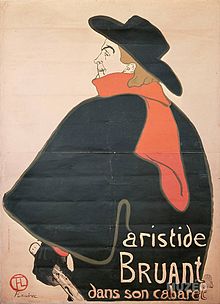
p 327 | Aristide Bruant (1851–1925) was a French cabaret singer, comedian, and nightclub owner.

p 328 | Maria Sophie in Bavaria (Queen of Naples, 1841–1925) was the last Queen consort of the Kingdom of the Two Sicilies. 

Empress Elisabeth of Austria and Duchesse d'Alençon were her sisters. Her niece, Elisabeth of Bavaria, Queen of Belgium (1876–1965) married Albert I (1875–1934), who reigned as King of the Belgians from 1909 to 1934. 

p 331 | Norns:  in Norse mythology, female beings who rule the destiny of gods and men. They roughly correspond to other controllers of humans' destiny, the Fates, elsewhere in European mythology.

p 334 | Sibyl: certain women of antiquity reputed to possess powers of prophecy or divination or supposed to utter the oracles and prophecies of a god.

p 337 | Kinderszenen ("Scenes from Childhood"), Opus 15, by Robert Schumann, is a set of 13 pieces of music for piano written in 1838. "Child Sleeps" and "Poet Speaks" are two titles from the work. Hear samples at this link.

p 339 | The Sistine Chapel ceiling, painted by Michelangelo between 1508 and 1512, is a cornerstone work of High Renaissance art.

p 350 | Song to the Evening Star & Elizabeth’s Prayer, both from Wagner's 1845 opera Tannhäuser. Tristan, Rhinegold, and the Mastersingers are other operas by the German composer, Richard Wagner, 1813-83.

p 351 | "...Pas d'Armes du Roi Jean.... the Contemplations...": Early vs later works by French author Victor Hugo, 1802-85.


10.30.2016

The Captive V pp 169-210


p 176 | Gregory the Great . . . Palestrina: Gregory the Great, Pope from 590 to 604, is supposed to have set the rules for Gregorian chant. A 16th-century Pope, Gregory XIII, had Palestrina adapt the old chants to the new liturgy of Pius V. (Clark)

p 180 | Charles de Sévigné, son of Madame de Sévigné.

p 185 | Les Fourberies de Nérine, a comedy in verse by by Théodore de Banville


p 195 | Danaides . . . Ixion: From Greek legend, they were condemned to never-ending tasks. The Danaides (the 50 daughters of Danaus) murdered their husbands and were condemned to spend eternity pouring water into a bottomless vessel. Ixion was attached by Zeus to a burning wheel which turned eternally in the Underworld.

p 196 | Trois Quartiers shop in Paris.

p 203 | midinette : Parisian seamstress or salesgirl in a clothes shop (French, from midi [noon] + dinette [light meal], since the girls had time for no more than a snack at midday). © Collins English Dictionary,, 12th ed, 2014

p 205 | Lamoureux concert = an orchestral concert society which once gave weekly concerts by its own orchestra, founded in Paris by Charles Lamoureux in 1881.

p 205 | The Longjumeau Postilion: An 1836 comic opera by Adolphe Adam. In 1915, the critic Frederic Masson wrote that this work compared to Wagner's Die Meistersinger.

p 207 | Human Comedy (title of Balzac's collected novels); The Legend of the Centuries (a collection of narrative poems by Victor Hugo); The Bible of Humanity (imaginative attempt at a synthesis of human history by Jules Michelet)

p 210 | 120 hp Mystère : a make of aircraft.

p 210 | L 'Education sentimentale: in Flaubert's novel of that name, the woman the hero loves sees in his house a portrait of a former mistress of his, whom she had known. She says, "I've seen that woman somewhere," but he replies, "Impossible, it's an old Italian painting."

6.02.2016

The Captive V pp 27-46

p 30 | Elysium (or the Elysian Fields), in Greek mythology, the final resting places of the souls of the heroic and the virtuous. It was ruled by Cronus.

p 30 | My landlady, Mme de Guermantes:  Having originally lived in a different part of Paris, at the beginning of The Guermantes Way, the narrator's family moves to a flat in the Hotel de Guermantes, in the Faubourg Saint-Germain. The side ranges of the front courtyard of the old aristocratic town house are now divided into flats and rented to middle-class families, while the ground floor supports small workshops of various kinds. The furthest range is occupied as a single house by the owners, the Duc and Duchesse de Guermantes, whom by this point in the story the narrator has got to know. Many of the main characters in the story (the narrator, Albertine, the Guermantes, Jupien and his niece) are thus now living on the same site, and can plausibly watch and/or meet each other on the stairs & in the courtyard. Charlus, brother of the Duc de Guermantes, erstwhile sexual partner of Jupien & protector of his niece, visits them all at this address, which is very convenient for the novelist's purposes, and not implausible; such multiple uses of old aristocratic dwellings was common in Paris throughout the 19th century, and its traces can still be seen in the Marais district, until its recent renovation.

p 31 | Carrying an umbrella was, in the 19th & early 20th centuries, a symbol of bourgeois status. Aristocrats were supposed to ride in carriages, poor people to get wet. Louis-Philippe, the 'Citizen King', was often caricatured with an umbrella in his hand.

p 32 | See a selection of early 20th century women's dresses

p 34 | Fortuny's Delphos gown --> 

Delphos
p 35 | Maurice Maeterlinck, Belgian writer, 1862-1949;  Prosper Mérimée, French author, 1803-70.  Paul-Louis Courier, French scholar, 1772-1825)

p 38 | Pampile:  pen-name of Mme Leon Daudet, wife of Proust's friend and author of Les bons plats de France: cuisine régionale (1913).

p 41 | coup d'éclat=feat or great feat; coup de tête=whim; coup de force = a sudden, violent act; rapprochement=establishment or resumption of harmonious relations, reconciliation

p 42 } The Dreyfus affair was a political scandal that from its beginning in 1894 divided France until it was finally resolved in 1906. [So, we think it's 1908-ish here in the text.]

p 44 | In the Aeneid, Achates ("good, faithful Achates", fidus Achates as he was called) was a close friend of Aeneas; his name became a byword for an intimate companion.

p 45 | Mayer Alphonse James Rothschild (1827-1905)

p 46 | Jupiter Tonans = Thundering Jove:  the aspect of Jupiter (Jove) who is the god of sky & thunder and king of the gods in ancient Roman religion & mythology. Here, it refers back to Basin knitting his Jupiterian brows on p 44.

p 46 | Édouard Adolphe Drumont (1844–1917) was a French journalist and writer. He founded the Antisemitic League of France in 1889, and was the founder & editor of the newspaper La Libre Parole.


3.03.2016

Sodom and Gomorrah IV pp 593-611

p 594 | tapette = a (feminine) noun with several meanings, often used informally to refer to someone as a homosexual.

p 596 | penates = Roman deities, household gods of the Romans & other Latin peoples. 
In proeliis non semper  means Not always in combat.
Non sine labore means Nothing is gained without effort  (motto of the Cardinal de Retz) (Sturrock)

p 596 | Hydrophobia, the historic name for rabies, especially a set of symptoms of its later stages, where the victim has difficulty swallowing, shows panic when presented with liquids to drink, and cannot quench its/their thirst.

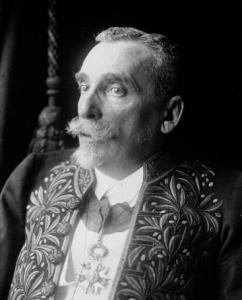
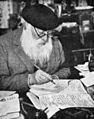
p 604 | Parmi les hommes: means among men. Henry Roujon was an academic, essayist and novelist, elected member of the Académie française in 1911. The real title of the book was Au milieu des hommes (which also means among men or in the midst of men, and it was a collection of critical essays. (Storrock)


Roujon

p 606 | Joseph-Raymond, comte Fournier-Sarlovèze (1836-1916) was an adminstrator and art historian, who created a connoisseurs' club in 1904 called La Société artistiques des amateurs.

p 611 | "It's so beautiful...: the satanic Carlos Herrera, alias Vautrin, had "befriended," first Eugène de Rastignac (in Le Pere Goriot) and then Lucien de Rubempré, who is with him when they find themselves passing Rastignac; Tristesse d'Olympio is one of Victor Hugo's best-known and beautiful poems, in which he revisits the scenes where he first fell in love with his mistress, Juliette Drouet. (Sturrock)

Perhaps this will help: "Honoré de Balzac’s Gay Anti-Hero" (an essay by Robert W. Mack):
Nearly 200 years ago, the French novelist Honoré de Balzac created a remarkable character, Vautrin, a charming, hyper-masculine master criminal, and a man who loves men. In three of Balzac’s most popular novels an important part of the plot turns on Vautrin’s love for an exceptionally handsome, much younger man: 21-year-old Eugène de Rastignac in Père Goriot, twenty-year-old Lucien de Rubempré in the climactic scene of Lost Illusions and in A Harlot High and Low (Splendeurs et misères) and 27-year-old Théodore Calvi (nicknamed “Madeleine”), who doesn’t appear until the end of the last book, when Vautrin is around fifty, but who had also been involved with Vautrin a decade before, at the age of eighteen.
p 611 | The "man of taste" was Oscar Wilde, who in his essay "The Decay of Lying" wrote, "One of the greatest tragedies of my life is the death of Lucien de Rubempré in Splendeurs et misères."

Honoré de Balzac (1799–1850) was a French novelist and playwright. La Comédie humaine (The Human Comedy) is the title of his multi-volume collection of interlinked novels and stories depicting French society in the period of the Restoration and the July Monarchy (1815–1848). The Comédie humaine consists of 91 finished works (stories, novels or analytical essays) and 46 unfinished works (some of which exist only as titles).

1.30.2016

Sodom and Gomorrah IV pp 515-42

Bergson
p 520-22 | Émile Boutroux (1845–1921), eminent 19th century French philosopher of science & religion, and an historian of philosophy. Firmly opposed to materialism in science, he was a spiritual philosopher who defended the idea that religion and science are compatible, at a time when the power of science was rising inexorably. His work is somewhat overshadowed by Henri Bergson. Elected to the Academy of Moral & Political Sciences (1898) & the Académie française (1912). Henri Bergson (1859–1941), major French philosopher, convinced many that immediate experience & intuition are more significant than abstract rationalism & science for understanding reality. He was awarded the 1927 Nobel Prize in Literature and in 1930, France awarded him its highest honour, the Grand-Croix de la Legion d'honneur. (wiki) 
p 521 | "like a dulcimer" refers to a couplet from Baudelaire's Fleurs du mal: "Your memory, like uncertain fables, / Wearies the reader like a dulcimer." (Sturrock)

p 521 | Porphyry of Tyre (c. 234–c. 305 AD) was a Neoplatonic philosopher who edited & published the Enneads, the only collection of the work of his teacher Plotinus. Plotinus (c.204/5 – 270) was a major philosopher of the ancient world. His teacher was Ammonius Saccas & he is of the Platonic tradition. Historians of the 19th century invented the term Neoplatonism and applied it to him & his philosophy, which was influential in Late Antiquity. Much of his biographical information comes from Porphyry's preface to the Enneads. (wiki)


p 525 | toquewoman's small hat without a brim made in any of various soft close-fitting shapes. Here are some outfits made for motoring

p 524 | Footman.

p 524-25  | "Prosper, dear hope ...": a line from Racine's Esther, wrongly attributed here to Athalie. In French, "Prospérez, cher espoir d'une nation sainte." "Come, come, my daughters": "Venez, venez, mes filles."  They must be summoned": "il faut les appeler."

p 527 | Euryclea: In the Odyssey, when Ulysses returns to Ithaca in disguise, his nurse Euryclea recognizes him by a scar on his foot or leg.

p 528 | "... faulty restorations at Notre-Dame" refers to the restorations done by Viollet-le-Duc and others between 1844 and 1864. (Sturrock) Also see this excerpt about church painting & restorations.

p 528 | "...those objects . . . mantelpiece:" a reference to Edgar Allan Poe's story "The Purloined Letter," translated into French by Baudelaire, in which a much-sought incriminating letter lies unconcealed. Text is here. (Sturrock)

p 528 | Etruscan

p 534 | Epreville
 
p 535 | The Okeanides (or Oceanides) were 3000 goddess Nymphs who presided over the sources of earth's fresh-water, ranging from rainclouds to subterranean springs and fountains.

p 538 | Montsurvent

p 541 | Hadrian (d. 138 CE), 14th Emperor of Rome, built the Pantheon in Rome and Hadrian’s Wall in northern Britain.

7.14.2015

Sodom and Gomorrah IV pp 342-357

p 343 | Amphitryon: in Greek mythology, during Amphitryon’s absence, Alcmene became pregnant by Zeus, who, disguised as her husband, visited her; she became pregnant again by her real husband when he returned the next day. Of these unions were born twin boys -- Iphicles was the son of Amphitryon, Heracles the son of Zeus. 

p 345 | Cliff of Criquetot: Not sure if this is it, but it is on the coast of France. 

p 346 | Marcel spent part of autumn 1891 at this beautiful manor in Trouville, home of Arthur Baignères, uncle of his school friend Jacques Baignères. Les Frémonts was the model for La Raspelière, summer home of the Verdurins. Built in an L-shape and on a small cliff, the property looks out on the Channel, and on the other side, the Norman countryside (my translation).


 p 347 | Revue des deux mondes; still being published here and an English introduction is here.


p 353 | French flower girl.

p 347 | Paper by Gene M. Moore on the little train (downloadable), referencing names of towns on the line.


p 356 | Les Maximes, first published in 1665, are by François, Duc de La Rochefoucauld (1613-80). Here's one: "Self-love is the greatest of all flatterers." Here are some more, and here's the whole book.

p 357 | "But won't you, indolent traveler, rest your head/And dream your dreams upon my shoulder?": from a poem by Alfred de Vigny (Storrock) 
Lyre

6.26.2015

Sodom and Gomorrah IV pp 323-342

p 324 | Prothyraia, Hera, Neptune, Nereus, Leto, Protogonos, etc. see, for example, Greek Mythology; styrax; saffron; myrrh; manna; Orphic hymns; Amphietes; Orgiophant

p 325 | Sapphism, derived from Sappho.

p 329 | Esther and Athalie by Jean Racine.
 
p 329 | Edgar Dégas drew, painted, and sculpted many ballet dancers. 

p 331 | atavism; seraglio; purlieus


p 331 | La Juive (The Jewish Woman): an opera, with music by Fromental Halévy (1799-1862), first performed in 1835.

p 331 | "C'est un courrier de cabinet": popular tune from Les Brigands, an opera by Jacques Offenbach (1819-80). It was the equivalent of a King's or Queen's messenger.

p 331-32 | Céleste Albaret (née Gineste, 1891-1984), married to a taxi-driver employed by Proust, became his housekeeper in 1914 and worked for him until his death in 1922. Her memories were published in 1973 as Monsieur Proust. (See video here.) Marie Gineste, her unmarried sister, sometimes helped; both originally were from Auvergne.


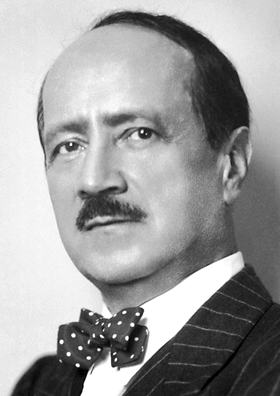
Leger / Perse
p 336 | Alexis Saint-Leger Leger (1887-1975), French poet and diplomat wrote under the name Saint-John Perse. Éloges appeared in 1911. Real name=Alexis Leger. Nobel Prize for Literature (1960).

p 336 | "Here below the lilacs die..."first line of a poem by Sully Prudhomme (1839-1907), French poet, who received the first Nobel Prize for literature, in 1901. This poem was often set to music. 

p 336 | Archibishop of Tours; Bishop of Rodez.

6.12.2015

Sodom and Gomorrah IV pp 245-305

Paul Decauville (1846-1922), industrialist and politician, who in­vented a narrow-gauge railway that could be demounted and transported. (Sturrock)

p 248 | Rosemonde: a slip of the pen for Albertine. (Sturrock)

“ascenseur”…“accenseur”: In French, the difference in sound is between “assenseur” and “acksenseur.” Ascenseur means “elevator” or “lift.” (Sturrock)

the recidivism… single negative: Proust’s lift boy omits the normal ne in front of the verb used negatively. Bélise is a character in Les Femmes savantes, in which Molière makes fun of grammatical pedantry. (Sturrock)

p 272 | Legend has the poetess Sappho throwing herself into the sea off Lesbos as a result of her unrequited love for a boatman. (Sturrock)

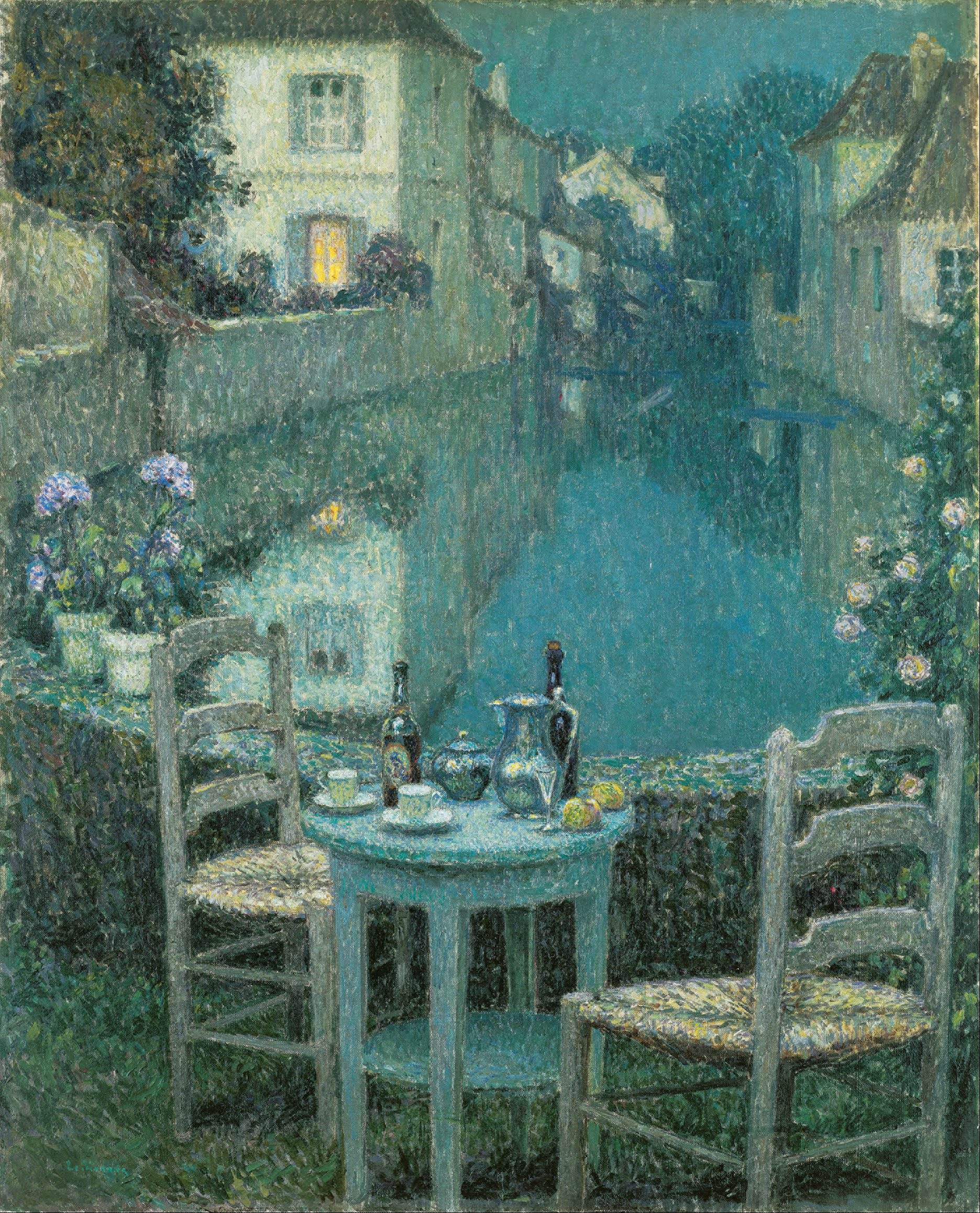
p 278 | Henri le Sidaner (1862-1939), a minor Impressionist, best known for his cityscapes of Bruges and Venice. (Sturrock)

p 287 | “M. Degas assures us…: Degas had much to do with the re­vival of Poussin’s reputation during the 1890s. (Sturrock)

p 289 | “Their giant’s wings…”: a line from a celebrated sonnet in which Baudelaire describes the ungainliness of an albatross when it is on the ground, using the bird as a symbol for the Poet. In French, “Leurs ailes de géant les empêchent de marcher.” (Sturrock)

The Congrégations were religious bodies that ran many schools (and some hospitals) in France; they were dissolved in 1904. “Wars in the East” refers to the 1904-05 war between Russia & Japan; the Japanese victory created European fears that the “yellow” races might prove too strong for the white. (Sturrock)

p 288, 290-91: Tetralogy: the four operas of Wagner’s Ring cycle.  (Sturrock)

Young-jules-massenet-1860s p 291 | Jules Massenet (1842-1912), a composer best known for op­eras, especially Manon and Don Quixote. (Sturrock)

6.11.2015

Sodom and Gomorrah IV p 203-245

p 205 | Caen

p 205 | French Legion of Honour
 
p 205 | L'Écho de Paris was a daily newspaper in Paris, 1884 to 1944.

Caillaux
p 205 | Joseph Caillaux (1863-1944), a Radical politician who served as prime minister from 1911 to 1912.

p 205 | "under the thimble ... thumb": the manager says "sous la coupole" instead of "sous la coupe," which improves the joke, since "sous la coupole" refers to the meeting place of the Académie Française (being re­ceived sous la coupole means being elected to the Academy). (Sturrock)


p 210 | M. Paillard was a well-known Paris restaurant, patronized by some of Proust's friends.

From  A Companion to Evelyn Waugh’s Brideshead Revisited: "Paillard’s was one of leading restaurants of Paris... created in 1880 when M. Paillard took over an establishment situated at the corner of the Rue de la Chaussée-d’Antin and the Boulevard des Capucines from the Bignon brothers. According to Larousse Gastronomique, ‘Favourite dishes were chicken Archduke, Georgette potatoes, calves’ sweetbreads with asparagus tips, fillets of sole Chauchat and, above all, stuffed duck, rivalling the duck au sang of the Tour d’Argent.’  The culinary term paillard is of course named after the famous chef, who trained under the great Escoffier himself. It is a thin slice of veal (or now, any meat) pounded even thinner until it is translucent and then grilled or fried for a few seconds only."
p 216 | Lethe: the stream of oblivion & forgetfulness, was one of the rivers of the underworld and its goddess (Greek mythology).
Jammes

p 218 | Francis Jammes (1868-1938) wrote simple poetry, often on the theme of innocence re­covered. The stag in this dream sequence appears to derive from a story by Flaubert, "The Legend of Saint Julien the Hospitaler," in which a stag predicts to Julien that he will kill his father & mother (this reference may be relate to Proust’s guilt about the death of his mother). The fork comes from an earlier draft of the novel, where the sound of a fork striking a plate triggers the Narrator’s involuntary memories (like the madeleine). In the final book (Time Regained), the fork has become a spoon.(Sturrock)  After reading Swann's Way, Jammes wrote Proust a letter comparing him to Shakespeare and Balzac.

p 219 | Aias: Greek for Ajax in the Iliad, who, in his madness killed sheep & shepherds after mistaking them for fellow Greeks. (Sturrock)


p 223 | barouche: carriage

p 223 |Jonathan, i.e., John the Baptist. (Sturrock)
 
p 228 | Duc d’Orléans…: only two of the four separate houses of Orléans ever succeeded to the throne, with the second occasion in 1830, with King Louis-Philippe; the title of Prince de Tarente belonged indeed to the house of La Trémoille.

p 229 |Mme Marie de Sévigné (1626-96), considered to be one France’s greatest letter-writers; Proust admired the quick, spirited impressionism of her style. Mme de Beausergent is a character, not a person.(Sturrock)

p 231-2 | Bertrand de Salignac-Fénélon (1878-1914) was killed in the opening months of WWI. He was descended from a brother of François de Salignac de La Mothe-Fénélon (1651-1715), writer, theologian, Archbishop; also known as the “Swan” of Cambrai, whose Aventures de Télémaque were interpreted as a veiled attack on Louis XIV.< (Sturrock) He was Proust's very good friend and partial model for Saint-Loup.


p 232 | René Duguay-Trouin, Sieur du Guay (1673-1736), a sailor whose statue stands in his native Saint-Malo. (Sturrock)

p 232 | whitlow: an infection of the tip of the finger.

p 234 | The Abbess of Fontevrault was Marie-Madeleine Gabrielle de Rochechouart (1645-1704), who was the older sister of Françoise-Athénaïs de Rochechouart (1640-1707), the Marquise de Montespan, who was the mistress of King Louis XIV

p 235 | Panathenaea: an Athenian festival to honor the goddess Athena, depicted on a frieze on the Parthenon, fragments of which are in the British Museum & the Louvre. (Sturrock)

p 240-1 | syncope ("sincup"): a short loss of consciousness and muscle strength, fainting, passing out.

p 243 | "angel lutanists, Italian cathedral, porphyry, jasper... " maybe Cappella Di San Brizio (Duomo) in Orvieto.

1.19.2015

Sodom and Gomorrah IV pp 123-42

p 123 | Don Juan: fictitious character symbolic of libertinism. (Don Juan. (2015). In Encyclopædia Britannica.)
p 123 | Gustave Jean Jacquet (1846-1909), painted genre scenes and society portraits.
,
               
           Is this the portrait of Mme de Surgis?
p 125 | ...married to a Bourbon princess...: this is the only mention of Charlus’s late wife's having been a Bourbon – that is, a member of the family of the family of the Kings of France between 1589 and 1848. (Sturrock)
p 126 | one louis: a gold coin worth twenty francs. (Sturrock)
p 128 | Uncle and Nephew, i.e. Nephew as Uncle, by Friedrich Schiller & L.-B. Picard.
p 129 | Giorgionesque...Giorgione on wiki. Did they mean like this?
Pastoral Concert. Louvre, Paris, which
it now attributes to Titian, c.1509.
p 130 | Scapin is a character in Les Fourberies de Scapin ("Scapin's Deceits"), a 3-act comedy by Molière; the traditional figure of the insolent valet in Italian comedy, imported into France by Molière. (Sturrock).
p 131 | ...send me away with a flea in my ear... a rebuke.
p 132 | Syndicate...
p 132 | Victurnien d'Esgrignon is a character in Balzac's novel Le Cabinet des Antiques.
p 132 | Emile Loubet was president of the Republic from 1899 to 1906, and thus during the time when the Dreyfus case was reopened. He was in favor of a review and reprieved Dreyfus after he had been found guilty for a second time. (Sturrock).
p 133 | definition of aristocrat
p 134 | Prussian blue
p 136 | The Restoration was the period immediately following the fall of Napoleon and the First Empire (Sturrock).
p 136 | deliquescent: becoming liquid or having a tendency to become liquid. Sturrock says: 'Ah! Green ...' ": the line (slightly misquoted) comes from a volume of parodies of Symbolist poetry entitled Deliquescences: Poemes decadents d'André Floupette (1885), written by Gabriel Vicaire and Henri Beauclair. In French, the quote reads, "Ah! Verte, combien verte était mon âme ce jour-la...."
p 140 | Jules, Cardinal Mazarin (1602-61), a great statesman of the 17th-century, founded the Bibliothèque Mazarine in Paris in 1642, a public library that became part of the Bibliotheque Nationale in 1930. (Sturrock).
p 140 | Athena Hippia (Sturrock: so called because she was supposed to have taught men how to control horses); Pallas Tritogeneia.
p 142 | Assyrian frieze


1.16.2015

Sodom and Gomorrah IV pp 119-23

p 119 | la barbe literally, "the beard," an expression meaning "what a drag.” (Sturrock)
p 119 | sphinxes along arms of chairs; see, for example, here.
p 119 | augural: the art or practice of an augur; divination. 2. the rite or ceremony of an augur. 3. an omen, token, or indication. Mid. Eng · Latin. 1325-75. Signifying the future : ominous, portentous, or auspicious.
p 119 | Pythia, oracle of Delphi.
p 120 | more geometrico: in the geometrical mode (Sturrock).
p120 | sibylline: "having a secret meaning" or "foretelling the future," like a fortune teller whose crystal ball reveals a sibylline message about what will happen. If you can predict this meaning, you may come from a family of psychics — or you may have a background in Greek mythology. Origins in the Greek word Sibulla, meaning "prophetess." Back in Greek & Roman times, a sibyl was a female oracle who delivered cryptic prophecies foretelling the future, often inspired by the deities.
p 120 | grimoire: a textbook of magic.
p 120 | children of Jupiter: Metis=first great spouse of Zeus. Themis=one of the first Delphic oracles. Eurynome=3rd bride of Zeus. See also 12 Olympians in the Greek pantheon.
p 121 | "suave, mari magno” (“how sweet when, on the open sea") are the first words of a passage by the Roman poet Lucretius where he reflects on the comfort of watching from the shore as the lives of others are imperiled by a storm out at sea; memento quia pulvis (“remember thou art dust") are words drawn from Genesis 3:19 and God's promise to Adam: "for dust thou art, and unto dust shalt thou return." (Sturrock)
p 121 | punchinello nose 
p 121 | The Valois were the reigning dynasty in France from 1328 to 1589. (Sturrock)
p 123 | camphorate - treat with camphor; subject to a process or treatment, with the aim of readying , improving, or remedying a condition; "process hair," "treat the water so it can be drunk," etc.

7.28.2014

Sodom and Gomorrah IV p 1-21

Sodom and Gomorrah (The Cities of the Plain)

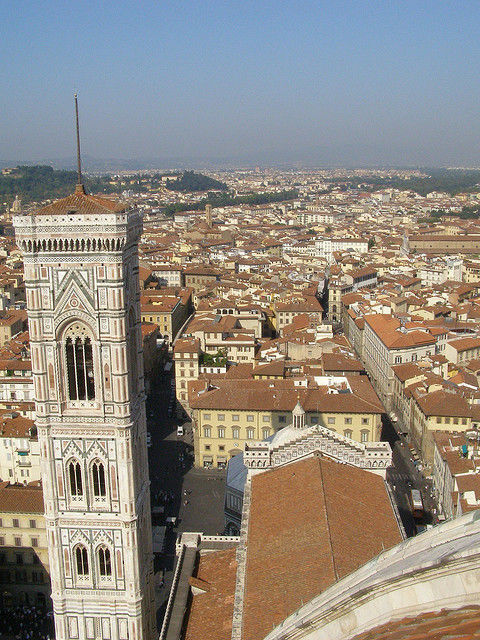
p 1 | "...rose-pink campanile..." (bell tower; this one is Giotto's in Florence); coach-house = carriage house;  eyrie or aerie: large nest of a bird of prey, especially an eagle, typically built high in a tree or on a cliff.

p 2 | pollination

the chapel at Combray     

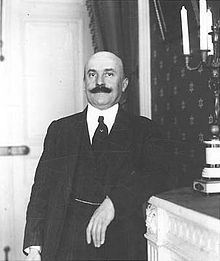
Robert de Montesquiou

 p 2 | Excellent essay on Count Robert de Montesquiou (above), who was a partial model for the Baron de Charlus...

p 7 | "... Beethoven's questioning phrases..." In Hammerklavier’s Adagio Sostenuto or the Sixteenth Quartet?

p 10 | Boer War (Second)

p 12 | Fanlight = window  transom

p 12 | pregnancy (of Nero) in the Golden Legend.

p 13 | Caliph of Baghdad dressed as a merchant 

p 14 | Gare d'Orléans; Orléans is about 83 miles ssw of Paris.

p 15 | Cathedral of Orléans

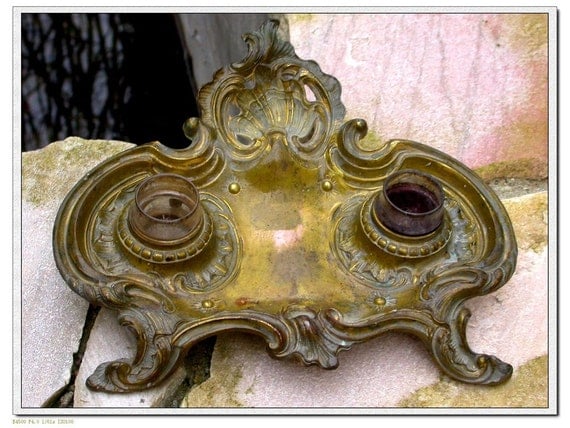
real penholder
stereoscope


p 15 | optical penholder  (stereoscope)

p 15 | ophthalmia = inflammation of the conjunctiva or the eyeball;

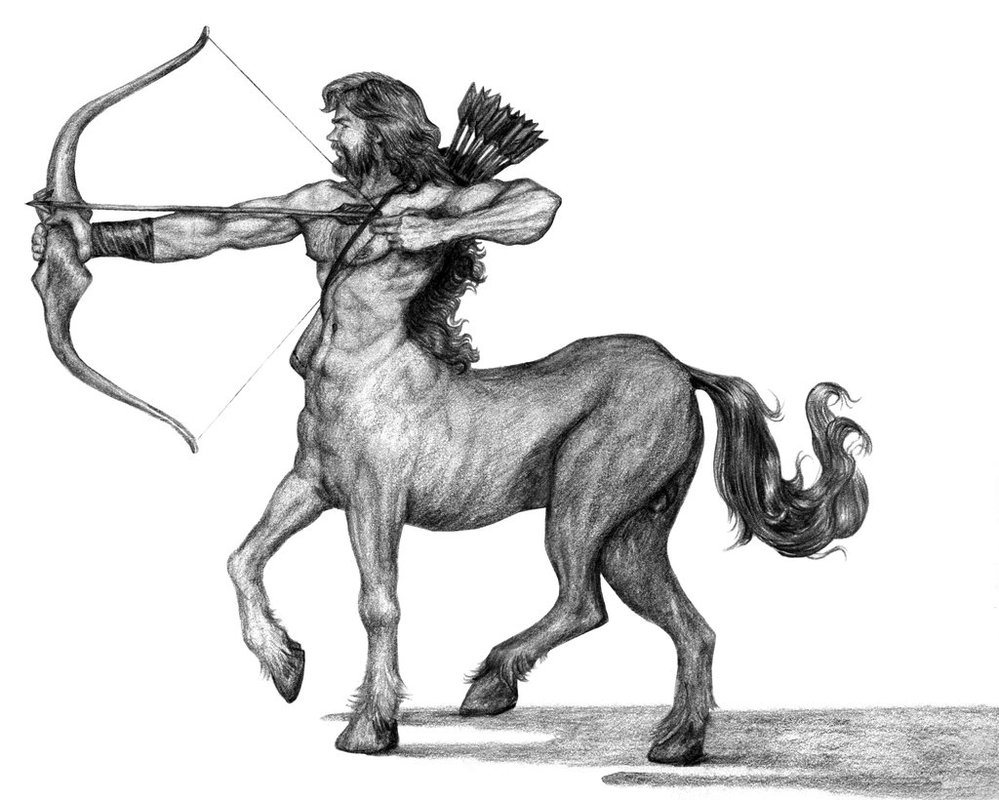
Centaur

p 15 | Diane  de Poitiers, mistress of King Henri II of France. Her Renaissance house in Orleans was destroyed in June 1940. {Sturrock, note 10}

p 16 | mantle in gules (heraldry); "I have three popes in my family": possibly an allusion to three Renaissance popes from the Medici family in Florence from whom Charlus is supposedly descended: Leo X, Clement VII, and Leo XI. {Sturrock, note 11}

p 18 | "... word dear to the ancient Greeks...";  Athena: the goddess who protects Ulysses in both the Iliad & the Odyssey. In Book XIII of the Odyssey, she finally reveals herself to him, having earlier appeared in the guise of an adolescent. {Sturrock, note 12}

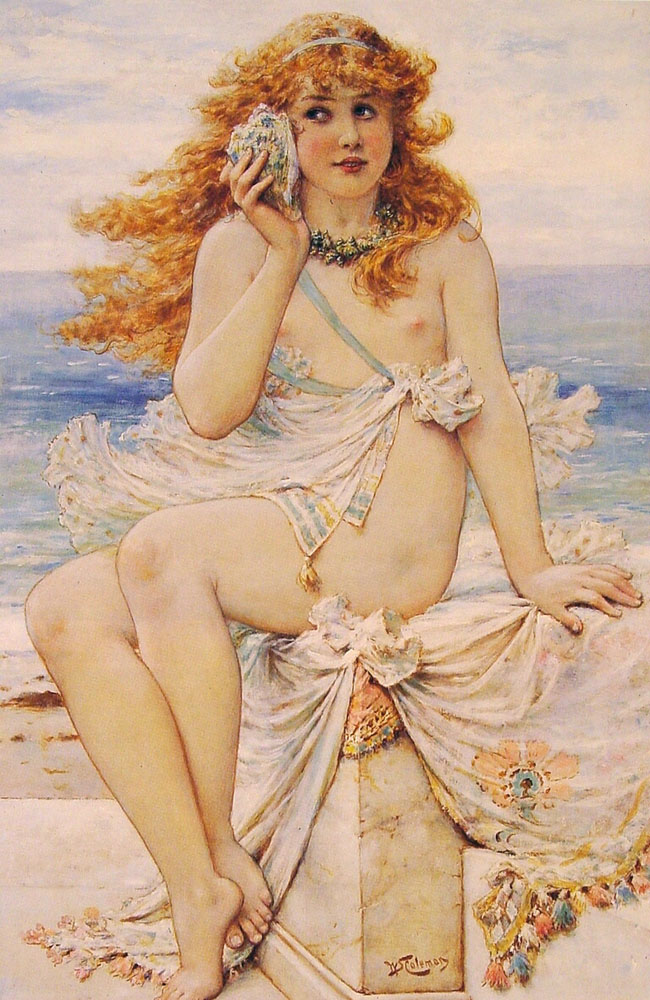
nymph
p 19 | Mene, Tekel, Upharsin (the writing on the wall); prophetic words written on the wall by the fingers of a man's hand during King Belshazzar's fatal feast in Babylon. They were interpreted by the prophet Daniel to mean that Belshazzar's reign, and indeed his life, were over (see Daniel 5). {Sturrock, note 13}

p 20 | A nymph in Greek & Latin mythology is a minor female nature deity usually associated with a specific location or landform. Not goddesses, nymphs are seen as divine spirits who animate nature, often shown as beautiful, young nubile maidens who dance and sing. Ephebes are young adolescent men of (military) training age.

p 20 | Original sin and racial predestination.

p 21 | ... honour precarious, liberty provisional, ... position unstable, ... the poet one day feted in every drawing room & applauded in every theatre in London, and the next driven from every lodging... (Oscar Wilde?, Wilde was convicted of gross indecency and sentenced to two years' hard labor, 1895-97.)

p 21 | turning the mill like Samson....

p 21 | "two sexes shall die... " Vigny poem, Proust's meaning, timing, connection to Baudelaire are all discussed beginning on page 18 of Proust's Lesbianism by Elisabeth Ladenson; a line from Alfred de Vigny's poem "La Colere de Samson", where Samson becomes disillusioned with women following his betrayal by Delilah. {Sturrock, note 14}