Pages

Showing posts with label Literature. Show all posts

8.14.2021

Time Regained VI pp 1-27

p 1-4 | the two ways (in French, with photos; translation to come); also here.
p 7: Chinese porcelain bowl


 p 7 | ... Léa dressed as a man... (cross-dressing)

p 8 |... Pascal's gulf.... From a poem titled "Le Gouffre"  ("The Gulf"), the opening lines of Baudelaire:


"Pascal avait son gouffre, avec lui se mouvant.
— Hélas! tout est abîme, — action, désir, rêve,"

"Pascal had his abyss that moved along with him.
— Alas! all is abysmal, — action, desire, dream,"


p 12 | Marienbad: Mariánské Lázně, a spa town in the Czech Republic. Most of its buildings are from its Golden Era in the second half of the 19th century, when celebrities & European rulers came to enjoy the curative carbon dioxide springs.


Empress Theodora
p 17 | Empress Theodora: (c.497-548 AD), powerful Byzantine empress, wife of Justinian I, said to have been a low-born actress.

p 21 | ...battle of Ulm...: on 16–19 October 1805 was a series of skirmishes that allowed Napoleon I to trap an entire Austrian army under the command of Karl Freiherr Mack von Leiberich with minimal losses and to force its surrender near Ulm in the Electorate of Bavaria  (wiki).  The Battle of Lule Burgas (1912) was here in the First Balkan War. (Sidenote: its emperor was Theodosius I. We see the fictional Theodosius II visit Paris twice during the novel.)


p 23 | La Fille aux yeux d'or (The Girl with the Golden Eyes): 1835 novel by Balzac, part of La Comédie humaine.


p 25 | Joseph Fourier (1768–1830) was a French mathematician and physicist known for initiating the investigation of Fourier series & their applications to problems of heat transfer and vibrations. The Fourier transform and Fourier's law are also named in his honor; also generally credited with discovering the greenhouse effect.


p 25 | Tobolsk is a town in Tyumen Oblast, Russia, located at the confluence of the Tobol and Irtysh Rivers. Founded in 1590, Tobolsk is the second oldest Russian settlement east of the Ural Mountains in Asian Russia, and is a historic capital of the Siberia region. In the early 1900s, it was famous as the administrative center of Grigori Rasputin's home province, and is located close to his birthplace.

 
p 26 | the Goncourt Brothers produced the Goncourt Journal together from 1850-1870, then by Edmond alone till 1896. It was a candid chronicle of the literary and artistic Parisian world in which they lived. Proust paid the Journal a tribute by including a pastiche* of it in Time Regained. Some say the Journal's obsessive chronicling of the most minute details of its authors' social lives and rendering of them into literary art anticipates Proust's novel.  (wiki) 


* A pastiche is a work of visual art, literature, theatre, or music that imitates the style or character of the work of one or more other artists. Unlike parody, pastiche celebrates, rather than mocks, the work it imitates. (wiki)

3.30.2018

The Fugitive V pp 732-52

p 736 | "...Venus was the desire of Jove...": Not sure, but sources say Jove was the father of Venus.
photo: Lionel Allorge

p 737 | Chevreuse Valley, sw of Versailles.  ==>

p 742 | Fabrice del Dongo: Romantic hero of Stendhal's La Chartreuse de Parme.

p 744 | paintings by Titian in the Louvre (at left, Woman with a Mirror, c. 1515).

p 746 | (Mme de) Pompadour provided Louis XV...: Wikipedia disputes this here.

p 751 | ... geometry in space..., psychology in time...

3.16.2018

The Fugitive V pp 712-32

p 720 | War of 1870 is the name used by the French for the Franco-Prussian War.

p 722 | Gilbert the Bad | see v. 1, p. 145: 
 "You may depend upon it, Mme. Octave," replied the Curé. "Why, it was just his Lordship himself who started the outcry about the window, by proving that it represented Gilbert the Bad, a Lord of Guermantes and a direct descendant of Geneviève de Brabant, who was a daughter of the House of Guermantes, receiving absolution from Saint Hilaire."  ... "Gilbert's brother, Charles the Stammerer, was a pious prince, but, having early in life lost his father, Pepin the Mad, who died as a result of his mental infirmity, ...Gilbert, wishing to be avenged on Charles, caused the church at Combray to be burned down, the original church, ... Nothing remains of it now but the crypt, into which Théodore has probably taken you, for Gilbert burned all the rest." 

p 725 | Da capo: an Italian musical term that means "from the beginning" (literally, "from the head").

p 731 | Gabriel Fauré: Le Secret (video), song for voice & piano in D flat major, Op. 23/3 (1880-81); Duc de Broglie's Secret du Roi; Golgotha (According to the Gospels, Golgotha was, a site immediately outside Jerusalem's walls where Jesus was crucified... Matthew's and Mark's gospels in Latin rendered Calvariæ Locus, from which the English word Calvary derives, trans. place of skulls, or Proust's Calvus Mons, or Bald Mountain); the Parc des Buttes-Chaumont in NE Paris, is the 5th largest park in the city.

p 732 | Pascal's Pensées : The Pensées ("Thoughts") is a collection of fragments on theology and philosophy written by 17th-century philosopher and mathematician Blaise Pascal.


8.09.2017

The Captive V pp 501-11

p 501 | Pianola (player piano); a Velasquez Infanta, for example Infanta Margarita Teresa in a Pink Dress (attributed);

p 503 | Sacred Variation for the Organ = from Vinteuil's septet at the Verdurin's.

p 506 | Jules Barbey d'Aurevilly (1808–89) was a French novelist and short story writer.

p 508 | Fyodor Dostoyevsky, 1821-81, Russian novelist. His novels: The Idiot (1868), Crime and Punishment (1866), The Brothers Karamazov (1880)

p 509 | Mihály Munkácsy (1844 – 1900) was a Hungarian painter, specializing in genre pictures and large-scale biblical paintings.

p 511 | Pierre Choderlos de Laclos (1741-1801) was a French novelist, best known for the 1782 epistolary novel Les Liaisons dangereuses (Dangerous Liaisons).  Stéphanie Félicité, Madame de Genlis (1746–1830) was a French writer.
  The Night Watch by Rembrandt.


7.24.2017

The Captive V pp 408-44

p 411 | Ultramontanism is a clerical political conception within the Catholic Church that places strong emphasis on the powers of the Pope. From the Middle Ages: when a non-Italian was elected to the papacy, he was said to be papa ultramontano, that is, a Pope from beyond the mountains (referring to the Alps). Foreign students at medieval Italian universities were also referred to as ultramontanes.

p 414 | Queen of Naples: Maria Sophie in Bavaria (1841-1925) was the last Queen consort of the Kingdom of the Two Sicilies.

p 418 | Camille Chevillard, French composer/conductor, 1859-1923.

p 422 | Hunt-the-thimble is a party game.

p 441 | Second Eclogue of Virgil

[ 442 | Causeries du Lundi: (tr. “Monday Chats”) were a series of informal essays by Charles Augustin Sainte-Beuve. The 640 critical & biographical essays on literary topics & European authors were published weekly in several Paris newspapers, on Mondays, for over 20 years (1849-69), later collected into 15 volumes. The most famous French exponent of the biographical method of literary criticism, Sainte-Beuve was Proust's critical bête noire: his writings on literature, published posthumously, were given the title Contre Sainte-Beuve. No doubt it amused him to present, through Brichot, Sainte-Beuve's work as a collection of stale gossip. (Clark notes)

p 442: Phidias (c. 480–430 BC) was a Greek sculptor, painter, and architect. His statue of Zeus at Olympia was one of the Seven Wonders of the Ancient World.

p 443 | Aspasia was an ancient Greek woman philosopher, who had a "salon" and maybe influenced Socrates.

p 444 | quod di omen avertant = May the gods avert this omen (Cicero)

p 444 | The Crime of Sylvestre Bonnard (1881) is the 1st novel of Anatole France.


3.14.2017

The Captive V pp 310-351

Nijinsky
p 314 | History of the Ballets Russes

p 316 | Jean Jaurès (French politician & historian, 1859–1914) was a French Socialist leader.

p 320 | rhino-gomenol: a decongestant & antiseptic ointment which Proust himself frequently used.


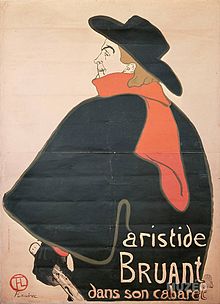
p 327 | Aristide Bruant (1851–1925) was a French cabaret singer, comedian, and nightclub owner.

p 328 | Maria Sophie in Bavaria (Queen of Naples, 1841–1925) was the last Queen consort of the Kingdom of the Two Sicilies. 

Empress Elisabeth of Austria and Duchesse d'Alençon were her sisters. Her niece, Elisabeth of Bavaria, Queen of Belgium (1876–1965) married Albert I (1875–1934), who reigned as King of the Belgians from 1909 to 1934. 

p 331 | Norns:  in Norse mythology, female beings who rule the destiny of gods and men. They roughly correspond to other controllers of humans' destiny, the Fates, elsewhere in European mythology.

p 334 | Sibyl: certain women of antiquity reputed to possess powers of prophecy or divination or supposed to utter the oracles and prophecies of a god.

p 337 | Kinderszenen ("Scenes from Childhood"), Opus 15, by Robert Schumann, is a set of 13 pieces of music for piano written in 1838. "Child Sleeps" and "Poet Speaks" are two titles from the work. Hear samples at this link.

p 339 | The Sistine Chapel ceiling, painted by Michelangelo between 1508 and 1512, is a cornerstone work of High Renaissance art.

p 350 | Song to the Evening Star & Elizabeth’s Prayer, both from Wagner's 1845 opera Tannhäuser. Tristan, Rhinegold, and the Mastersingers are other operas by the German composer, Richard Wagner, 1813-83.

p 351 | "...Pas d'Armes du Roi Jean.... the Contemplations...": Early vs later works by French author Victor Hugo, 1802-85.


11.22.2016

The Captive V pp 231-60

p 231 | Passy : an area of Paris located in the 16th arrondissement, on the Right Bank, home to many of the city's wealthiest residents.

p 233 | ... Rue de Berri and Rue Washington are in the same neighborhood, the 8th arrondissement of Paris,

p 233 | Lemuel Gulliver is the fictional protagonist and narrator of Gulliver's Travels, a novel written by Jonathan Swift, first published in 1726.

p 235 | Janus  is the god of beginnings, gates, transitions, time, duality, doorways, passages, and endings. He is usually depicted as having two faces, since he looks to the future and to the past.

p 237 | ... old French silver... This is only from 1882.
p 240 | Anaxagoras  (c. 500—428 B.C.E.):  Anaxagoras of Clazomenae was an important Presocratic natural philosopher and scientist who lived and taught in Athens for approximately 30 years.

p 240 | .... the Apostles at Pentecost...The Christian feast day of Pentecost is 7 weeks after Easter Sunday. It commemorates the descent of the Holy Spirit upon the Apostles and other followers of Jesus Christ while they were in Jerusalem celebrating the Feast of Weeks, as described in the Acts of the Apostles.

p 243 | amyl = amyl nitrite, a vasodilator, may have been used to treat / prevent chest pain (angina).


p 249 | Claude-Philibert Barthelot, comte de Rambuteau (1781–1869), Préfet of the former Départment of the Seine, caused pissoirs to be installed on Paris streets. See also pissotière.

p 255 |  Neurasthenia.... more than just neurotic?

p 257 |  Le Pêcheur d'Islande (An Iceland Fisherman, 1886 novel by Pierre Loti); Tartarin de Tarascon (Tartarin of Tarascon, 1872 novel by Alphonse Daudet)

p 26o |  Eyeglasses in 19th century France

10.30.2016

The Captive V pp 169-210


p 176 | Gregory the Great . . . Palestrina: Gregory the Great, Pope from 590 to 604, is supposed to have set the rules for Gregorian chant. A 16th-century Pope, Gregory XIII, had Palestrina adapt the old chants to the new liturgy of Pius V. (Clark)

p 180 | Charles de Sévigné, son of Madame de Sévigné.

p 185 | Les Fourberies de Nérine, a comedy in verse by by Théodore de Banville


p 195 | Danaides . . . Ixion: From Greek legend, they were condemned to never-ending tasks. The Danaides (the 50 daughters of Danaus) murdered their husbands and were condemned to spend eternity pouring water into a bottomless vessel. Ixion was attached by Zeus to a burning wheel which turned eternally in the Underworld.

p 196 | Trois Quartiers shop in Paris.

p 203 | midinette : Parisian seamstress or salesgirl in a clothes shop (French, from midi [noon] + dinette [light meal], since the girls had time for no more than a snack at midday). © Collins English Dictionary,, 12th ed, 2014

p 205 | Lamoureux concert = an orchestral concert society which once gave weekly concerts by its own orchestra, founded in Paris by Charles Lamoureux in 1881.

p 205 | The Longjumeau Postilion: An 1836 comic opera by Adolphe Adam. In 1915, the critic Frederic Masson wrote that this work compared to Wagner's Die Meistersinger.

p 207 | Human Comedy (title of Balzac's collected novels); The Legend of the Centuries (a collection of narrative poems by Victor Hugo); The Bible of Humanity (imaginative attempt at a synthesis of human history by Jules Michelet)

p 210 | 120 hp Mystère : a make of aircraft.

p 210 | L 'Education sentimentale: in Flaubert's novel of that name, the woman the hero loves sees in his house a portrait of a former mistress of his, whom she had known. She says, "I've seen that woman somewhere," but he replies, "Impossible, it's an old Italian painting."

The Captive V pp 156-168


p 159 | Renaissance Pietà: There are others, but Michaelangelo's is the main one.

p 161 | Prunier Restaurant in Paris specialized in seafood.

p 161 | Here's mackerel! (Il arrive le maquereau) = a pun because maquereau is French slang for a pimp, hence his thought wanders to the chauffeur.

p 161 | Cos lettuce=Romaine

p 162 | Praeceptis salutaribus moniti et divina institutione formati audemus dicere : "Instructed by Thy saving precepts, and following Thy divine institution, we are bold to say..." This is the opening to the Lord's Prayer in the Mass liturgy.

p 162 | Suave mari magno="How pleasant when on a great sea..." (Lucretius). These opening lines of Book II of Lucretius' poem De rerum naturae observe how pleasant it is, when we are on dry land, to watch another man battling to stay afloat in a stormy sea. Though the poet was commending not schadenfreude but philosophical detachment, the phrase is used proverbially to allude to someone who takes pleasure in the suffering of others. Proust, however, seems here to be using it literally and not figuratively. (Clark)


p 163 | Chasselas = White wine grape

p 163 | Rebattet, 12, rue du Faubourg- Saint-Honore. A very
fashionable pastry shop.

p 164 | "... ices not hawked in the street..." : small ices, to be eaten immediately, were certainly sold in the street before 1900: there is a 19th century photo of an ice-cream man with his cart by Eugene Atget. But what the characters are discussing here are sizeable, elaborate iced desserts sold in expensive shops. Scroll down on this page to see an example.


Eugene Atget
p 165 | Monte Rosa is a huge ice-covered mountain in the Alps.

p 167 | Scheherazade is the fictional narrator of the Arabian Nights, a book which Proust loved both as a child and as an adult. She made up a new tale for 1001 nights to avoid being killed by the king.

p 168 | "...consecration-cross of his wheel = the steering-wheel of some cars at this time was cruciform, with no outer ring. Others were stylized, with a circle enclosing a cross.


p 168 ff: The Palace at VersaillesGrand Trianon at Versailles;
Petit Trianon at Versailles
Hôtel des Réservoirs at Versailles
Vatel

4.10.2016

Sodom and Gomorrah IV pp 662-691

Berthe de Clinchamp,
p 666 | Aldonce de Guermantes is an invention. Because Louis VI (known as le Gros, 1081-1137), had an illegitimate younger half-brother, called Philippe de Mantes, he had himself crowned quickly in 1108 to ensure his own succession.

p 666 | The La Trémoilles became heirs to the Kings of Naples in 1605; their descent from the Comtes de Poitiers is uncertain. Uzès did not become a duchy until 1572.

p 667 | The first Duc de Luynes was created in 1619. The Choiseuls, the Harcourts, the La Rochefoucaulds... are families who traced their origins back to the 10th century. ...the Noailles ... the Montesquious, the Castellanes can be traced back to the 11th century.

p 667 | Vatefairefiche = va-te-faire-fiche means "Scram!" (Gotoblazes). Turning Cambremer into Cambremerde is a vulgarization of the name.

p 668 | Scènes de la vie de province is one of the major sections of Balzac's Comédie Humaine. La Muse du département is part of the Scènes de la vie de province; its heroine, Mme de la Baudraye, writes literary essays and has an adulterous love affair. Mme de Bargeton is a character in Illusions perdues, a provincial wife who becomes the lover of the young hero, Lucien de Rubempré. Mme de Mortsauf was the heroine of Le Lys dans la vallée, who overcomes her passion for the young Félix de Vandenesse and dies a saintly death.

p 672 | Berthe de Clinchamp, companion of the Duchesse d'Aumale, came eventually to run the Duc's household, and in 1899 published a memoir of him: Le Duc d'Aumale, prince, soldat.p 673 | In media stat virtus = virtue lies in the middle.

p 674 | ... M. Moreau, Morille, Morue...: Moreau can mean a horse's nosebag; a morille is a morel (mushroom); morue is a codfish.

p 681 | Subaltern = an officer in the British army below the rank of captain, especially a second lieutenant. Saint-Cyr = military academy where French Army officers are trained.

p 688 | Pont-l'Éveque: Éveque is French for "bishop." Childhood of Christ is an oratorio written by Berlioz between 1850 and 1854; L'Enchantement du Vendredi Saint, or The Good Friday Music forms part of Act III of Wagner's opera Parsifal, but is sometimes performed separately, especially at Easter.


Decreuse - Louis IX of France
King Louis IX

p 689 | Rue de Blancs-Manteaux: literally, White Mantles or White Friars, a Carmelite order.

p 690 | Saint Louis = Louis IX, King of France 1226-70, canonized in 1287.


p 690 | Felix de Rochegude's 20-volume work Promenades dans toutes les rues de Paris (1910). The street Charlus can't remember was the rue des Rosiers & "du Rozier'' later will become the name Bloch takes to hide his Jewishness. Though not a Jew, Rembrandt lived in the Amsterdam's Jewish quarter & painted Jewish subjects. Legend about a 13th century Jew convicted of burning a consecrated Host, which was itself miraculously preserved.

p 690 | According to Rochegude, this Louis I d'Orléans (1372-1407) was murdered by Jean sans Peur on coming out from supper with Isabeau de Bavière, his sister-in-law & mistress. The Duc de Chartres (1840-1910) was the grandson of Louis-Philippe, Duc d'Orléans (also known as Philippe-Égalité, 1747-1793), and not obviously related to Charlus.


N.B. All entries based primarily based on Sturrock's notes.

6.12.2015

Sodom and Gomorrah IV pp 245-305

Paul Decauville (1846-1922), industrialist and politician, who in­vented a narrow-gauge railway that could be demounted and transported. (Sturrock)

p 248 | Rosemonde: a slip of the pen for Albertine. (Sturrock)

“ascenseur”…“accenseur”: In French, the difference in sound is between “assenseur” and “acksenseur.” Ascenseur means “elevator” or “lift.” (Sturrock)

the recidivism… single negative: Proust’s lift boy omits the normal ne in front of the verb used negatively. Bélise is a character in Les Femmes savantes, in which Molière makes fun of grammatical pedantry. (Sturrock)

p 272 | Legend has the poetess Sappho throwing herself into the sea off Lesbos as a result of her unrequited love for a boatman. (Sturrock)

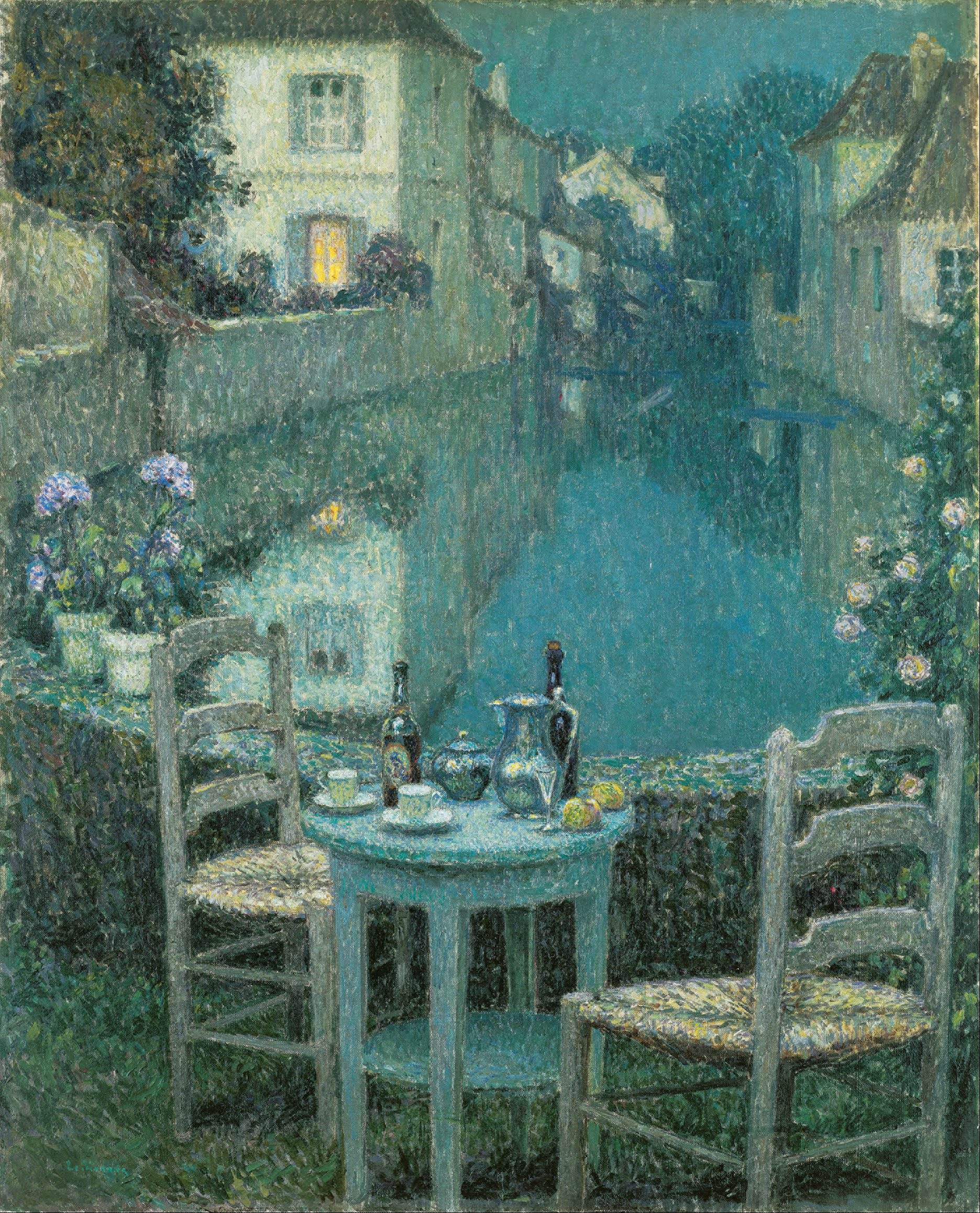
p 278 | Henri le Sidaner (1862-1939), a minor Impressionist, best known for his cityscapes of Bruges and Venice. (Sturrock)

p 287 | “M. Degas assures us…: Degas had much to do with the re­vival of Poussin’s reputation during the 1890s. (Sturrock)

p 289 | “Their giant’s wings…”: a line from a celebrated sonnet in which Baudelaire describes the ungainliness of an albatross when it is on the ground, using the bird as a symbol for the Poet. In French, “Leurs ailes de géant les empêchent de marcher.” (Sturrock)

The Congrégations were religious bodies that ran many schools (and some hospitals) in France; they were dissolved in 1904. “Wars in the East” refers to the 1904-05 war between Russia & Japan; the Japanese victory created European fears that the “yellow” races might prove too strong for the white. (Sturrock)

p 288, 290-91: Tetralogy: the four operas of Wagner’s Ring cycle.  (Sturrock)

Young-jules-massenet-1860s p 291 | Jules Massenet (1842-1912), a composer best known for op­eras, especially Manon and Don Quixote. (Sturrock)