Pages

Showing posts with label Definitions. Show all posts

8.14.2021

Time Regained VI pp 1-27

p 1-4 | the two ways (in French, with photos; translation to come); also here.
p 7: Chinese porcelain bowl


 p 7 | ... Léa dressed as a man... (cross-dressing)

p 8 |... Pascal's gulf.... From a poem titled "Le Gouffre"  ("The Gulf"), the opening lines of Baudelaire:


"Pascal avait son gouffre, avec lui se mouvant.
— Hélas! tout est abîme, — action, désir, rêve,"

"Pascal had his abyss that moved along with him.
— Alas! all is abysmal, — action, desire, dream,"


p 12 | Marienbad: Mariánské Lázně, a spa town in the Czech Republic. Most of its buildings are from its Golden Era in the second half of the 19th century, when celebrities & European rulers came to enjoy the curative carbon dioxide springs.


Empress Theodora
p 17 | Empress Theodora: (c.497-548 AD), powerful Byzantine empress, wife of Justinian I, said to have been a low-born actress.

p 21 | ...battle of Ulm...: on 16–19 October 1805 was a series of skirmishes that allowed Napoleon I to trap an entire Austrian army under the command of Karl Freiherr Mack von Leiberich with minimal losses and to force its surrender near Ulm in the Electorate of Bavaria  (wiki).  The Battle of Lule Burgas (1912) was here in the First Balkan War. (Sidenote: its emperor was Theodosius I. We see the fictional Theodosius II visit Paris twice during the novel.)


p 23 | La Fille aux yeux d'or (The Girl with the Golden Eyes): 1835 novel by Balzac, part of La Comédie humaine.


p 25 | Joseph Fourier (1768–1830) was a French mathematician and physicist known for initiating the investigation of Fourier series & their applications to problems of heat transfer and vibrations. The Fourier transform and Fourier's law are also named in his honor; also generally credited with discovering the greenhouse effect.


p 25 | Tobolsk is a town in Tyumen Oblast, Russia, located at the confluence of the Tobol and Irtysh Rivers. Founded in 1590, Tobolsk is the second oldest Russian settlement east of the Ural Mountains in Asian Russia, and is a historic capital of the Siberia region. In the early 1900s, it was famous as the administrative center of Grigori Rasputin's home province, and is located close to his birthplace.

 
p 26 | the Goncourt Brothers produced the Goncourt Journal together from 1850-1870, then by Edmond alone till 1896. It was a candid chronicle of the literary and artistic Parisian world in which they lived. Proust paid the Journal a tribute by including a pastiche* of it in Time Regained. Some say the Journal's obsessive chronicling of the most minute details of its authors' social lives and rendering of them into literary art anticipates Proust's novel.  (wiki) 


* A pastiche is a work of visual art, literature, theatre, or music that imitates the style or character of the work of one or more other artists. Unlike parody, pastiche celebrates, rather than mocks, the work it imitates. (wiki)

3.16.2017

The Captive V pp 369-91

p 382 | Thomas Couture (1815-79): French history painter & teacher.
Romans during the Decadence (1847)
 p 383 | Georges Enesco (Romanian violinist, 1881–1955); also a composer, pianist, conductor, and teacher, often considered Romania's most important musician. Lucien Capet (French violinist, 1873–1928); Jacques Thibaud (French violinist, 1880–1953). 

p 383 | Étienne Pierre Théodore Rousseau (1812–67) was a French painter of the Barbizon school (realism in art).

p 385 | Angelus: The Angelus (Latin for "angel") is a Catholic devotion commemorating the Incarnation... called the "prayer of the devotee", traditionally recited three times daily: 6:00 am, noon, and 6:00 pm.... The Angelus is usually accompanied by the ringing of the Angelus bell, which is a call to prayer and to spread good-will to everyone. The angel referred to in the prayer is Gabriel, a messenger of God who revealed to Mary that she would conceive a child to be born the Son of God.

p 386 | florilegium=a collection of literary extracts; an anthology.

p 386 | Auguste Vacquerie (French writer, 1819-95); Paul Meurice (French writer, 1818-1905); Victor Hugo (1802–85).

p 387 | "...not in the least timorous..." = not showing or suffering from nervousness, fear, or a lack of confidence.


p 389 | beadle=A beadle is a church leader. Often, a beadle serves as an usher or manages charities for the church. The noun beadle isn't used very often in American English, though it's still fairly common in Britain, where beadles hold symbolic or ceremonial jobs in parishes or at universities.

p 389 | sursum corda (Latin: "Lift up your hearts" or literally, "Hearts lifted").

p 390 | The Most Serene House of Condé was a French princely house and a cadet branch of the House of Bourbon. The name of the house was derived from the title of Prince of Condé that was originally assumed around 1557 by the French Protestant leader, Louis de Bourbon (1530–1569), uncle of King Henry IV of France, and borne by his male-line descendants. 


p 390 | ... wearing a ruff... An item of clothing worn in Western Europe from the mid-16th century to the mid-17th century, primarily. The ruff, worn by men, women and children, evolved from the small fabric ruffle at the drawstring neck of a shirt or chemise. This changeable piece of cloth could be laundered separately while keeping the wearer's doublet from becoming soiled at the neckline.

p 391 | Man proposes, but God disposes is a translation of the Latin phrase Homo proponit, sed Deus disponit from Book I, chapter 19, of The Imitation of Christ by the German cleric Thomas à Kempis.

The Captive V pp 351-69

p 355 | Georges-Louis Leclerc, Comte de Buffon (1707–88) was a French naturalist, mathematician, cosmologist, and encyclopedist.

p 355 | A tea dance, also called a thé dansant (French for "dancing tea"), is a summer or autumn afternoon or early-evening dance from 4 p.m. to 7 p.m., sometimes preceded in the English countryside by a garden party.

p 356 | A l'ombre d'un petit bois de pins qui couvre la partie supérieure de la grande ile, s'élève le Chalet, café-restaurant tenu par les glaciers Poiré-Blanche. (In the shade of a small pine forest that covers the top of the large island, stands the Chalet, café and restaurant run by Poiré Blanche glaciers [makers of ices].

p 365 | "... fall of Gaeta..." : The Siege of Gaeta was the concluding event of the war between the Kingdom of Sardinia & the Kingdom of the Two Sicilies, part of the unification of Italy. It started on November 5, 1860 and ended February 13, 1861, in Gaeta (today's Southern Lazio, Italy).


p 365 | From Manet, Wagner, and the Musical Culture of Their Time by Therese Dolan (p 33): "...The third act found little favor with the majority and the end of the opera was greeted with loud sifflements, the hissing and whistling that were the characteristic French show of disdain. Jules Janin reported that Princess Metternich broke her fan against the railing of the loge where she was seated because she pounded it in such fury at the hostile reaction of the audience." This was at the Paris debut of Wagner's Tannhäuser on March 13, 1861.
Caroline Bonaparte

p 365 | Maria Carolina Murat (1782–1839), better known as Caroline Bonaparte (a younger sister of Napoleon I), was also the Queen of Naples.

p 366 | Duras=Duchesse de Duras, 1st wife of the Duc de Duras.


p 367 | In Wagner's Die Meistersinger Von Nurnberg, the character Beckmesser is "the pedantic town clerk and master of "Die Meistersinger." ... Beckmesser can't actually create beauty himself; all he can do is find flaws, judging the new by the old..." From a music review by Edward Rothstein, New York Times, 1/24/93. 

p 369 | Bernardin de Saint-Pierre (1737–1814) was a French writer and botanist.

3.14.2017

The Captive V pp 310-351

Nijinsky
p 314 | History of the Ballets Russes

p 316 | Jean Jaurès (French politician & historian, 1859–1914) was a French Socialist leader.

p 320 | rhino-gomenol: a decongestant & antiseptic ointment which Proust himself frequently used.


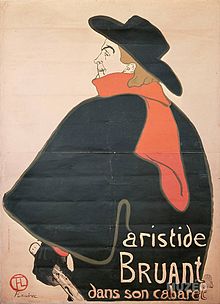
p 327 | Aristide Bruant (1851–1925) was a French cabaret singer, comedian, and nightclub owner.

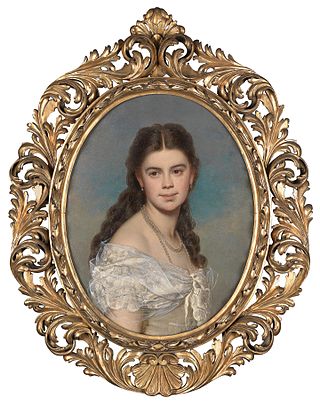
p 328 | Maria Sophie in Bavaria (Queen of Naples, 1841–1925) was the last Queen consort of the Kingdom of the Two Sicilies. 

Empress Elisabeth of Austria and Duchesse d'Alençon were her sisters. Her niece, Elisabeth of Bavaria, Queen of Belgium (1876–1965) married Albert I (1875–1934), who reigned as King of the Belgians from 1909 to 1934. 

p 331 | Norns:  in Norse mythology, female beings who rule the destiny of gods and men. They roughly correspond to other controllers of humans' destiny, the Fates, elsewhere in European mythology.

p 334 | Sibyl: certain women of antiquity reputed to possess powers of prophecy or divination or supposed to utter the oracles and prophecies of a god.

p 337 | Kinderszenen ("Scenes from Childhood"), Opus 15, by Robert Schumann, is a set of 13 pieces of music for piano written in 1838. "Child Sleeps" and "Poet Speaks" are two titles from the work. Hear samples at this link.

p 339 | The Sistine Chapel ceiling, painted by Michelangelo between 1508 and 1512, is a cornerstone work of High Renaissance art.

p 350 | Song to the Evening Star & Elizabeth’s Prayer, both from Wagner's 1845 opera Tannhäuser. Tristan, Rhinegold, and the Mastersingers are other operas by the German composer, Richard Wagner, 1813-83.

p 351 | "...Pas d'Armes du Roi Jean.... the Contemplations...": Early vs later works by French author Victor Hugo, 1802-85.


1.18.2017

The Captive V pp 272-89

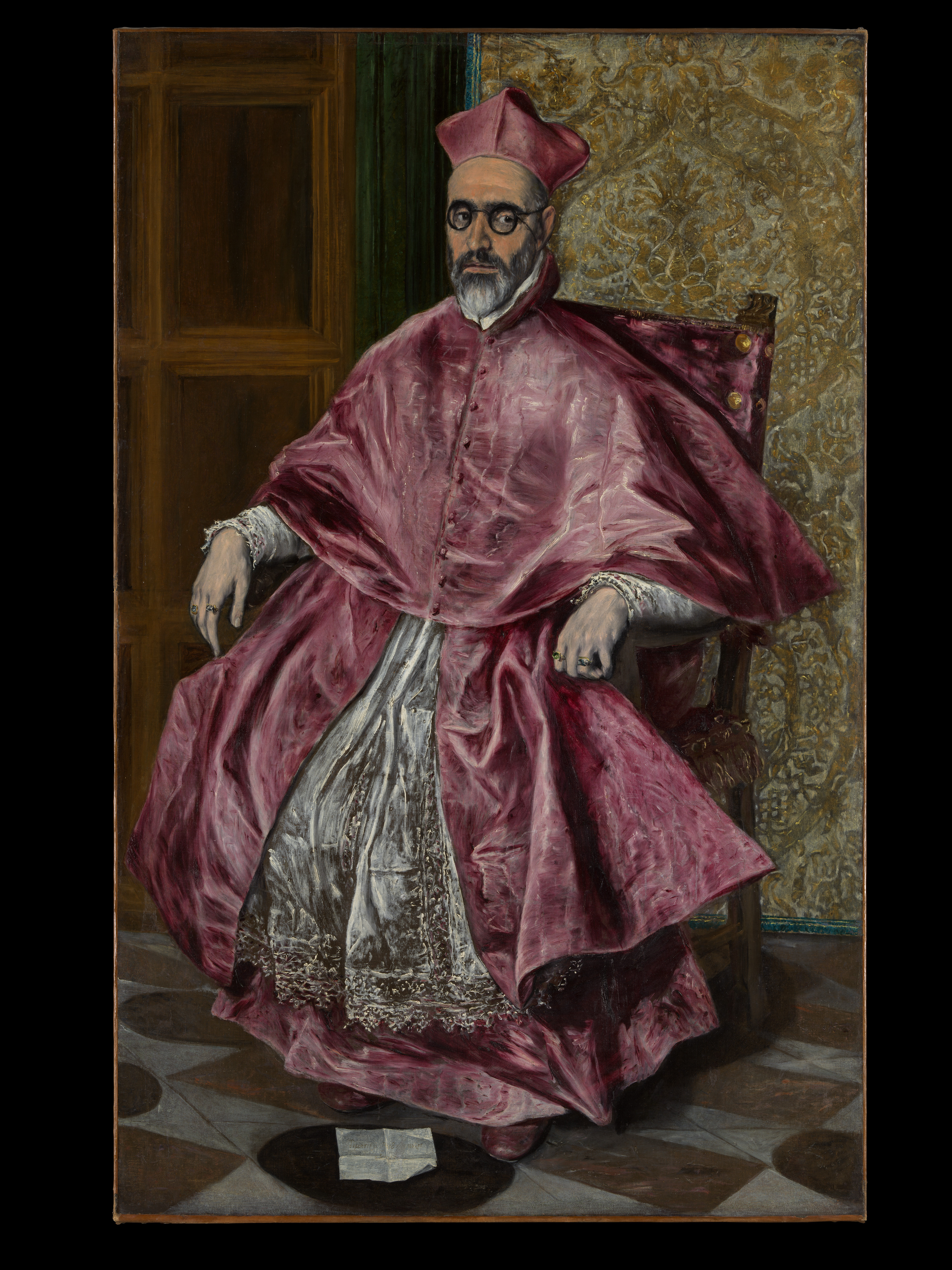
p 272 | El Greco paints the Grand Inquisitor: This intense portrait depicts Fernando Niño de Guevara (1541–1609), who in 1596 was named cardinal and is dressed as such here. In 1599 he became Inquisitor General of Spain but resigned in 1602 to serve the rest of his life as Archbishop of Seville. The painting probably dates from the spring of 1600 when the cardinal was in Toledo with Philip III and members of the Madrid court.

p 275 | Jean Mounet-Sully (1841-1916), French actor.

p 276 | Hair en brosse: French phrase meaning cut short so it stands up like bristles on a brush. An example of en brosse is a man's military hair cut or a buzz cut.

p 279 | Queen of the May: The May Queen is usually a teenage girl who is selected to ride or walk at the front of a parade for May Day celebrations. She wears a white gown to symbolize purity and usually a tiara or crown.

p 281 | 19th century private detectives

p 284 | ... looks like a Bronzino.

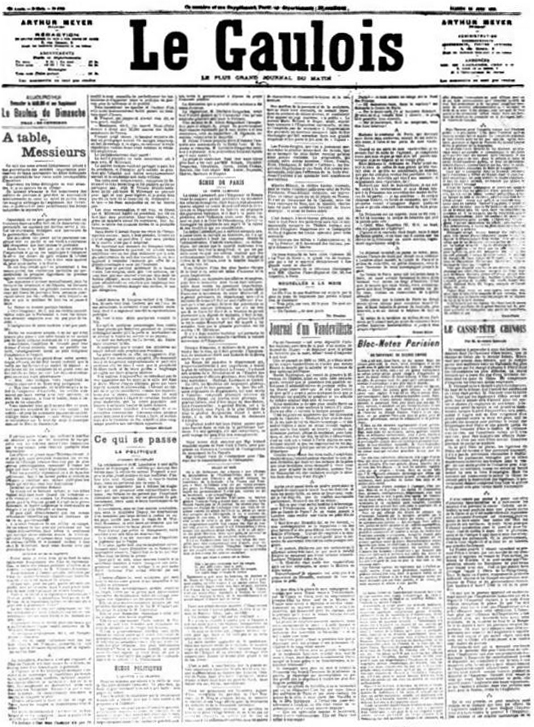
p 289 | Le Gaulois: French daily newspaper, founded 1868.


1.07.2017

The Captive V pp 261-72

p 261 | Cercle de l'Union interalliée : also known as the Cercle interallié, is a private social & dining club established in 1917. The clubhouse is the Hôtel Perrinet de Jars at 33 rue du Faubourg Saint-Honoré in Paris. It adjoins the British Embassy and an annex of the embassy of Japan.


Duchesse of Uzes
p 262 | Uzès, Jacques, duc de (French aristocrat): The Duchesse of Uzes, née Rochechouart de Mortemart was the first woman in France to obtain a driving licence... in 1889 she and her son Jacques were fined for speeding at nearly 15 kph in their Delahaye in the Bois de Boulogne. Heiress to the Veuve Cliquot champagne fortune, she financed General Boulanger whose ambition was to overthrow the French Republic. She wrote under the name of Manuela, and also sculpted the statue of St Hubert (Patron of the Hunt) in the Sacré Coeur Basilica in Paris. She was a feminist who was interested in furthering social welfare, and became a friend of the anarchist Louise Michel.

p 262 | M. Cartier (French aristocrat, Mme de Villefranche’s brother; friend of Bréauté & La Trémoïlle) (character)

p 262-63 | Tissot's painting of the Rue Royale. Charles Haas is on the far right. Click here to see who else is in the picture.


p 264 | Antoine Léon Marie de Noailles (19 April 1841 Paris – 2 February 1909) 9th prince de Poix, from (1846) 6th duc espagnol de Mouchy, 5th duc français de Mouchy et duc de Poix, from 1854, was a French nobleman.

p 264 | Boucher tapestries :: François Boucher (1703–1770)

p 266 | Charles VII, called the Victorious or the Well-Served, was a monarch of the House of Valois who ruled as King of France from 1422 to his death.

p 265 | Quai Conti, right on the Seine, near Pont Neuf. Nice.

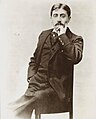
p 267 | Otto Wegener... photographer.... see photos here...
Otto Wegener (1849 - 1924) is a Swedish photographer who worked in Paris from 1867. He took this picture of Proust:

p 267 | Guillaume Lenthéric (Parisian hairdresser/perfumer, d. 1912)

p 270 | Praxiteles (Greek sculptor, 4th century B.C.):

p 270 | Jean de La Bruyère (French essayist, Académician, 1645–96).

p 270 | Theocritus (Greek poet, 3rd century B.C.):

p 272 | Chaps: a fissure or crack, especially in the skin.

10.30.2016

The Captive V pp 169-210


p 176 | Gregory the Great . . . Palestrina: Gregory the Great, Pope from 590 to 604, is supposed to have set the rules for Gregorian chant. A 16th-century Pope, Gregory XIII, had Palestrina adapt the old chants to the new liturgy of Pius V. (Clark)

p 180 | Charles de Sévigné, son of Madame de Sévigné.

p 185 | Les Fourberies de Nérine, a comedy in verse by by Théodore de Banville


p 195 | Danaides . . . Ixion: From Greek legend, they were condemned to never-ending tasks. The Danaides (the 50 daughters of Danaus) murdered their husbands and were condemned to spend eternity pouring water into a bottomless vessel. Ixion was attached by Zeus to a burning wheel which turned eternally in the Underworld.

p 196 | Trois Quartiers shop in Paris.

p 203 | midinette : Parisian seamstress or salesgirl in a clothes shop (French, from midi [noon] + dinette [light meal], since the girls had time for no more than a snack at midday). © Collins English Dictionary,, 12th ed, 2014

p 205 | Lamoureux concert = an orchestral concert society which once gave weekly concerts by its own orchestra, founded in Paris by Charles Lamoureux in 1881.

p 205 | The Longjumeau Postilion: An 1836 comic opera by Adolphe Adam. In 1915, the critic Frederic Masson wrote that this work compared to Wagner's Die Meistersinger.

p 207 | Human Comedy (title of Balzac's collected novels); The Legend of the Centuries (a collection of narrative poems by Victor Hugo); The Bible of Humanity (imaginative attempt at a synthesis of human history by Jules Michelet)

p 210 | 120 hp Mystère : a make of aircraft.

p 210 | L 'Education sentimentale: in Flaubert's novel of that name, the woman the hero loves sees in his house a portrait of a former mistress of his, whom she had known. She says, "I've seen that woman somewhere," but he replies, "Impossible, it's an old Italian painting."

10.28.2016

The Captive V pp 147-156

p 147-49 | "Boris Godunov . . . Pelléas":  Mussorgsky's opera Boris Godunov was first performed in Paris in 1908, Debussy's Pelléas et Melisande in 1902, but Proust first heard them in 1911-13, when he was first working on The Captive.  The novelty of these music-dramas was that they did not observe the old operatic distinction between recitative and aria, but were through-composed (songs composed without repetitions, i.e., using different music for each verse), their essential dialogue delivered with only small variations of pitch. (Clark)

In Pelléas et Mélisande, instead of a librettist adapting the original play for him, Debussy chose to set the text directly, since Maeterlinck's play was in prose rather than verse. This contributes to the most famous feature of the opera: the almost complete absence of arias or set pieces... Instead, Debussy set the text one note to a syllable in a "continuous, fluid 'cantilena', somewhere between chant and recitative". (Wikipedia)

p 148 | Jean-Phillipe Rameau: these words appear in Phillipe Quinault's libretto Armide, set to music first by Lully in 1686 and then by Gluck in 1777  (not in an opera by Rameau, as Proust seems to have thought).  (Clark)

p 149 | "...Arkel . . .  Golaud ...  the King of Allemande...":  characters in Pelléas et Melisande. (Clark)

p 149 | Per omnia saecula saeculorum = for ever and ever, through all ages of ages, world without end; Requiescat in pace = May he/she rest in peace. Both phrases conclude prayers for the dead, both usually intoned with the last syllable falling a minor third, and followed by "Amen." (Clark)

p 149 | Cerement= Usually plural: a waxy cloth used for wrapping the dead, or any burial garments (Hamlet, act 1, sc 4)

p 150 | Costermonger: a person who sells goods, especially fruit and vegetables, from a handcart in the street.

p 150 | Antiphonary=one of 3 liturgical books used for the Divine Office (the others being the breviary & the choir psalter). The antiphonary contains, among other elements, antiphons, which are short sentences sung or recited before or after a psalm or canticle. Antiphonaries are fairly large so they are easily read by all members of a choir.  Trivium= the lower division of the 7 liberal arts:  grammar, logic, and rhetoric (input, process, and output).  Subjects of the trivium are the foundation for the quadrivium, the upper division of the medieval education in the liberal arts, which comprised arithmetic (number), geometry (number in space), music (number in time), and astronomy (number in space and time). Educationally, the trivium and the quadrivium imparted to the student the 7 liberal arts of classical antiquity. 


Basque beret
  Tinker = (especially in former times) a person who travels from place to place mending metal utensils as a way of making a living.

 p 152 | "What insolent mortal comes to meet his doom?" "Was it for you this stern decree was made?" "In you alone, a certain grace I see/That always charms and never wearies  me." (Lines from Esther by Racine).  (Clark)

p 155 | Hippolyte Taine (1828–93): critic and historian, who had a profound effect on French literature.  George Eliot, pseudonym of Mary Ann Evans (1819-80): English Victorian novelist who developed the method of psychological analysis characteristic of modern fiction.

p 156 |  Mnemotechniaa goddess not only of memory (time past) but of method (technia): she offers a way of remembering and recording the passage of time. (Ellen Eve Frank, Literary Architecture)

6.02.2016

The Captive V pp 27-46

p 30 | Elysium (or the Elysian Fields), in Greek mythology, the final resting places of the souls of the heroic and the virtuous. It was ruled by Cronus.

p 30 | My landlady, Mme de Guermantes:  Having originally lived in a different part of Paris, at the beginning of The Guermantes Way, the narrator's family moves to a flat in the Hotel de Guermantes, in the Faubourg Saint-Germain. The side ranges of the front courtyard of the old aristocratic town house are now divided into flats and rented to middle-class families, while the ground floor supports small workshops of various kinds. The furthest range is occupied as a single house by the owners, the Duc and Duchesse de Guermantes, whom by this point in the story the narrator has got to know. Many of the main characters in the story (the narrator, Albertine, the Guermantes, Jupien and his niece) are thus now living on the same site, and can plausibly watch and/or meet each other on the stairs & in the courtyard. Charlus, brother of the Duc de Guermantes, erstwhile sexual partner of Jupien & protector of his niece, visits them all at this address, which is very convenient for the novelist's purposes, and not implausible; such multiple uses of old aristocratic dwellings was common in Paris throughout the 19th century, and its traces can still be seen in the Marais district, until its recent renovation.

p 31 | Carrying an umbrella was, in the 19th & early 20th centuries, a symbol of bourgeois status. Aristocrats were supposed to ride in carriages, poor people to get wet. Louis-Philippe, the 'Citizen King', was often caricatured with an umbrella in his hand.

p 32 | See a selection of early 20th century women's dresses

p 34 | Fortuny's Delphos gown --> 

Delphos
p 35 | Maurice Maeterlinck, Belgian writer, 1862-1949;  Prosper Mérimée, French author, 1803-70.  Paul-Louis Courier, French scholar, 1772-1825)

p 38 | Pampile:  pen-name of Mme Leon Daudet, wife of Proust's friend and author of Les bons plats de France: cuisine régionale (1913).

p 41 | coup d'éclat=feat or great feat; coup de tête=whim; coup de force = a sudden, violent act; rapprochement=establishment or resumption of harmonious relations, reconciliation

p 42 } The Dreyfus affair was a political scandal that from its beginning in 1894 divided France until it was finally resolved in 1906. [So, we think it's 1908-ish here in the text.]

p 44 | In the Aeneid, Achates ("good, faithful Achates", fidus Achates as he was called) was a close friend of Aeneas; his name became a byword for an intimate companion.

p 45 | Mayer Alphonse James Rothschild (1827-1905)

p 46 | Jupiter Tonans = Thundering Jove:  the aspect of Jupiter (Jove) who is the god of sky & thunder and king of the gods in ancient Roman religion & mythology. Here, it refers back to Basin knitting his Jupiterian brows on p 44.

p 46 | Édouard Adolphe Drumont (1844–1917) was a French journalist and writer. He founded the Antisemitic League of France in 1889, and was the founder & editor of the newspaper La Libre Parole.


4.10.2016

Sodom and Gomorrah IV pp 662-691

Berthe de Clinchamp,
p 666 | Aldonce de Guermantes is an invention. Because Louis VI (known as le Gros, 1081-1137), had an illegitimate younger half-brother, called Philippe de Mantes, he had himself crowned quickly in 1108 to ensure his own succession.

p 666 | The La Trémoilles became heirs to the Kings of Naples in 1605; their descent from the Comtes de Poitiers is uncertain. Uzès did not become a duchy until 1572.

p 667 | The first Duc de Luynes was created in 1619. The Choiseuls, the Harcourts, the La Rochefoucaulds... are families who traced their origins back to the 10th century. ...the Noailles ... the Montesquious, the Castellanes can be traced back to the 11th century.

p 667 | Vatefairefiche = va-te-faire-fiche means "Scram!" (Gotoblazes). Turning Cambremer into Cambremerde is a vulgarization of the name.

p 668 | Scènes de la vie de province is one of the major sections of Balzac's Comédie Humaine. La Muse du département is part of the Scènes de la vie de province; its heroine, Mme de la Baudraye, writes literary essays and has an adulterous love affair. Mme de Bargeton is a character in Illusions perdues, a provincial wife who becomes the lover of the young hero, Lucien de Rubempré. Mme de Mortsauf was the heroine of Le Lys dans la vallée, who overcomes her passion for the young Félix de Vandenesse and dies a saintly death.

p 672 | Berthe de Clinchamp, companion of the Duchesse d'Aumale, came eventually to run the Duc's household, and in 1899 published a memoir of him: Le Duc d'Aumale, prince, soldat.p 673 | In media stat virtus = virtue lies in the middle.

p 674 | ... M. Moreau, Morille, Morue...: Moreau can mean a horse's nosebag; a morille is a morel (mushroom); morue is a codfish.

p 681 | Subaltern = an officer in the British army below the rank of captain, especially a second lieutenant. Saint-Cyr = military academy where French Army officers are trained.

p 688 | Pont-l'Éveque: Éveque is French for "bishop." Childhood of Christ is an oratorio written by Berlioz between 1850 and 1854; L'Enchantement du Vendredi Saint, or The Good Friday Music forms part of Act III of Wagner's opera Parsifal, but is sometimes performed separately, especially at Easter.


Decreuse - Louis IX of France
King Louis IX

p 689 | Rue de Blancs-Manteaux: literally, White Mantles or White Friars, a Carmelite order.

p 690 | Saint Louis = Louis IX, King of France 1226-70, canonized in 1287.


p 690 | Felix de Rochegude's 20-volume work Promenades dans toutes les rues de Paris (1910). The street Charlus can't remember was the rue des Rosiers & "du Rozier'' later will become the name Bloch takes to hide his Jewishness. Though not a Jew, Rembrandt lived in the Amsterdam's Jewish quarter & painted Jewish subjects. Legend about a 13th century Jew convicted of burning a consecrated Host, which was itself miraculously preserved.

p 690 | According to Rochegude, this Louis I d'Orléans (1372-1407) was murdered by Jean sans Peur on coming out from supper with Isabeau de Bavière, his sister-in-law & mistress. The Duc de Chartres (1840-1910) was the grandson of Louis-Philippe, Duc d'Orléans (also known as Philippe-Égalité, 1747-1793), and not obviously related to Charlus.


N.B. All entries based primarily based on Sturrock's notes.

3.06.2016

Sodom and Gomorrah IV pp 611-625

p 612 | "Esther heureuse...": the titles of three of the four sections of Splendeurs et misères des courtisanes.

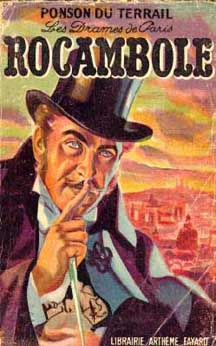
p 612 | Rocambole was the hero of more than 30 adventure novels written by Alexis Ponson du Terrail (1829-71), as well as later writers. The adjective rocambolesque usually means a fantastic adventure.

p 612 | "...moult sorbonagre, sorbonicole et sorboniforme...": a scathing Rabelaisian way of referring to a pedantic doctor from the Sorbonne, perhaps translatable as "Sorbonnified, Sorbonniculous, and Sorbonniform."

p 612 | "The quart d'heure de Rabelais...": popular phrase meaning "the moment of reckoning." An explanatory  anecdote  from a comic incident from the writer’s life. "One day he was in Lyon and wanted to travel to Paris. He had no money and so he marked several sachets of sugar “Poison for the King” and left them lying prominently around. He was arrested and taken to Paris, thus getting a free ride. King Francis I laughed so hard when he heard about it that he happily paid for the trip." Literally, "the quarter-hour of Rabelais," which is amusingly echoed in Andy Warhol's "15 minutes of fame."

p 613 | "Chateaubriand aux pommes": Sturrock says this is "Chateaubriand steak served with apple," but I think the dish is really served with potatoes (pommes frites, pommes de terres...).

p 613 |  gnōthi seauton : Greek for "Know thyself."

p 613 | Jean-Martin Charcot, 19th century French neurologist.

p 614 | "...holy terror Ovid..." Ovid wrote "Materiam superabat opus" (Metamorphoses II, 5), or "The workmanship surpassed the material" (form over content).

Hanska by Delmont
p 614 | "Meudon... ": Meudon, now part of Paris, was the parish of which Rabelais was the curé; Ferney was the Genevan home of Voltaire; the Vallée-aux-Loups, near Sceaux, was where Chateaubriand lived for several years; Les Jardies was the name of Balzac's house in Villa d'Avray; the "Polish woman" was Mme Hanska, whom Balzac married in 1850, shortly before his death and the inspiration for many of his characters. (Sturrock)

p 614 | Hippolyte Taine complained in a well-known essay on Balzac, that the Comedie humaine contained too much that was morbid or unnatural, and did not meet his literary concepts of   "race, milieu, et moment." See his Wiki page for an interesting explanation.

p 617 | Zénaïde, French form of Zenaida, a feminine form of "Zeus."

p 618 | Diane de Maufrigneuse, main character in Balzac's novel Les Secrets de la Princesse de Cadignan, part of the Comedie humaine. 

p 620 | "cut a dash" = (Br.) Be stylish or impressive in one’s dress or behavior, e.g. "The Foreign Secretary wanted to cut a dash in Brussels."

p 620 | Paul Thureau-Dangin (1837-1913) was a Catholic historian, member of the Académie française. Gaston Boissier (1823-1908) was a French classical scholar, and secretary of the Académie française.

p 620 | Boissier is a chocolatier, founded in 1827.

p 621 | ...40bis Boulevard Malesherbes...: For most of his life (until 1900) Proust lived at 9 boulevard Malesherbes, near the Madeleine church, where the family moved in 1873 after his brother Robert was born. Proust himself had lived with his parents at 9 Boulevard Malesherbes.  His maternal grandparents lived at 40bis rue du Faubourg-Poissonniere.

p 621 | Marc-Joseph-Edgar Bourdon Vatry (baron de, 1828-1891)

9.10.2015

Sodom and Gomorrah IV pp 397-446

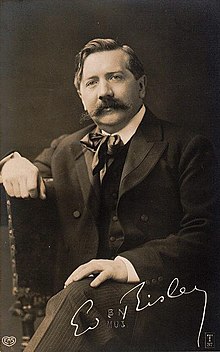
p 401 | Francis Planté (1839-1934), French pianist; Ignacy Jan Paderewski (1860-1941), a virtuoso pianist who twice became prime minister of his native Poland; Édouard Risler (1873-1929), a French pianist best known for his playing of Liszt and Beethoven. 

p 401 | "Qualis artifex pereo!": "What an artist perishes in me!," supposedly the Emperor Nero's last words. German classicists had been unable to agree on the worth or authenticity of the Latin poetry attributed to him. 

p 407 | Demoiselles de Caen (lobsters) are small Normandy lobsters; Pampille was the pen name of Mme Marthe Daudet, who wrote cooking & fashion columns in the right-wing paper L'Action run by her husband, Proust's friend Léon.

p 409 | Pierre de Ronsard (1524-85), greatest of French Renaissance poets. His popularity and prosperity in his own time was steady.   


p 411 | buen retiro: Spanish phrase literally meaning "good retreat", used here meaning toilet.

p 411 | An eminent publisher ... paper knife: possibly a description of Eugene Fasquelle, a Paris publisher known to Proust.

p 419 | Jean-Gilbert-Victor Fialin, Due de Persigny (1808-72), was a right-wing politician who became minister of the interior and ambassador to London under the Second Empire.

p 421 | Dumas fils was Alexandre Dumas (1824-95),  novelist & playwright, son of Alexandre Dumas, the novelist of the same name, best known as the author of La Dame aux camelias.

p 424 | Cancan: the word can refer to either an item of unkind gossip, or the quack of a duck. (mid 19th century: from French, a child's word for canard ‘duck,’ from Old French caner ‘to quack.’ The name can-can may be derived from the French for tittle-tattle or scandal. However the dance was also called the coin-coin, which could have become corrupted into can-can.

p 427 | Jean de La Fontaine (1621-95),  the  greatest  of French  fabulists; Jean-Pierre Claris de Florian (1755-94), Voltaire's great-nephew and, as a writer of fables, much influenced by Rousseau.

p 427 | Julien de Monchateau ... "Pico della Mirandola": Francois de Monchateau was celebrated in France as a child prodigy (as was Pic0 della Mirandola in Renaissance Florence).

p 429 | Place Saint-Sulpice: where, in Paris, the cheapest and most tasteless religious objects can be bought.

p 430 Ferdinand Barbedienne (1810-92) specialized in casting bronze reproductions of classical statuary, popular with 19th-century bourgeoisie.

p 434 | Harpagon: the sexagenarian bourgeois miser in Molière's comedy L'Avare (The Miser).

p 434-37 | "Chantepie ... Does it deserve its name?": une pie is "a magpie," chanter means "to sing," so that the name should refer to a place where magpies sing.

p 438 | Jules Lachelier (1832-1918), French idealist philosopher, wrote influentially about the problem of induction, and is opposed here to John Stuart Mill, a philosopher known
in France in Proust's day as an extreme empiricist.


p 438 | Jean-Francois Millet (1814-75), celebrated for painting scenes of peasant life, notably the much reproduced L'Angelus.

p 439 | Chantereine: play on words... chanter, to sing and reine means "queen."

p 440-41 | Pont-a-Couleuvre would literally mean "Snake Bridge" or “Serpent bridge,” which was formerly Pont-à-Quileuvre, which in old French stands for Pont a qui l'euvre, in Latin Pons cui aperit, i.e., Pont a qui ouvre, closed bridge opened only upon payment.


p 441 | In none of La Fontaine's or Florian's fables does a frog find itself before the Areopagus, or supreme court of Athens.

p 443 | " 'She has good qualities ...'": the quotation from Mme de Sévigné, modified by Proust, refers to her daughter-in-law.

p 446 | Members of the French Senate, like Charles de Freycinet (1828-1923) and Justin de Selves (1848-1934). Sylva = Latin word for a wood.

p 447-48 | The Tour d'Argent, on the Left Bank, was, and is, one of the great restaurants of Paris; the Hotel Meurice, on the rue de Rivoli, was one of the city's best in Proust's day.  Emile Boutroux (1845-1921) taught philosophy at the Sorbonne, and at one time had Henri Bergson for a pupil. 

p 448-49 | The Forty are the "Immortals," or the 40 members of the Academie Francaise. Not all the names Brichot cites were actual Academicians.

p 449 | Paul Parfouru (1842-1917) was called Porel. He was an actor & theater director, who ran the Odéonon theater from 1884 to 1892, hence the reference to "Odeonia"; his son, Jacques Porel  (1893-1982), was a friend of Proust's.

p 449-51 | "...two trees...": Saint-Martin-du-Chene (un chene is an oak tree) & Saint-Pierre-des-Ifs (un if is a yew tree).


Place Saint-Sulpice

N.B. All entries based primarily based on Sturrock's notes.