Pages

Showing posts with label Churches. Show all posts

10.29.2017

The Captive V pp 531-59

p 531 | The Ambrosian Library: The Biblioteca Ambrosiana is a historic library in Milan, Italy, also housing the Pinacoteca Ambrosiana, the Ambrosian art gallery.

p 531 | Fortuny in Tiepolo pink: 

p 545 | Luxembourg Gallery = Musée du Luxembourg (Paris)

p 545 | Fourteenth of July = Bastille Day, French National Day, celebrated on July 14th each year.

p 547 | ...steeple of Saint-Hilaire.... (really Saint-Jacques in Illiers-Combray)


p 552 | Les Rochers: The 15th century Gothic mansion known as the Château des Rochers-Sévigné was the former residence of Madame de Sévigné in Brittany.


Château des Rochers-Sévigné (photo: Luna04 wiki)
p 554 | vetiver: a fragrant grass, related to sorghum; similar to lemongrass & citronella.

p 554 | Saint-Jean-de-la-Haise (Normandy, nw France); Gourville (Charente, sw France)

10.29.2015

Sodom and Gomorrah IV pp 492-514

p 492 | The Arrachepels were a noble family whose seat was near Illiers/ Combray. (Sturrock note)

Campanile

p 493 | blazon=a correct description of armorial bearings. 

p 493 | La Fontaine wrote a fable called The Camel and the Floating Sticks.

p 493 | campanile= a tall tower with a bell in it.


p 494 | Molière’s word = cuckold (derived from the cuckoo bird, alluding to its habit of laying its eggs in other birds' nests.)

p 499 | tableau vivant: ("living picture"): a group of suitably costumed actors or models, carefully posed and often theatrically lit. Throughout the duration of the display, the people shown do not speak or move.

p 499 | Maréchal d'Huxelles: Nicolas Chalon du Blé, marquis d'Uxelles and Cormatin (1652–1730) was a French general and Foreign Minister. And a homosexual.


p 502 | peritonitis = Inflammation of the membrane lining the abdominal wall and covering the abdominal organs.

p 504 | In the 17th century, the Abbey of Port-Royal became the center of Jansenism, whose adherents believed the Augustinian doctrine that Grace was a free gift from God, not necessarily related to the virtue of those receiving it. (Sturrock note)

p 508 | double-six; David=King David=King of Spades. 

p 510 | à frigore spasms: Appelée "à frigore" car jadis on pensait que le froid était la cause de la maladie (called à frigore because formerly it was thought that cold caused the condition). May be what currently is known as Bell's palsy.

p 511 | Refers to a medieval legend, whereby Virgil having created a miraculous curative spa near Naples, the jealous doctors of Salerno set out in a boat to destroy it; the boat was destroyed in a storm, as retribution from divine Providence. (Sturrock note)

p 514 | End of the Verdurin party.

10.28.2015

Sodom and Gomorrah IV pp 484-89

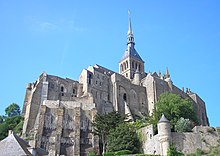
p 484 | Archangel Michael at the  Abbey on the Mount (Abbey of Mont Saint-Michel).

p 484 | Offertory= the offering of bread and wine to God as part of the Communion ceremony during a Christian church service.

p 485 | Palestrinising= playing sacred music by Giovanni da Palestrina.

 
p 485 | Whist: English card game, played by 4 players in 2 partnerships.

p 486 | Célestine Galli-Marié (1840-1905), French mezzo-soprano who created the title role in the opera Carmen. 

Charcot
p 487 | Charles Jacques Bouchard (1837-1915), doctor and pathologist. 

Jean-Martin Charcot (1825–93) was a French neurologist and professor of anatomical pathology. Known as the founder of modern neurology. As a teacher, Charcot famously influenced students such as Freud, William James, Alfred Binet & Bouchard. 


p 488 |  Dr. Gabriel Bouffe de Saint-Blaise, Parisian doctor (b. 1862); Dr. Maurice Edme Courtois-Suffit, French doctor (1861-1947) (Thanks to M. Patrice Louis at Le fou de Proust)

p 489 | Trional (sedative drug) introduced in 1888.

9.29.2015

Sodom and Gomorrah IV pp 456-70

p 456 | Banat;  Louis d'Harcourt; Jean Anthelme Brillat-Savarin, 1755-1826): French lawyer and politician, who gained fame as an epicure and gastronome; sibylline = referring to certain women of antiquity reputed to possess powers of prophecy or divination; a female prophet or witch.

p 457 | Piquet=an early 16th-century trick-taking card game for two players. The river Dives runs through Cabourg (Balbec), this is the church by the river, Notre Dame de Dives sur mer.

p 459 | daubing: to coat or smear (a surface) with a thick or sticky substance in a carelessly rough way. 

p 459 | Paul César Helleu (1859-1927): French oil painter, pastel artist, drypoint etcher, and designer, best known for numerous portraits of beautiful society women of the Belle Époque. He also conceived the ceiling mural of night sky constellations for Grand Central Terminal in NYC. Father of Jean Helleu, grandfather of Jacques Helleu, both artistic directors for Parfums Chanel. 
Jouy

p 460 | French strawberry mousse recipe.

p 463 | See a summary of these pages here, with comments.
 
p 466 | "a piece of green lustre plugging a broken pane...": a drop-shaped piece of cut glass or crystal used as a decoration on a chandelier, vase, etc. Or, a shiny metallic surface on some pottery and porcelain.

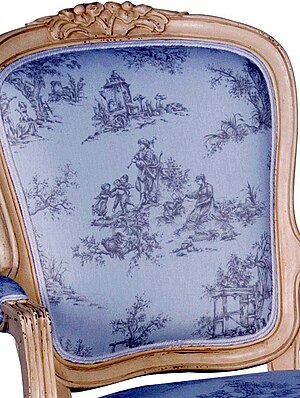
p 467 | Jouy hangings=toile de Jouy: cloth or canvas for painting on. draught-curtains are used to prevent heat loss from a room, due to drafts or weather. 

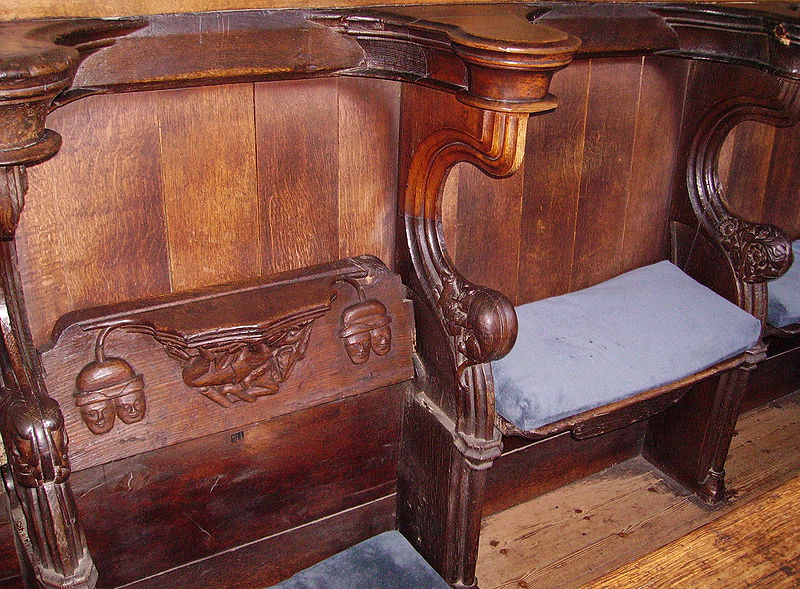
p 468 | A misericord (sometimes named mercy seat) is a small wooden shelf on the underside of a folding seat in a church, installed to provide a degree of comfort for a person who has to stand during long periods of prayer. The small shelves were available for use at times when the folding chair was required to be stored folded up, and the person expected to be in an upright position.
"Boston Stump misericord 02" by Immanuel Giel (Own work). Public Domain via Commons License
 p 468 | Agraphia: loss of the ability to write.

p 470 | "this Hohenzollern ... : with the abdication of Wilhelm II in 1918, the Hohenzollern dynasty of German emperors came to an end. The short-lived kingdom of Hanover was annexed by Prussia in 1866, and its last King was indeed dispossessed, but by Kaiser Wilhelm I, not his son. Prussia annexed Alsace-Lorraine from France following its victory in the 1870 war. (Sturrock)


6.11.2015

Sodom and Gomorrah IV p 203-245

p 205 | Caen

p 205 | French Legion of Honour
 
p 205 | L'Écho de Paris was a daily newspaper in Paris, 1884 to 1944.

Caillaux
p 205 | Joseph Caillaux (1863-1944), a Radical politician who served as prime minister from 1911 to 1912.

p 205 | "under the thimble ... thumb": the manager says "sous la coupole" instead of "sous la coupe," which improves the joke, since "sous la coupole" refers to the meeting place of the Académie Française (being re­ceived sous la coupole means being elected to the Academy). (Sturrock)


p 210 | M. Paillard was a well-known Paris restaurant, patronized by some of Proust's friends.

From  A Companion to Evelyn Waugh’s Brideshead Revisited: "Paillard’s was one of leading restaurants of Paris... created in 1880 when M. Paillard took over an establishment situated at the corner of the Rue de la Chaussée-d’Antin and the Boulevard des Capucines from the Bignon brothers. According to Larousse Gastronomique, ‘Favourite dishes were chicken Archduke, Georgette potatoes, calves’ sweetbreads with asparagus tips, fillets of sole Chauchat and, above all, stuffed duck, rivalling the duck au sang of the Tour d’Argent.’  The culinary term paillard is of course named after the famous chef, who trained under the great Escoffier himself. It is a thin slice of veal (or now, any meat) pounded even thinner until it is translucent and then grilled or fried for a few seconds only."
p 216 | Lethe: the stream of oblivion & forgetfulness, was one of the rivers of the underworld and its goddess (Greek mythology).
Jammes

p 218 | Francis Jammes (1868-1938) wrote simple poetry, often on the theme of innocence re­covered. The stag in this dream sequence appears to derive from a story by Flaubert, "The Legend of Saint Julien the Hospitaler," in which a stag predicts to Julien that he will kill his father & mother (this reference may be relate to Proust’s guilt about the death of his mother). The fork comes from an earlier draft of the novel, where the sound of a fork striking a plate triggers the Narrator’s involuntary memories (like the madeleine). In the final book (Time Regained), the fork has become a spoon.(Sturrock)  After reading Swann's Way, Jammes wrote Proust a letter comparing him to Shakespeare and Balzac.

p 219 | Aias: Greek for Ajax in the Iliad, who, in his madness killed sheep & shepherds after mistaking them for fellow Greeks. (Sturrock)


p 223 | barouche: carriage

p 223 |Jonathan, i.e., John the Baptist. (Sturrock)
 
p 228 | Duc d’Orléans…: only two of the four separate houses of Orléans ever succeeded to the throne, with the second occasion in 1830, with King Louis-Philippe; the title of Prince de Tarente belonged indeed to the house of La Trémoille.

p 229 |Mme Marie de Sévigné (1626-96), considered to be one France’s greatest letter-writers; Proust admired the quick, spirited impressionism of her style. Mme de Beausergent is a character, not a person.(Sturrock)

p 231-2 | Bertrand de Salignac-Fénélon (1878-1914) was killed in the opening months of WWI. He was descended from a brother of François de Salignac de La Mothe-Fénélon (1651-1715), writer, theologian, Archbishop; also known as the “Swan” of Cambrai, whose Aventures de Télémaque were interpreted as a veiled attack on Louis XIV.< (Sturrock).  He was Proust's very good friend and partial model for Saint-Loup.


p 232 | René Duguay-Trouin, Sieur du Guay (1673-1736), a sailor whose statue stands in his native Saint-Malo. (Sturrock)

p 232 | whitlow: an infection of the tip of the finger.

p 234 | The Abbess of Fontevrault was Marie-Madeleine Gabrielle de Rochechouart (1645-1704), who was the older sister of Françoise-Athénaïs de Rochechouart (1640-1707), the Marquise de Montespan, who was the mistress of King Louis XIV

p 235 | Panathenaea: an Athenian festival to honor the goddess Athena, depicted on a frieze on the Parthenon, fragments of which are in the British Museum & the Louvre. (Sturrock)

p 240-1 | syncope ("sincup"): a short loss of consciousness and muscle strength, fainting, passing out.

p 243 | "angel lutanists, Italian cathedral, porphyry, jasper... " maybe Cappella Di San Brizio (Duomo) in Orvieto.

11.06.2014

Sodom and Gomorrah IV pp 95-99


p 96 | "...the Academicians...": candidates for election to the various academies, the Académie Française above all, are expected to gather support in this way. (Sturrock notes)

p 96 | Mme de Durfort: the Durfort family appears in the Memoirs of Saint-Simon, one of Proust's principal sources of aristocratic names; various members were still prominent in Parisian society in his own day. (Sturrock notes)


p 97 | Mélanie Pourtalès: Comtesse Edmond de Pourtalès, née Mélanie de Bussière (c.1832-1914), had been a lady-in-waiting to the Empress Eugénie, wife of Napoleon III. (Sturrock notes)

Oratorian temple
p 97 | "Holy Synod and the Oratorian temple": the Holy Synod was an ecclesiastical body of the Russian Orthodox church, founded in 1721 and suppressed in 1917; in modern Russia, it serves by Church statute as the highest governing body of the Russian Orthodox Church in the periods between Bishops' Councils. Oratoire du Louvre is a Protestant church on the rue de Rivoli in Paris. It was given to the Protestants by Napoleon in 1811. Before then, it was the royal chapel of the kings of France. (Sturrock notes)

p 98 | General Staff: Representatives from all French military forces (army, navy, air, etc.).

p 99 | Eugène-Marin Labiche (1815-88), comic playwright who wrote many of the most popular and amusing light comedies of the 19th-century French stage. Born into the bourgeois class, which provided the social setting for most of his works. Typically, the plays are based on an improbable incident evolving into an imbroglio that brings out the folly and frailty of the characters.


7.28.2014

Sodom and Gomorrah IV p 1-21

Sodom and Gomorrah (The Cities of the Plain)

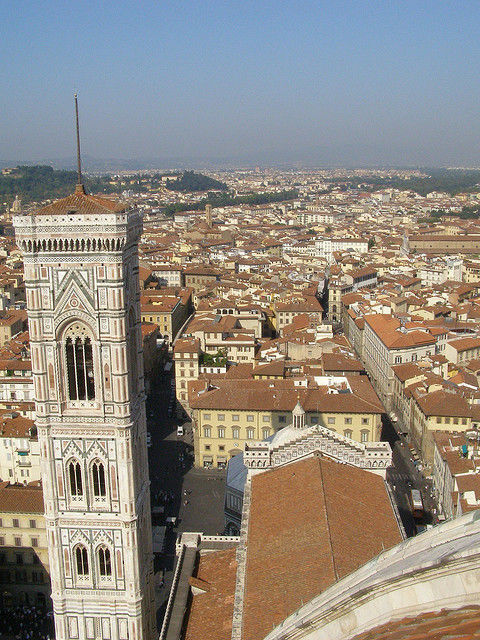
p 1 | "...rose-pink campanile..." (bell tower; this one is Giotto's in Florence); coach-house = carriage house;  eyrie or aerie: large nest of a bird of prey, especially an eagle, typically built high in a tree or on a cliff.

p 2 | pollination

the chapel at Combray     

Robert de Montesquiou

 p 2 | Excellent essay on Count Robert de Montesquiou (above), who was a partial model for the Baron de Charlus...

p 7 | "... Beethoven's questioning phrases..." In Hammerklavier’s Adagio Sostenuto or the Sixteenth Quartet?

p 10 | Boer War (Second)

p 12 | Fanlight = window  transom

p 12 | pregnancy (of Nero) in the Golden Legend.

p 13 | Caliph of Baghdad dressed as a merchant 

p 14 | Gare d'Orléans; Orléans is about 83 miles ssw of Paris.

p 15 | Cathedral of Orléans

real penholder
stereoscope


p 15 | optical penholder  (stereoscope)

p 15 | ophthalmia = inflammation of the conjunctiva or the eyeball;

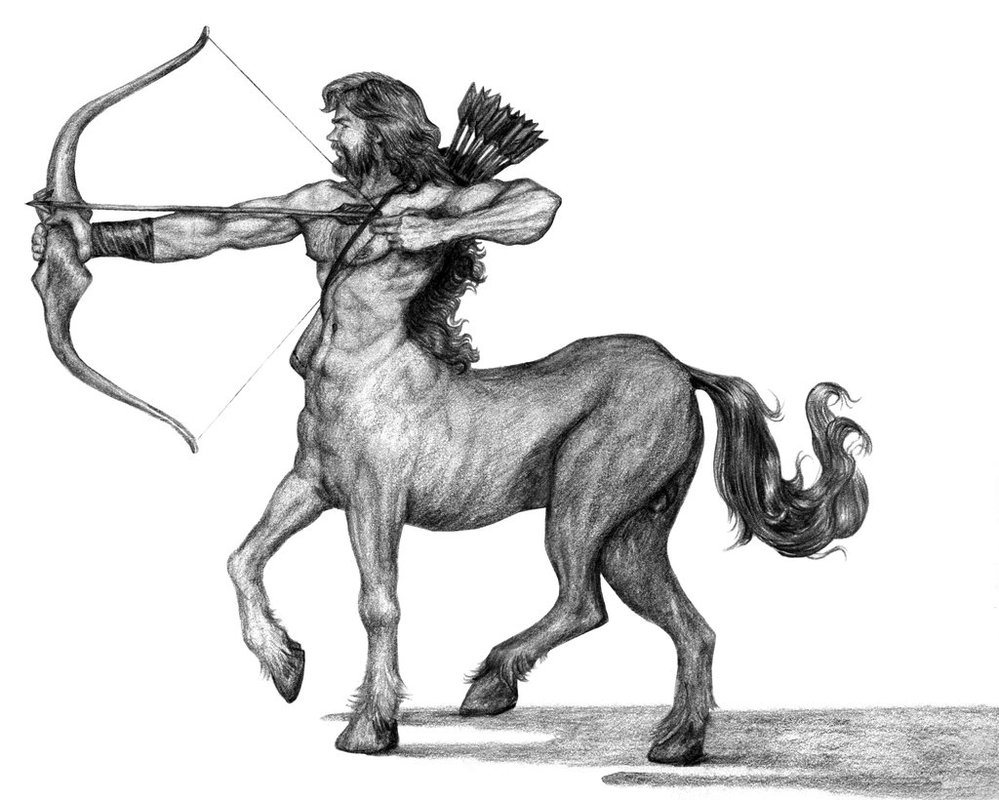
Centaur

p 15 | Diane  de Poitiers, mistress of King Henri II of France. Her Renaissance house in Orleans was destroyed in June 1940. {Sturrock, note 10}

p 16 | mantle in gules (heraldry); "I have three popes in my family": possibly an allusion to three Renaissance popes from the Medici family in Florence from whom Charlus is supposedly descended: Leo X, Clement VII, and Leo XI. {Sturrock, note 11}

p 18 | "... word dear to the ancient Greeks...";  Athena: the goddess who protects Ulysses in both the Iliad & the Odyssey. In Book XIII of the Odyssey, she finally reveals herself to him, having earlier appeared in the guise of an adolescent. {Sturrock, note 12}

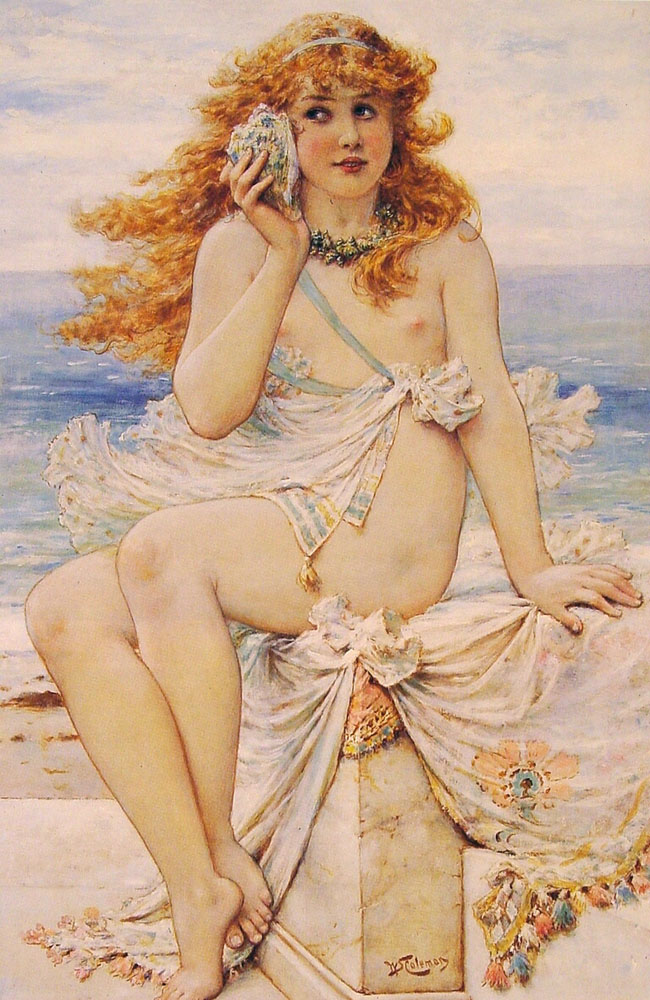
nymph
p 19 | Mene, Tekel, Upharsin (the writing on the wall); prophetic words written on the wall by the fingers of a man's hand during King Belshazzar's fatal feast in Babylon. They were interpreted by the prophet Daniel to mean that Belshazzar's reign, and indeed his life, were over (see Daniel 5). {Sturrock, note 13}

p 20 | A nymph in Greek & Latin mythology is a minor female nature deity usually associated with a specific location or landform. Not goddesses, nymphs are seen as divine spirits who animate nature, often shown as beautiful, young nubile maidens who dance and sing. Ephebes are young adolescent men of (military) training age.

p 20 | Original sin and racial predestination.

p 21 | ... honour precarious, liberty provisional, ... position unstable, ... the poet one day feted in every drawing room & applauded in every theatre in London, and the next driven from every lodging... (Oscar Wilde?, Wilde was convicted of gross indecency and sentenced to two years' hard labor, 1895-97.)

p 21 | turning the mill like Samson....

p 21 | "two sexes shall die... " Vigny poem, Proust's meaning, timing, connection to Baudelaire are all discussed beginning on page 18 of Proust's Lesbianism by Elisabeth Ladenson; a line from Alfred de Vigny's poem "La Colere de Samson", where Samson becomes disillusioned with women following his betrayal by Delilah. {Sturrock, note 14}

11.29.2013

The Guermantes Way III p 498-522

p 502, 506 | Saint-André-des-Champs: Proust's fictional church near Combray, which throughout the novel comes to represent, through its Gothic sculptures of people, the essence of "Frenchness." He has related it to Francoise & Theodore. Here he sees Albertine's little peasant face.
p 503 | Mme. Blandais: minor character, wife of a LeMans notary Marcel meets on holiday at the Grand Hotel.
p 507 | A bergère is an enclosed upholstered French armchair with an upholstered back and armrests on upholstered frames.


p 507 | Yellow satin gown with black poppies... well, maybe something like this (but way nicer...)
p 508 | Schubert's Adieu (music);
"The song is not by Schubert, but by August Heinrich von Weyrauch. It was first published in 1824, to a text by Karl Friedrich Gottlob Wetzel. Schubert's name was first attached to the song in 1843. The author of the French text to which the song is now sung ("Voici l'instant supreme...") is thought to have been Edouard Belanger. (Reed, John. The Schubert Song Companion, page 12, via books.google.com).  (Note that the lines quoted are not part of these lyrics, as far as I can tell.)
p 514-15 | "Fabrice's aunt... Count Mosca": reference to characters in Stendahl's novel The Charterhouse of Parma.
p 517-18 | Book of Esther; Ahasuerus (later Xerxes) is given as the name of the King of Persia in the Book of Esther; Mordecai was there also.
p 520 | Théâtre-Français = Comédie-Française .
p 520 | Fernand Labori was the lawyer for Dreyfus & Zola.
p 521 | May be Elizabeth, Princess of Ligne.


4.07.2011

I said to myself: "Here I am: this is the Church of Balbec. This square, which looks as though it were conscious of its glory, is the only place in the world that possesses Balbec church. All that I have seen so far have been photographs of this church—and of these famous Apostles, this Virgin of the Porch, mere casts only. Now it is the church itself, the statue itself, they, the only ones—this is something far greater."

12.24.2009

Combray : Notes on Week 15

But in my dreams of Combray (like those architects, pupils of Viollet-le-Duc, who, fancying that they can detect, beneath a Renaissance rood-loft and an eighteenth-century altar, traces of a Norman choir, restore the whole church to the state in which it probably was in the twelfth century) I leave not a stone of the modern edifice standing, I pierce through it and ’restore’ the Rue des Perchamps. 
Eugène Emmanuel Viollet-le-Duc (January 27, 1814 – September 17, 1879) was a French architect and theorist, famous for his "restorations" of medieval buildings. Born in Paris, he was as central a figure in the Gothic Revival in France as he was in the public discourse on "honesty" in architecture, which eventually transcended all revival styles, to inform the emerging spirit of Modernism.

 Steeples at Martinville
   At a bend in the road I experienced, suddenly, that special pleasure, which bore no resemblance to any other, when I caught sight of the twin steeples of Martinville, on which the setting sun was playing, while the movement of the carriage and the windings of the road seemed to keep them continually changing their position; and then of a third steeple, that of Vieuxvicq, which, although separated from them by a hill and a valley, and rising from rather higher ground in the distance, appeared none the less to be standing by their side.
    In ascertaining and noting the shape of their spires, the changes of aspect, the sunny warmth of their surfaces, I felt that I was not penetrating to the full depth of my impression, that something more lay behind that mobility, that luminosity, something which they seemed at once to contain and to conceal.


More views at the Ecclesiastical Proust Archive 

https://www.amisdeproust.fr/fr/

Water-lillies on the Vivonne

Proust and His Times

I haven't yet found any analysis of the unnamed fisherman in the straw hat.  {{The Pont-Vieux led to a tow-path which, at this point, would be overhung in summer by the bluish foliage of a hazel, under which a fisherman in a straw hat seemed to have taken root. At Combray, where I knew everyone, and could always detect the blacksmith or grocer’s boy through his disguise of a beadle’s uniform or chorister’s surplice, this fisherman was the only person whom I was never able to identify. He must have known my family, for he used to raise his hat when we passed; and then I would always be just on the point of asking his name, when some one would make a sign to me to be quiet, or I would frighten the fish. }}

So.  Proust wrote Impressions on Riding in an Automobile about a car trip to Caen, where he saw the steeples shifting at Saint-Etienne & Saint-Pierre.  The pertinent part of the article later became the boy Marcel's writing fragment, the one he jots down in the carriage. See the page 437 preview in Carter's biography at this link. (Scroll down).

More analysis of the Martinville fragment in on page 38 of this essay (Ruskin, Proust, and the Art of Failure). (Use Ctrl F to find the word "Martinville").

12.10.2009

An Image of an Image : Week 14 Notes


A question at tonight's meeting: What is a monstrance? A very beautiful one is in the photo to the left.
A monstrance is the vessel used in the Roman Catholic, Old Catholic, Anglican, and Lutheran Churches to display the consecrated Eucharistic Host.
Proust uses it in a lovely passage, just when M. takes shelter from the rain at the Roussainville church after comparing the country girl of his  dreams to the sculptures on the church, reflecting the physical types of the local people:
"Before our eyes, in the distance, a promised or an accursed land, Roussainville, within whose walls I had never penetrated, Roussainville was now, when the rain had ceased for us, still being chastised, like a village in the Old Testament, by all the innumerable spears and arrows of the storm, which beat down obliquely upon the dwellings of its inhabitants, or else had already received the forgiveness of the Almighty, Who had restored to it the light of His sun, which fell upon it in rays of uneven length, like the rays of a monstrance upon an altar."
We also wondered about the word sadism in referring to Mlle. Vinteuil and her friend:
It was true that in all Mlle. Vinteuil’s actions the appearance of evil was so strong and so consistent that it would have been hard to find it exhibited in such completeness save in what is nowadays called a ’sadist’; it is behind the footlights of a Paris theatre, and not under the homely lamp of an actual country house, that one expects to see a girl leading her friend on to spit upon the portrait of a father who has lived and died for nothing and no one but herself; and when we find in real life a desire for melodramatic effect, it is generally the ’sadistic’ instinct responsible for it.  
It is possible that, without being in the least inclined towards ’sadism,’ a girl might have shown the same outrageous cruelty as Mlle. Vinteuil in desecrating the memory and defying the wishes of her dead father, but she would not have given them deliberate expression in an act so crude in its symbolism, so lacking in subtlety....  
But, appearances apart, in Mlle. Vinteuil’s soul, at least in the earlier stages, the evil element was probably not unmixed. A ’sadist’ of her kind is an artist in evil, which a wholly wicked person could not be, for in that case the evil would not have been external, it would have seemed quite natural to her, and would not even have been distinguishable from herself; and as for virtue, respect for the dead, filial obedience, since she would never have practised the cult of these things, she would take no impious delight in their profanation. ’Sadists’ of Mlle. Vinteuil’s sort are creatures so purely sentimental, so virtuous by nature, that even sensual pleasure appears to them as something bad, a privilege reserved for the wicked. And when they allow themselves for a moment to enjoy it, they endeavour to impersonate, to assume all the outward appearance of wicked people, for themselves and their partners in guilt, so as to gain the momentary illusion of having escaped beyond the control of their own gentle and scrupulous natures into the inhuman world of pleasure. And I could understand how she must have longed for such an escape when I realised that it was impossible for her to effect it. At the moment when she wished to be thought the very antithesis of her father, what she at once suggested to me were the mannerisms, in thought and speech, of the poor old music-master... 
It was not evil that gave her the idea of pleasure, that seemed to her attractive; it was pleasure, rather, that seemed evil. And as, every time that she indulged in it, pleasure came to her attended by evil thoughts such as, ordinarily, had no place in her virtuous mind, she came at length to see in pleasure itself something diabolical, to identify it with Evil...
Perhaps she would not have thought of wickedness as a state so rare, so abnormal, so exotic, one which it was so refreshing to visit, had she been able to distinguish in herself, as in all her fellow-men and women, that indifference to the sufferings which they cause which, whatever names else be given it, is the one true, terrible and lasting form of cruelty. (Emphasis added) 

So after winning us over to his argument that Mlle Vinteuil was not truly sadistic (if she were inherently evil, she would not have been able to separate her actions from her self; she was just being melodramatic), he implies that true cruel sadists are indifferent to the sufferings they cause. As always for Proust, love hurts.

10.07.2009

Steeple and Church at Combray : week 5


Interior & exterior Combray church photos at the Ecclesiastical Proust Archive :: WOW! There's an outstanding search feature, so you can search for Combray church windows and color!
Walking Combray  :: Someone went to Illiers-Combray & took pictures.
Map :: Modern
..."The [tea] leaves, which had lost or altered their own appearance, assumed those instead of the most incongruous things imaginable, as though the transparent wings of flies or the blank sides of labels or the petals of roses had been collected and pounded, or interwoven as birds weave the material for their nests."
  • Daily Proust … This writer from S.C. started reading & blogging. Here are his church entries. Looks like he didn’t finish. Or at least he stopped blogging.

9.23.2009

Combray (vol I p 22-55): Notes September 2009

marrons glacés::
 
Aristaeus and learning that...the realms of Thetis ...  into an empire hidden from mortal eyes, where Virgil...

a letter from Twickenham:: TWICKENHAM, London. Residence of the exiled Comte de Paris.

Marquise de Villeparisis (née Mlle de Bouillon, aunt of the Duc and Duchesse de Guermantes; friend of M's grandmother from convent days; lover of the Duc de Norpois)

the des Laumes (Prince and Princesse des Laumes become the Duc and Duchesse de Guermantes)

Sévigné: Mme de SÉVIGNÉ, author of the famous Letters (1626-96).

p 26 | the Maréchal de MacMahon :: (1808–93; President of the Republic 1873–79).

reign of Louis-Philippe :: Louis-Philippe I (6 October 1773 – 26 August 1850), was King of the French from 1830 to 1848 in what was known as the July Monarchy. He was the last king to rule France, although Napoleon III, styled as an emperor, would serve as its last monarch.

Duc d’Audiffret-Pasquier :: (le chancelier; French statesman, 1767–1862)

...met a learned old man who knows Maubant very well :: MAUBANT (French actor, 1821–1902)

Mme. Materna:: (Austrian singer, 1847–1918)

Saint-Simon :: Louis de Rouvroy, Duc de SAINT-SIMON (French social philosopher, author of the Mémoires, 1675–1755) describes how Maulévrier : MAULÉVRIER, Marquis de (French Ambassador in Madrid, 1720–23).

novels of George Sand

Chartres Cathedral by Corot, of the Fountains of Saint-Cloud by Hubert Robert

Mount Vesuvius by Turner

p 54 | the engraving by Morghen  of Leonardo’s Last Supper

sculptures representing the miracle of Saint Théophile or the four sons of Aymon