Pages

Showing posts with label Theatre. Show all posts

2.15.2018

The Fugitive V pp 614-54

p 617-20 | Phèdre (originally Phèdre et Hippolyte) is a French dramatic tragedy in five acts written in alexandrine verse by Jean Racine, first performed in 1677 at the theatre of the Hôtel de Bourgogne in Paris.

p 620 | ..."Jansenist" scruples...: Jansenism is so called after the Christian doctrine put forth by Cornelius Jansen (1585-1638), a Dutch Catholic bishop, in his Augustinus, 1640. This doctrine favors grace and predestination rather than free will and good works. In this light, Phèdre would be less responsible for her actions, and less guilty. (Collier notes)

p 627 | Gare d'Orsay: former Paris railway station and hotel built in 1900. this station served the south and southwest of France, including Châtelleraut and Touraine. After closing as a station, it reopened in December 1986 as the Musée d'Orsay, an art museum.
Electric trains in the Gare d'Orsay, ca. 1900

p 630 |"..close down the churches and ..." : An allusion to French legislation passed in 1904 and 1905 leading to the separation of Church and State (Loi sur les Congrégations).

p 634 | Niccolò Machiavelli (1469–1527) was an Italian diplomat, politician, historian, philosopher, humanist, and Renaissance writer. Often called the father of modern political science, he was an official in the Florentine Republic, as well as writing comedies, songs, & poetry. "Machiavellianism" is a widely used negative term to characterize unscrupulous politicians of the sort he described most famously in The Prince (Il Principe), his most renowned work, in 1513.

Touraine
p 636 | Touraine: a traditional province of France, whose capital was Tours.

p 646 | Les Écorres...Marie-Antoinette: Farms near Balbec where Albertine and the girls may have visited; it was fashionable at the time to drive out into the countryside in Normandy and take tea on a farm.

p 648 | Cricqueville-en-Bessin is a commune in the Calvados department in the Normandy region in NW France. Its name is from its deep-water creek that forms a natural harbor, from Crycavilla.

p 654 | "to philosophise in my garret...": Collins offers a reference to a work by 19th-century novelist Émile Souvestre (1806–54), who wrote Un philosophe sous les toits (An attic philosopher in Paris, or A peep at the world from a garret : the journal of a happy man, 1850).

p 654 | ..."the goatherd's horn..." : 


1.15.2018

The Fugitive V pp 563-614

p 589-90 | Helen... Trojan elders: On the old men of Troy, upon seeing Helen, from Homer's Iliad, but also referring to Pierre de Ronsard's Sonnets pour Hélène (1578), written for Hélène de Surgères, a young love. The quoted line is from one of the sonnets, Book II, LXVII, line 4.

p 609 | Manon is a comic opera in 5 acts by Jules Massenet, to a French libretto by Henri Meilhac and Philippe Gille, based on the 1731 novel L’histoire du chevalier des Grieux et de Manon Lescaut by the Abbé Prévost. It was first performed at the Opéra-Comique in Paris in 1884.
1896 by Nadar

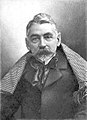
p 614 | Mallarmé's The Swan (Le Cygne) (Great discussion here, if you have time) The poem, which opens with one of the most famous lines in French literature, has the reputation of being very difficult. First, the original text:

Le vierge, le vivace et le bel aujoud'hui
Va-t-il nous déchirer avec un coup d'aile ivre
Ce lac dur oublié que hante sous le givre
Le transparent glacier des vols qui n'ont pas fui!

Un cygne d'autrefois se souvient que c'est lui
Magnifique mais qui sans espoir se délivre
Pour n'avoir pas chanté la region ou vivre
Quand du stérile hiver a resplendi l'ennui.

Tout son col secouera cette blanche agonie
Par l'espace infligée a l'oiseau qui le nie,
Mais non l'horreur du sol où le plumage est pris.
Fantôme qu'à ce lieu son pur éclat assigne,

Il s'immobilise au songe froid de mépris
Que vêt parmi l'exil inutile le Cygne.

******************************************
Can the virgin, beautiful and vivid day
Release this frosted and forgotten lake,
With a drunk blow of wings to reel away 
In névés of flights they have yet to make?

Without song or recognition, the image burns
Tediously into the surrounding cold.
Yet always the magnificence, and the long neck yearns
Beyond the white hardness of the winter's hold.

Fast though feathers be caught in soiling mud,
From a horror of life the bird sails on,
Cold and improbable in its own pure being,
A scorching pure whiteness in the glacial flood:

A dream wrapped in scorn, and a phantom, seeing
How futile is exile for the Swan.

p 614 | other lines... vespertine: Two stanzas from another Mallarmé poem, M'introduire dans ton histoire (1914)


2.26.2017

New Proust play in Montreal

This play sounds like great fun!


========================================================

image1.jpeg

About Sylvie Moreau, the director (articles in French). 


In bed with Marcel

5.12.2016

The Captive V pp 1-27

p 3 | Russian ballet=Ballets Russes

p 3 | "Les douleur sont des folles/Et qui les écoute est encore plus fou."  Albertine hums this refrain from Biniou, by Hippolyte Guérin, music by Emile Durand (1830-1903). 

p 4 | "Une chanson d'adieu sort des sources troublées..."  From Pensée d'automne by Armand Silvestre, music by Jules Massenet, French opera composer, 1842-1912.

p 13 | Assuerus = Ahasuerus, King of Persia, in the play Esther, by Racine., here Act I, Scene 3


p 15 | Parc des Buttes Chaumont: 5th largest park in Paris, opened in 1867. The park took its name from the bleak hill on the site, which, because of the soil's chemical composition, was almost bare of vegetation; it was called Chauve-mont, or bare hill.

p 16 | coalheaver = one who feeds coal into a furnace

p 20 | Gomorrah: Sodom and Gomorrah were cities named in the Bible, the Torah and other religious texts, destroyed by God in fire and brimstone because of their lack of hospitality & wickedness. Proust here seems to be using it to refer to the  rampant lesbianism he imagined at Balbec.

 p 27 |  Arquebus : an early muzzle-loaded firearm, sensitive to humidity.

1.31.2016

Sodom and Gomorrah IV pp 542-62


p 543 | cabinet puddings (diplomats) = biscuits soaked in rum or kirsch. See a recipe here.  (Sturrock)

p 549 | La Sanseverina is the spirited, sophisticated heroine of Stendhal's novel La Chartreuse de Parme. (Sturrock)

p 551 | "the Baronne de Rothschild" rose named in 1868 after Laure, wife of Baron Alphonse de Rothschild; "the Maréchale Niel" (actually "Maréchal Niel") pear named in 1864 after Adolphe Niel (1802-69). (Sturrock)

p 555 | Camille Stamati (1811-70), pianist and composer, and teacher of Saint-Saens.


bon Chrétien
p 556-57 | La Comtessed'Escarbagnas is a one-act comedy by Molière, in which the heroine is sent some bon Chrétien pears as a love offering by her suitor, M. Thibaudier. The other pear names that follow came from Elisabeth (not Emilie) de Clermont-Tonnerre’s cookbook, Almanach des bonnes choses de France (1920). (Sturrock)

p 562 | Calvados brandy

1.30.2016

Sodom and Gomorrah IV pp 515-42

Bergson
p 520-22 | Émile Boutroux (1845–1921), eminent 19th century French philosopher of science & religion, and an historian of philosophy. Firmly opposed to materialism in science, he was a spiritual philosopher who defended the idea that religion and science are compatible, at a time when the power of science was rising inexorably. His work is somewhat overshadowed by Henri Bergson. Elected to the Academy of Moral & Political Sciences (1898) & the Académie française (1912). Henri Bergson (1859–1941), major French philosopher, convinced many that immediate experience & intuition are more significant than abstract rationalism & science for understanding reality. He was awarded the 1927 Nobel Prize in Literature and in 1930, France awarded him its highest honour, the Grand-Croix de la Legion d'honneur. (wiki) 
p 521 | "like a dulcimer" refers to a couplet from Baudelaire's Fleurs du mal: "Your memory, like uncertain fables, / Wearies the reader like a dulcimer." (Sturrock)

p 521 | Porphyry of Tyre (c. 234–c. 305 AD) was a Neoplatonic philosopher who edited & published the Enneads, the only collection of the work of his teacher Plotinus. Plotinus (c.204/5 – 270) was a major philosopher of the ancient world. His teacher was Ammonius Saccas & he is of the Platonic tradition. Historians of the 19th century invented the term Neoplatonism and applied it to him & his philosophy, which was influential in Late Antiquity. Much of his biographical information comes from Porphyry's preface to the Enneads. (wiki)


p 525 | toquewoman's small hat without a brim made in any of various soft close-fitting shapes. Here are some outfits made for motoring

p 524 | Footman.

p 524-25  | "Prosper, dear hope ...": a line from Racine's Esther, wrongly attributed here to Athalie. In French, "Prospérez, cher espoir d'une nation sainte." "Come, come, my daughters": "Venez, venez, mes filles."  They must be summoned": "il faut les appeler."

p 527 | Euryclea: In the Odyssey, when Ulysses returns to Ithaca in disguise, his nurse Euryclea recognizes him by a scar on his foot or leg.

p 528 | "... faulty restorations at Notre-Dame" refers to the restorations done by Viollet-le-Duc and others between 1844 and 1864. (Sturrock) Also see this excerpt about church painting & restorations.

p 528 | "...those objects . . . mantelpiece:" a reference to Edgar Allan Poe's story "The Purloined Letter," translated into French by Baudelaire, in which a much-sought incriminating letter lies unconcealed. Text is here. (Sturrock)

p 528 | Etruscan

p 534 | Epreville
 
p 535 | The Okeanides (or Oceanides) were 3000 goddess Nymphs who presided over the sources of earth's fresh-water, ranging from rainclouds to subterranean springs and fountains.

p 538 | Montsurvent

p 541 | Hadrian (d. 138 CE), 14th Emperor of Rome, built the Pantheon in Rome and Hadrian’s Wall in northern Britain.

9.16.2015

Sodom and Gomorrah IV pp 447-55

p 447 |  The English name "Normans" (settled in Normandy, France) comes from the French words Normans/Normanz, plural of Normant, modern French normand, which is itself borrowed from Old Low Franconian Nortmann "Northman" or directly from Old Norse Norðmaðr, Latinized as Nortmannus (recorded in Medieval Latin, 9th century) to mean "Norseman, Viking". (Wikipedia)

p 447 | The Tour d'Argent, on the Left Bank, was, and remains, one of the great restaurants of Paris; the Hotel Meurice, on the rue de Rivoli, was one of the city's best in Proust's day.
Boutroux

p 448 | Émile Boutroux (1845-1921) was an eminent 19th century French philosopher of science & religion and an historian of philosophy. He firmly opposed materialism in science. He ... defended the idea that religion & science are compatible...  His work is overshadowed... by that of his student, the more celebrated Henri Bergson. He was elected to the Academy of Moral & Political Sciences in 1898 & to the Académie française in 1912. (Wiki)

Académie française
p 448 | Académie française : The Forty are the "Immortals," or the forty members of the Académie française. Not all the names Brichot cites are actual Academicians. (Storrock)

p 448-9 | Henri Houssaye; Olivier Lefèvre d'Ormesson; Édouard René de Laboulaye: Honoré Le Peletier, comte d'Aunay; M. de Bussière; M. Albaret; M. de Cholet; M. dela Pommeraye

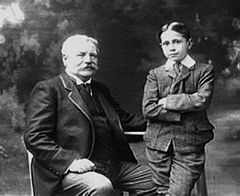
p 449 | Paul Porel (Paul Désire Parfouru, 1843-1917), actor &  theater director, who ran the Odéon on the Left Bank, from 1884 to 1892, hence "Odéonia." He was married to the comedienne Réjane (one of the models for Berma), who, with their son Jacques Porel were friends with Proust. 

p 449 | The Théâtre de l'Odéon is one of France's six national theatres. It is located at 2 rue Corneille in the 6th arrondissement of Paris on the left bank of the Seine, next to the Luxembourg Garden. It was originally built between 1779 and 1782, in the garden of the former Hôtel de Condé, to a Neoclassical design by Charles De Wailly and Marie-Joseph Peyre. The Odéon was originally intended to house the Comédie Française, which, however, preferred to stay at the Théâtre-Français in the Palais Royal. The new theatre was inaugurated by Marie-Antoinette on April 9, 1782.

p 450 | Even though Moncrieff uses "-ast" here, the French has "-arder", which Sturrock suggests could possibly stand for pétarder, meaning "to blow one's top" -- and possibly several other slangy meanings. I think Moncrieff used his translator's licence to indicate that the two men were gossiping about Charlus being gay (i.e., "pederast"). Remember Marcel has already indicated that the people in one's social circle wouldn't mention or notice it, but outsiders would do both.

p 452 | La Chercheuse d'esprit, a comic opera with words by Charles-Simon Favart (1710-92) and music by Jean-Claude Trial (1732-71), first presented in 1741.

p 453 | The Sarmatians were a large confederation of Iranian people during classical antiquity, flourishing from about the 5th century BC to the 4th century AD. They spoke Scythian, an Indo-European language from the Eastern Iranian family.

p 454 | ... the Rohans...: The House of Rohan is a French noble family of viscounts, later dukes and princes, coming from the locality of Rohan in Brittany. 

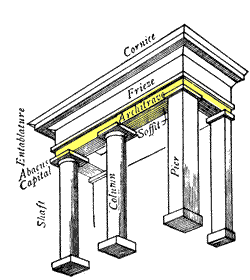
architrave
p 454 | architrave: the lintel or beam that rests on the capitals of the columns. It is an architectural element in Classical architecture.
Odéon
the lintel or beam that rests on the capitals of the columns. It is an architectural element in Classical architecture.
p 455 | galantine: A galantine is a Polish dish of de-boned stuffed meat, most commonly poultry or fish, that is poached and served cold, coated with aspic.

p 455 | Mme Jeanne Samary: 19th century actress and model (Renoir's lover for a while).


p 455 | Le Capitaine Fracasse by Théophile Gautier: This book was promised to the public in 1836 but finally published in 1863. It is centered on a soldier named Fracasse whose adventures portray bouts of chivalry, courage and a sense of adventure. Gautier places the story in his favourite historical era, that of Louis XIII. It is best described as a typical cloak-and-dagger fairy tale where everyone lives happily ever after.


9.10.2015

Sodom and Gomorrah IV pp 397-446

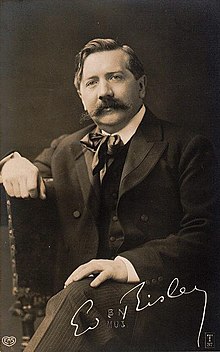
p 401 | Francis Planté (1839-1934), French pianist; Ignacy Jan Paderewski (1860-1941), a virtuoso pianist who twice became prime minister of his native Poland; Édouard Risler (1873-1929), a French pianist best known for his playing of Liszt and Beethoven. 

p 401 | "Qualis artifex pereo!": "What an artist perishes in me!," supposedly the Emperor Nero's last words. German classicists had been unable to agree on the worth or authenticity of the Latin poetry attributed to him. 

p 407 | Demoiselles de Caen (lobsters) are small Normandy lobsters; Pampille was the pen name of Mme Marthe Daudet, who wrote cooking & fashion columns in the right-wing paper L'Action run by her husband, Proust's friend Léon.

p 409 | Pierre de Ronsard (1524-85), greatest of French Renaissance poets. His popularity and prosperity in his own time was steady.   


p 411 | buen retiro: Spanish phrase literally meaning "good retreat", used here meaning toilet.

p 411 | An eminent publisher ... paper knife: possibly a description of Eugene Fasquelle, a Paris publisher known to Proust.

p 419 | Jean-Gilbert-Victor Fialin, Due de Persigny (1808-72), was a right-wing politician who became minister of the interior and ambassador to London under the Second Empire.

p 421 | Dumas fils was Alexandre Dumas (1824-95),  novelist & playwright, son of Alexandre Dumas, the novelist of the same name, best known as the author of La Dame aux camelias.

p 424 | Cancan: the word can refer to either an item of unkind gossip, or the quack of a duck. (mid 19th century: from French, a child's word for canard ‘duck,’ from Old French caner ‘to quack.’ The name can-can may be derived from the French for tittle-tattle or scandal. However the dance was also called the coin-coin, which could have become corrupted into can-can.

p 427 | Jean de La Fontaine (1621-95),  the  greatest  of French  fabulists; Jean-Pierre Claris de Florian (1755-94), Voltaire's great-nephew and, as a writer of fables, much influenced by Rousseau.

p 427 | Julien de Monchateau ... "Pico della Mirandola": Francois de Monchateau was celebrated in France as a child prodigy (as was Pic0 della Mirandola in Renaissance Florence).

p 429 | Place Saint-Sulpice: where, in Paris, the cheapest and most tasteless religious objects can be bought.

p 430 Ferdinand Barbedienne (1810-92) specialized in casting bronze reproductions of classical statuary, popular with 19th-century bourgeoisie.

p 434 | Harpagon: the sexagenarian bourgeois miser in Molière's comedy L'Avare (The Miser).

p 434-37 | "Chantepie ... Does it deserve its name?": une pie is "a magpie," chanter means "to sing," so that the name should refer to a place where magpies sing.

p 438 | Jules Lachelier (1832-1918), French idealist philosopher, wrote influentially about the problem of induction, and is opposed here to John Stuart Mill, a philosopher known
in France in Proust's day as an extreme empiricist.


p 438 | Jean-Francois Millet (1814-75), celebrated for painting scenes of peasant life, notably the much reproduced L'Angelus.

p 439 | Chantereine: play on words... chanter, to sing and reine means "queen."

p 440-41 | Pont-a-Couleuvre would literally mean "Snake Bridge" or “Serpent bridge,” which was formerly Pont-à-Quileuvre, which in old French stands for Pont a qui l'euvre, in Latin Pons cui aperit, i.e., Pont a qui ouvre, closed bridge opened only upon payment.


p 441 | In none of La Fontaine's or Florian's fables does a frog find itself before the Areopagus, or supreme court of Athens.

p 443 | " 'She has good qualities ...'": the quotation from Mme de Sévigné, modified by Proust, refers to her daughter-in-law.

p 446 | Members of the French Senate, like Charles de Freycinet (1828-1923) and Justin de Selves (1848-1934). Sylva = Latin word for a wood.

p 447-48 | The Tour d'Argent, on the Left Bank, was, and is, one of the great restaurants of Paris; the Hotel Meurice, on the rue de Rivoli, was one of the city's best in Proust's day.  Emile Boutroux (1845-1921) taught philosophy at the Sorbonne, and at one time had Henri Bergson for a pupil. 

p 448-49 | The Forty are the "Immortals," or the 40 members of the Academie Francaise. Not all the names Brichot cites were actual Academicians.

p 449 | Paul Parfouru (1842-1917) was called Porel. He was an actor & theater director, who ran the Odéonon theater from 1884 to 1892, hence the reference to "Odeonia"; his son, Jacques Porel  (1893-1982), was a friend of Proust's.

p 449-51 | "...two trees...": Saint-Martin-du-Chene (un chene is an oak tree) & Saint-Pierre-des-Ifs (un if is a yew tree).


Place Saint-Sulpice

N.B. All entries based primarily based on Sturrock's notes.

9.05.2015

Sodom and Gomorrah IV pp 372-97

p 372 | William= German Emperor Wilhelm II. 

p 373 | the Abbaye-aux-Bois: where the celebrated hostess Mme de Récamierher had her salon in Paris, at which, during the 1820s, the great Romantic writers, Chateaubriand among them, read their works in public. 

p 373 | Émilie du Châtelet (1706-49), French mathematician, physicist, and author during the Age of Enlightenment, who had a long liaison with Voltaire. 

p 373 | ... Roman Empress...: possibly Agrippina, wife of Claudius I and mother of Nero, famous for her domineering ways.  (Sturrock) 

p 373 |... like Christ or the Kaiser...: a reference to Christ's injunction in Matthew 10:37; and to Kaiser Wilhelm II's declarations of 1891 that "The will of the King is the supreme law" and that soldiers should obey "without a murmur" if ordered to fire on their own families. (Sturrock) 

p 374 | "You alone did seem ...": "Toi seule me parus ce qu'on cherche toujours." (from Vigny) 

p 378 | Pierre Potain (1825-1901), a prominent Paris medical man, with several literary patients 
(see the Goncourts' Journal); Jean-Martin Charcot (1825-93), greatest of 19th-century neurologists in France, who influenced young Freud when he was a medical student in Paris.

p 380 |the comedies of Pierre de Marivaux (1688-1763) contain numerous aristocrats, but no baronnes. (Sturrock)

p 380 | Eugene Viollet-le-Duc (1814-79) was a champion of Gothic architecture, responsible for the restoration of many medieval buildings. 

p 381 | "Charles-Maurice, Abbé of Perigord"=Talleyrand, both an unbeliever and a Catholic bishop.

p 384 | Vincent d'Indy (1851-1931), composer & teacher, was outspokenly anti-Dreyfus, and also anti-Semitic. The position of Claude Debussy (1862-1918) was more nuanced; ironically, the fiercely partisan disagreements as to the merits or otherwise of his opera, Pelléas et Mélisande , caused it later to be likened to the Dreyfus Affair.

Molière
p 386 | squireen: A person who is half squire, half farmer.  
p 387 | Henri Meilhac (1831-97) wrote plays and comic operas, the best-known of which is La belle Hélène. Brichot is referring to Pascal's famous pensée: "If Cleopatra's nose had been shorter, the whole face of the earth would have been changed." (Sturrock) 
p 393 | Jean-Baptiste Poquelin was the real name of Molière, whose absurd character Argan, in Le malade imaginaire, is the model for Proust's pastiche of medical jargon. Mr. Purgon, a character from the same play.    (Sturrock) 

p 387 | "Uncle, I mean Sarcey": Francisque Sarcey (1827-99) was the leading drama critic of the day, nicknamed "Uncle" for his good sense and middlebrow tastes.   (Sturrock)
 

p 397 | Phineas Taylor Barnum (1810-91), the archetypal American showman and publicist.