Pages

Showing posts with label Balbec. Show all posts

2.28.2018

The Fugitive V pp 654-95

ruins, 1871
p 657 | The Château de Saint-Cloud was one of Marie-Antoinette's châteaux, where Napoleon & Napoleon III declared themselves Emperor in their turn (in 1804 & 1852). It was built on a site over-looking the Seine about 5 km (3.1 mi) west of Paris.  The château was expanded by Phillipe of France, Duke of Orléans in the 17th century, and again by Marie-Antoinette in the 1780s. In 1870, during the Franco-Prussian War, the château caught fire; most of the contents had been removed by Empress Eugénie. The standing roofless walls were finally razed in 1891. Now, a large park is on the site of the former palace, the Parc de Saint-Cloud, owned by the state. 

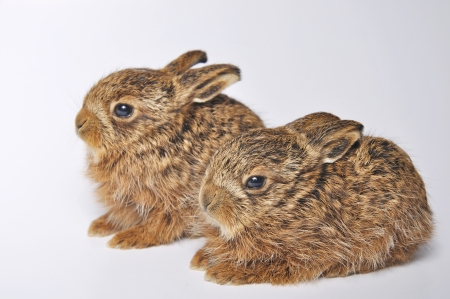
p 671 | Ortolans, leverets (a hare less than one year old),  rock-partridges...

p 675 | Byzantine Norman architecture

p 684 | novel in which a woman chooses not to speak (still searching)

p 695 | the baths at Balbec (Cabourg): Thalassotherapy: using sea-water as a form of therapy. Rules for sea-bathing at nearby Houlgate.

p 695 | A lorgnette is a pair of spectacles with a handle to hold them in place, rather than fitting over the ears or nose. The word "lorgnette" is derived from the French lorgner, to take a sidelong look at, and Middle French, from lorgne, squinting. They were invented by Englishman George Adams.


6.11.2015

Sodom and Gomorrah IV p 203-245

p 205 | Caen

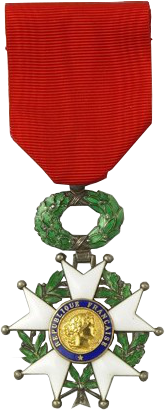
p 205 | French Legion of Honour
 
p 205 | L'Écho de Paris was a daily newspaper in Paris, 1884 to 1944.

Caillaux
p 205 | Joseph Caillaux (1863-1944), a Radical politician who served as prime minister from 1911 to 1912.

p 205 | "under the thimble ... thumb": the manager says "sous la coupole" instead of "sous la coupe," which improves the joke, since "sous la coupole" refers to the meeting place of the Académie Française (being re­ceived sous la coupole means being elected to the Academy). (Sturrock)


p 210 | M. Paillard was a well-known Paris restaurant, patronized by some of Proust's friends.

From  A Companion to Evelyn Waugh’s Brideshead Revisited: "Paillard’s was one of leading restaurants of Paris... created in 1880 when M. Paillard took over an establishment situated at the corner of the Rue de la Chaussée-d’Antin and the Boulevard des Capucines from the Bignon brothers. According to Larousse Gastronomique, ‘Favourite dishes were chicken Archduke, Georgette potatoes, calves’ sweetbreads with asparagus tips, fillets of sole Chauchat and, above all, stuffed duck, rivalling the duck au sang of the Tour d’Argent.’  The culinary term paillard is of course named after the famous chef, who trained under the great Escoffier himself. It is a thin slice of veal (or now, any meat) pounded even thinner until it is translucent and then grilled or fried for a few seconds only."
p 216 | Lethe: the stream of oblivion & forgetfulness, was one of the rivers of the underworld and its goddess (Greek mythology).
Jammes

p 218 | Francis Jammes (1868-1938) wrote simple poetry, often on the theme of innocence re­covered. The stag in this dream sequence appears to derive from a story by Flaubert, "The Legend of Saint Julien the Hospitaler," in which a stag predicts to Julien that he will kill his father & mother (this reference may be relate to Proust’s guilt about the death of his mother). The fork comes from an earlier draft of the novel, where the sound of a fork striking a plate triggers the Narrator’s involuntary memories (like the madeleine). In the final book (Time Regained), the fork has become a spoon.(Sturrock)  After reading Swann's Way, Jammes wrote Proust a letter comparing him to Shakespeare and Balzac.

p 219 | Aias: Greek for Ajax in the Iliad, who, in his madness killed sheep & shepherds after mistaking them for fellow Greeks. (Sturrock)


p 223 | barouche: carriage

p 223 |Jonathan, i.e., John the Baptist. (Sturrock)
 
p 228 | Duc d’Orléans…: only two of the four separate houses of Orléans ever succeeded to the throne, with the second occasion in 1830, with King Louis-Philippe; the title of Prince de Tarente belonged indeed to the house of La Trémoille.

p 229 |Mme Marie de Sévigné (1626-96), considered to be one France’s greatest letter-writers; Proust admired the quick, spirited impressionism of her style. Mme de Beausergent is a character, not a person.(Sturrock)

p 231-2 | Bertrand de Salignac-Fénélon (1878-1914) was killed in the opening months of WWI. He was descended from a brother of François de Salignac de La Mothe-Fénélon (1651-1715), writer, theologian, Archbishop; also known as the “Swan” of Cambrai, whose Aventures de Télémaque were interpreted as a veiled attack on Louis XIV.< (Sturrock) He was Proust's very good friend and partial model for Saint-Loup.


p 232 | René Duguay-Trouin, Sieur du Guay (1673-1736), a sailor whose statue stands in his native Saint-Malo. (Sturrock)

p 232 | whitlow: an infection of the tip of the finger.

p 234 | The Abbess of Fontevrault was Marie-Madeleine Gabrielle de Rochechouart (1645-1704), who was the older sister of Françoise-Athénaïs de Rochechouart (1640-1707), the Marquise de Montespan, who was the mistress of King Louis XIV

p 235 | Panathenaea: an Athenian festival to honor the goddess Athena, depicted on a frieze on the Parthenon, fragments of which are in the British Museum & the Louvre. (Sturrock)

p 240-1 | syncope ("sincup"): a short loss of consciousness and muscle strength, fainting, passing out.

p 243 | "angel lutanists, Italian cathedral, porphyry, jasper... " maybe Cappella Di San Brizio (Duomo) in Orvieto.

4.07.2011

I said to myself: "Here I am: this is the Church of Balbec. This square, which looks as though it were conscious of its glory, is the only place in the world that possesses Balbec church. All that I have seen so far have been photographs of this church—and of these famous Apostles, this Virgin of the Porch, mere casts only. Now it is the church itself, the statue itself, they, the only ones—this is something far greater."

3.15.2011

Balbec is Cabourg

Map showing Paris to Cabourg; click the + to zoom in.

Balbec is the fictional name of Cabourg, a town near the sea in the Basse-Normandie region of France. Proust spent the summers of 1907 and 1914 in the Grand Hôtel at Cabourg. Random walk site.
Gare de Dives-Cabourg, Dives-sur-Mer. From Gregory Deryckère 


Train station in Balbec-Plage (right);

Proust in Cabourg (photos and audio); 


The Grand Hotel still looks like a great place for les vacances  (below)