Pages

Showing posts with label Dreyfus. Show all posts

6.11.2015

Sodom and Gomorrah IV pp 195-203

p 195-6 | The Ligue de la Patrie Française was founded to bring together those opposed to Dreyfus, and as an answer to the Dreyfusard Ligue des Droits de l'Homme. (Sturrock)

p 197 | Duc d'Estrées so probably Charles de La Rochefoucauld-Doudeauville (1864-1907)

p 197 | Paul Doumer (1857-1932), a radical politician who became president of the Republic in 1931, only to be assassinated a year later; Paul Deschanel (1855-1922) became president in 1920, but resigned nine months later due to illness. (Sturrock)

p 197 |François de Charette (1763-96) led the counter-revolutionary Royalist uprising in the Vendée in 1793; his family remained strongly Royalist throughout the 19th century. Sosthène de Doudeauville (1825-1908), descended from another ultra-Royalist family, was a right-wing deputy for many years & ambassador in London 1873-74.  (Sturrock)

p 198 |Committee of Public Safety (Comité de Salut Public) was the most ferocious of the ruling institutions created by the French Revolution, lasting from 1793 to 1795; dominated first by Danton, then Robespierre. (Sturrock)

Zola in the 1890s
p 199 | Georges Clemenceau (1841-1929), a left-wing journalist and politician, was prime minister from 1906 to 1909 & again in the last months of WWI, but later was not elected president;

Émile Zola (1840-1902), by then the country's leading writer, was the most prominent Dreyfus supporter during the Affair;  Joseph Reinach  (1856-1921), a politician, eventually wrote a 7-volume history of the Affair;

Fernand Labori (1860-1917), a lawyer, defended Émile Zola in 1898 in the Dreyfus trial, and Captain Alfred Dreyfus himself at the court martial in Rennes in 1899.< (Sturrock)

p 201 |Édouard Juda Colonne (1838-1910), violinist & conductor who founded the Concert National in Paris in 1871 and later the Association des Concerts Colonne.

 
by Falconet

p 201 | Revue des deux mondes: (Review of the Two Worlds) is a French monthly literary & cultural affairs magazine published in Paris since 1829.


p 203 | Étienne Falconet (1716-91), sculptor and ceramic artist, whose patron was Mme de Pompadour.  


p 203 | Blue Cineraria flowers

1.09.2014

The Guermantes Way III p 537-551


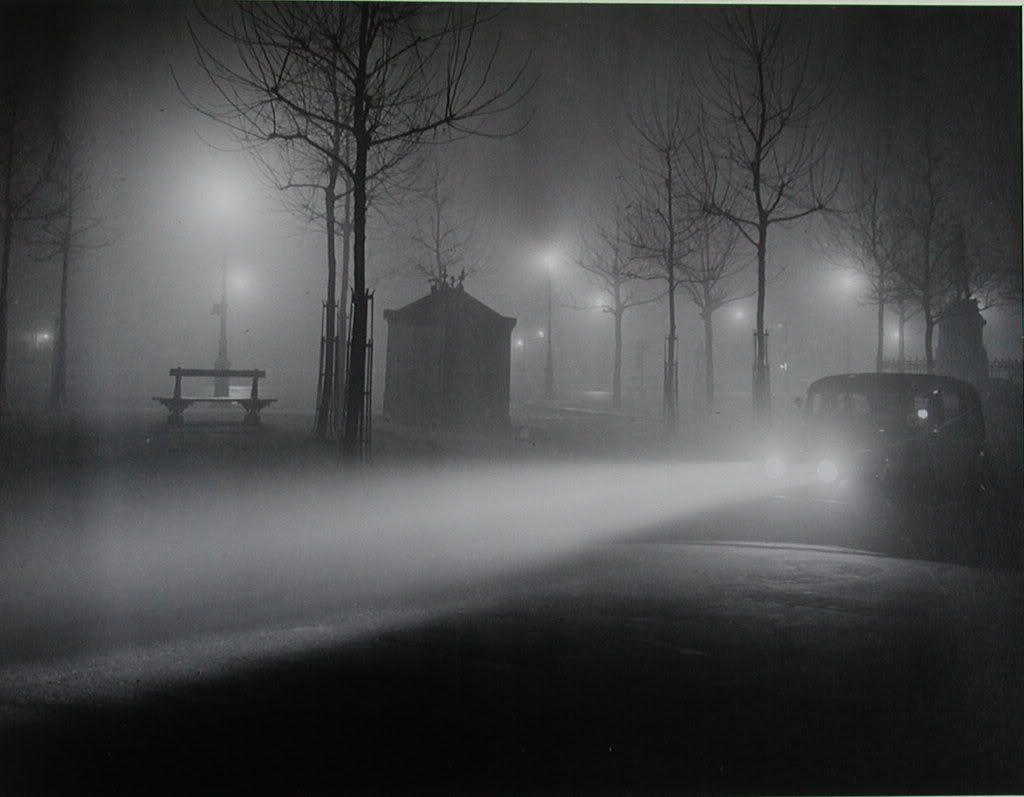
p 539 | Paris in fog
p 539 | Jews used to cover their heads with ashes in times of mourning...
p 540 | Nietzsche cut himself off from Wagner's music.... More on Proust and Nietzsche

p 544 | Le Figaro: French daily newspaper.

p 544 | Steeples at Martinville

p 547 | Pillar of Fire that guided the Hebrews.
p 548 | Arabian roc
p 548 | Zola trial  and this Zola trial


p 549 | Melanie Louise Sophie Renouard de Bussiere, better known under her married name Countess Edmond de Pourtales (1836-1914), was one of the "queens of Paris" under the Second Empire. Marquise de Galliffet.
p 549 | Revolving doors

p 550 | Dignus est intrare. Latin for "He is worthy to enter." Also, this phrase is found in Molière's comedy-ballet Le Malade imaginaire.
p 551 | Rond-Point of the Avenue des Champs-Elysées

3.28.2013

The Guermantes Way III p 328-43

p 328 | "The Learned Sisters" (in French, "les Doctes Soeurs," i.e., The Muses

p 329 | Rue Royal Club: This imposing group portrait commissioned from Tissot at the end of the Second Empire invites us to access the intimacy of the Circle of the Rue Royale, a male club founded in 1852. Painted in 1868. Charles Haas, one of the models for Swann, is on the far right. By the mid-1800s, maybe they were admitting "every Tom, Dick and Harry" as Bloch imagines, but not when this painting was done.


p 330 |  Devil's Island:  French penal colony off the coast of South America.
p 330 |  From Traharne:  "Caudine Forks ... company": this alludes to a conference in September 1898, presided over by the newspaper editor Gerault-Richard, in which the Socialists were to discuss the Dreyfus Affair and at which Jaurès was to speak. The Caudine Forks were the narrow pass where the Roman army was trapped by the Samnites in 321 B.C. and made to pass under the yoke.
p 330 | Praetorian Guard, Latin Cohors Praetoria, household troops of the Roman emperors. Here, I think, Norpois means to refer to a private army.
Pike medieval weapon consisting of a spearhead attached to a long pole or pikestaff; superseded by the bayonet.
p 331 | the Spree: German / Czech river which also runs through Berlin
p 331 | ultima ratio: The last resort. Short for the metaphor "The Last Resort of Kings and Common Men" referring to the act of declaring war; used in the names the French sniper rifle PGM Ultima Ratio. Louis XIV of France had Ultima Ratio Regum ("last argument of kings") cast on the cannons of his armies; motto of the 1st Battalion 11th Marines.
p 332 | Col. Émile Driant (1855–1916) was a French nationalist writer, politician, and army officer.
p 332 | Georges Clemenceau (1841-1929) was a French statesman who led the nation to victory in WWI. On 1/13/1898, Clemenceau, as owner/editor of the Paris daily L'Aurore, published Émile Zola's "J'accuse" on the front page. He decided to run the controversial article, which became a famous part of the Dreyfus Affair, in the form of an open letter to the President, Félix Faure.
p 334 | Atavism is the tendency to revert to ancestral type (Biol). In social science, atavism is a cultural tendency, e.g., people in the modern era reverting to the ways of thinking & acting of a former time. The word atavism is derived from the Latin atavus. An atavus is a great-great-great-grandfather or, more generally, an ancestor. In this case, the duc is dropping his modern political position & adopting one associated more with an older (titled) relative (anti-Dreyfusard).
p 334 | Japhetics: the descendants of Japheth, the third son of Noah and father of the white race (i.e., Europeans). So this may be an ethnic slur, which could have caused Bloch's surprised response.
p 335 | As editor, M. Judet maintained a conservative, Nationalist position in this newspaper. Zola later sued him, with the result shown in this headline from the New York Times:  
Zola's Defamers Convicted; French Novelist Wins His Suit Against Le Petit Journal -- Crowd Cheers His Enemies. PARIS, Aug. 3. -- The libel action of M. Emile Zola against Le Petit Journal has resulted in a fine of 2,000f. upon M. Judet, the editor, and of 500f. upon each of his two assistants. The three were mulcted in 5,000f. each as damages. 
p 337 | Vicomte Raymond de Borelli's (1827-1906) play in verse Alain Chartier (1889) shocked some theater-goers.
p 338 | Ferdinand Brunetière (1849-1906), French critic. Taught at the École Normale Supérieure & was director of the Revue des deux mondes.
p 338 | surah: soft twilled silk
p 340 | suzerainty: A relation between states in which a subservient nation has its own government, but is unable to take international action independent of the superior state.
p 342 | pun in French: "parle de Saint-Loup" and "parle de loup" ("speak of the devil")

3.21.2013

The Guermantes Way: III p 319-28

p 320 | Cercle Artistique et Littéraire de la Rue Volney. One of the largest clubs in Paris. Wide membership but members must be voted in. Concerts & dramatic soirées were held there, often written by the members. From Dictionary of Paris by Charles Dickens, Jr., 1862.
p 320 | Traharne notes: Émile Ollivier (1825-1913), minister of justice under Napoleon III, a somewhat discredited figure after his support for war in 1870.
p 325 | Paty de Clam: in charge of the first Dreyfus inquiry, and one of the witnesses in the Zola trial.
p 326 | Cavaignac & Cuignet: Godefroy Cavaignac (1853-1905), war minister in 1898, continued to see Dreyfus as guilty and to oppose retrial, even after Cuignet, who was attached to his department in the War Ministry, had communicated Henry's forgery to him and Henry had been found guilty.
p 326 | Joseph Reinach (1856-1921) was a fervent supporter of rettrial and author of a monumental study of the Dreyfus Affair.
p 326 | in petto: "deep down": inter pocula: "in his cups", i.e., to a close circle of friends.
p 327 | Prince Henri d'Orléans: great-grandson of Louis-Philippe who publicly congratulated Esterhazy after his acquittal in February 1898.
p 327 | The Duc de Chartres was father of the Prince d'Orléans.
p 328 | Princesse Clémentine d'Orléans, daughter of Louis-Philippe and mother to Ferdinand de Bulgarie.

3.14.2013

The Guermantes Way: III p 308-19

p 308 | Émile Augier 1820 – 89) was a French dramatist the 13th member to occupy seat 1 of the Académie française, 31 March 1857. However the line "Qu'importe le cflacon pourvu qu'on ait l'ivresse!" was written by Romantic poet Alfred de Musset, not Augier.
p 308 |  Maurice Maeterlinck (1862 – 1949) was a Belgian playwright, poet, and essayist who wrote in French and received the Nobel Prize in Literature in 1911. The main themes in his work are death and the meaning of life. His plays form an important part of the Symbolist movement. His play Les Sept Princesses  (The Seven Princesses) was published in 1891.  In one act, it concentrates essentially on decor and atmosphere rather than on action.  
p 308 | Joséphin Péladan (1858- 1918) was a French novelist.   He established the Salon de la Rose + Croix for painters, writers, and musicians sharing his artistic ideals, the Symbolists in particular. Treharne notes"Sar Péladan": the French Decadent writer Joseph Péladan (1858-1918), novelist, essayist, and author of "occultist" dramas. He claimed to be a Rosicrucian magus (Sar). 
p 311 | graminivorous: feeding on grass; herbivorous
p 312 | Maria Dorothea of Austria (1867–1932) was a member of the Hungarian line of the House of Habsburg-Lorraine and an Archduchess of Austria and Princess of Bohemia, Hungary, and Tuscany by birth. Through her marriage to Philippe, Duke of Orléans, she was also the Duchess of Orléans.
p 313 | Dulcinea:  the name Don Quixote gives to the (blissfully unaware) woman he has made himself The Champion of, for whom he is willing to risk his life. In the Spanish of the time, Dulcinea means something akin to an overly elegant "sweetness." To refer to one's "Dulcinea" is to refer to the object of one's hopeless devotion and idealized love. 
p 313 | Dreyfusard = Dreyfus was framed (Marcel, Zola, writers, artists, Jews);
             anti-Dreyfusard = Dreyfus was guilty (govt, nobility & military).
 p 315 | Treharne notesthe Zola trial: Zola was brought to trial in 1898, after the publication of his famous letter to the president of the Republic, published in L'Aurore of January 13 of the same year and entitled "J'accuse," proclaiming the innocence of Dreyfus after Esterhazy's acquittal. 
p 315 | Treharne notes: Miribel (1831-93) had been chief of staff of the French army.  Colonel Hubert-Joseph Henry, an ardent anti-Dreyfusard, forged a crucial incriminating document against Dreyfus. This was exposed in 1898, and he was imprisoned. He committed suicide the day after his imprisonment.
p 315 | Georges Picquart (1854–1914) was a French army officer. As chief of the army's intelligence section in 1896, Picquart discovered that the memo used to convict Dreyfus had been the work of Major Ferdinand Esterhazy. Though warned to conceal his discovery, Picquart persisted & continued his investigation. He was hindered & sabotaged by subordinate officers, notably Major Henry. As a consequence, Picquart was relieved of duty with the Bureau. After the Zola trial, Picquart was himself accused of forging the note that had convinced him of Esterhazy's guilt. He was then arrested for forgery & was awaiting court martial while the French Supreme Court was reviewing the Dreyfus case. After a second court-martial, Picquart resigned from the army, but the exoneration of  Dreyfus in 1906 also absolved Picquart, who was, by an act of the Chamber of Deputies, promoted to brigadier-general. He later entered Georges Clemenceau's first cabinet as Minister of War (1906-09). 
p 315 | Athena is the Greek goddess of wisdom, courage, inspiration, civilization, law and justice, just warfare, mathematics, strength, strategy, the arts, crafts, and skill. 
p 316 | Moira : one of the three Fates who controlled the metaphorical thread of life of every mortal from birth to death.
p 318 | Treharne notes: "Patrie Française": an anti-Dreyfus league founded in 1898 by various literary figures, soon joined by a great many academics, opposed to a retrial. 
p 319 | Treharne notes: the "Syndicate": during the Dreyfus Affair, French anti-Semites chose to imagine that the country was the victim of a conspiracy led by a Jewish "Syndicate."  

8.31.2011

Within a Budding Grove (vol II pp 522-32)

ZikmundodPisanella
p 522 | Pencil drawings  by Pisanello. The drawing of Sigismund of Luxembourg is in the Louvre; did Proust see it there?
Gallé's glassÉmile Gallé, Art Nouveau artist who worked in glass.

p 523 | confraternity: a group of men united for some particular purpose, esp Christian laymen organized for religious or charitable service; brotherhood [from Medieval Latin: confraternitas; see confrère, fraternity]
reliquary:   (Ecclesiastical Terms) a receptacle or repository for relics, esp relics of saints [from Old French reliquaire, from relique relic]
| predella : (Art) a painting or sculpture or a series of small paintings or sculptures in a long narrow strip forming the lower edge of an altarpiece or the face of an altar step or platform.
| reredos:  a screen or wall decoration on the wall at the back of an altar, as a tapestry, painting, or piece of metalwork or sculpture.
|  <-- gray mullet 
p 526 | butterfly signature of James McNeill Whistler; his painting of Lady Meux, titled "Harmony in Pink and Grey."
| What Marcel saw out the window.... click "Photo Gallery" for Grand Hotel (modern) photos.  Webcams at Balbec.  
p 527 | First mention of Dreyfus! (So the year is maybe summer of 1895?)
p 529 | Cauteries... cautery: Agent or instrument that destroys abnormal tissue by burning, searing, or scarring, including caustic substances, electric currents, lasers, and very hot or very cold instruments.
p 531 | a fortiori: for similar but more convincing reasons.

10.01.2009

Gopnik on the Dreyfus Affair

Found this in last week's NEW YORKER Magazine. Dreyfus becomes important later in A LA RECHERCHE. Gopnik mentions Proust in the middle of the piece. There's also a nice podcast on the site. Extremely important politics & anti-Semitism, 1896.